Table of Contents
Introduction: Keto vs. Paleo Is Not One-Size-Fits-All
If you are trying to lose weight, control your blood sugar, reduce inflammation, or simply “eat healthier,” you have likely come across two big names: the keto diet and the paleo diet. Both are incredibly popular, both emphasize whole foods, and both cut out many modern processed products. Yet they work very differently and fit different people, goals, and lifestyles.
This in-depth guide will walk you through keto vs. paleo in plain language:
- What each diet is and how it works
- What you can and can’t eat
- Pros, cons, and common mistakes
- Who each diet is best suited for
- How to decide which diet is right for you
- How to start (step-by-step) and what to watch out for
By the end, you’ll have a clear, practical answer to the question: “Keto vs. Paleo – which diet is right for me?”
What Is the Keto Diet?
The ketogenic (keto) diet is a high-fat, very low-carbohydrate eating pattern designed to shift your body into a metabolic state called ketosis.
Core principle
- Very low carbs → body runs out of glucose (sugar)
- High fat + moderate protein → body switches to burning fat and producing ketones for energy
Typical macronutrient breakdown:
- Fat: ~65–90% of calories
- Protein: ~10–30% of calories
- Carbohydrates: generally under 5–10% of calories (often under 25–50 g net carbs per day)
Originally developed as a medical diet for epilepsy, keto is now widely used for weight loss, blood sugar control, and certain metabolic conditions.
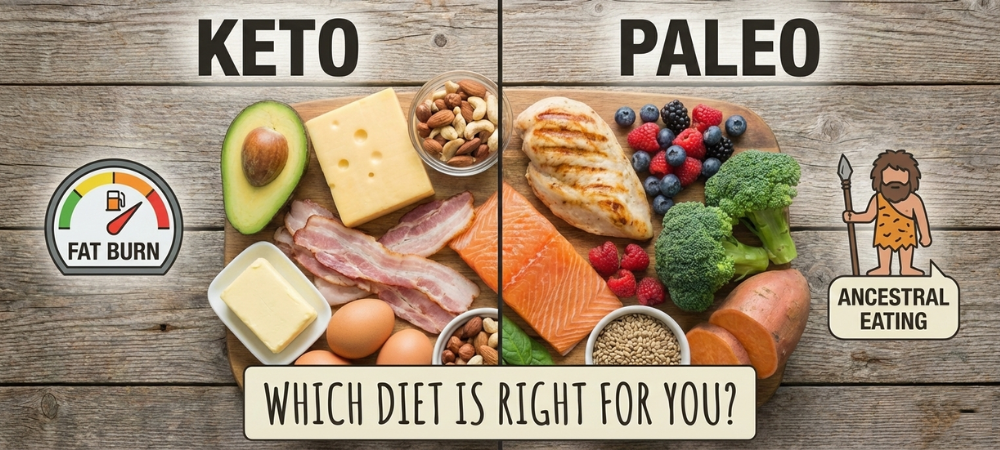
What you eat on keto
You focus on fat-rich, low-carb foods:
- Healthy fats: olive oil, avocado oil, coconut oil, butter, ghee, avocado
- Animal proteins: meat, poultry, fatty fish, eggs
- High-fat dairy: cheese, cream, full-fat yogurt (unsweetened)
- Nuts and seeds: almonds, walnuts, chia, flax, pumpkin seeds (in moderation for carbs)
- Low-carb vegetables: leafy greens, broccoli, cauliflower, zucchini, peppers
What you avoid on keto
Because carbs must stay very low to maintain ketosis, keto restricts:
- Grains: wheat, rice, oats, corn, quinoa, etc.
- Most fruits: especially bananas, apples, grapes, mangoes, etc.
- Starchy vegetables: potatoes, sweet potatoes, most root vegetables
- Sugars and sweeteners: table sugar, honey, maple syrup, agave, coconut sugar
- Most legumes: beans, lentils, chickpeas (carb-heavy)
- Ultra-processed foods with added sugars and refined starches
Some soy foods (like tofu and tempeh) and high-fat dairy are usually allowed if they fit your carb and protein limits.
What Is the Paleo Diet?
The paleo diet (or “Paleolithic diet”) is based on the idea of eating more like our hunter‑gatherer ancestors: whole, unprocessed foods that would have been available before agriculture.
Core principle
Paleo is not about specific macros. Instead, it focuses on food quality and food groups, emphasizing:
- Whole, minimally processed foods
- Lean and grass-fed animal proteins
- Vegetables and fruits
- Nuts, seeds, and natural fats
- Lifestyle elements like exercise and mindfulness
Unlike keto, paleo does not set carb targets; you could be low-, moderate-, or even relatively high-carb depending on your food choices.
Typical (example) macro pattern for paleo might be around:
- Protein: ~40%
- Fat: ~35%
- Carbs: ~25%
But this varies widely by person and is not strictly defined.
What you eat on paleo
You focus on “whole-food” sources of nutrients:
- Meat, poultry, fish, eggs (ideally grass-fed, pasture-raised, wild-caught)
- Vegetables of all kinds
- Fruits (including higher-carb fruits, in moderation)
- Nuts and seeds
- Natural fats: olive oil, avocado oil, coconut oil, animal fats
- Unrefined natural sweeteners like honey or maple syrup (in moderation)
Paleo is often paired with guidelines around movement, sleep, and stress, making it more of a lifestyle approach than keto.
What you avoid on paleo
Paleo excludes foods that emerged mainly after the agricultural revolution:
- Grains: wheat, oats, rice, corn, barley, etc.
- Legumes: beans, lentils, soy, peanuts
- Most dairy: milk, cheese, yogurt (most versions; some allow grass‑fed butter or ghee)
- Refined sugar and processed foods
- Industrial seed oils: like soybean oil, corn oil, canola oil (in many paleo interpretations)
Paleo does not allow soy and is generally dairy-free, except possibly small amounts of grass‑fed butter or ghee.
Keto vs. Paleo: Key Similarities
Despite their differences, keto and paleo share several important themes.
1. Both emphasize whole, minimally processed foods
Both diets encourage replacing ultra-processed foods (refined grains, added sugars, packaged snacks) with whole foods like vegetables, meats, fish, nuts, and healthy fats.
This is one major reason both diets can improve health markers when done properly.
2. Both eliminate added sugars and refined carbs
- Keto: cuts out all added sugars (refined or unrefined) because of carb content.
- Paleo: cuts out refined sugars, but allows unrefined sweeteners like honey and maple syrup in moderation.
Reducing added sugars is associated with better weight control and metabolic health according to many major health organizations.
3. Both can promote weight loss and better blood sugar control
By removing processed carbs and focusing on nutrient-rich foods, both diets can:
- Help reduce caloric intake through better satiety
- Improve insulin sensitivity
- Stabilize blood sugar levels
Keto has a more direct metabolic effect through ketosis, while paleo tends to help by removing common “junk” foods and improving diet quality.
4. Both are relatively restrictive
Both diets:
- Exclude entire food groups
- Require meal planning and label reading
- Can be hard to maintain long-term for some people
This restrictiveness is both a strength (clear rules) and a weakness (social and practical challenges).
Keto vs. Paleo: The Major Differences
Here is where keto vs. paleo really diverge. Understanding these differences is critical for choosing the right diet.
1. Carbohydrates: strict limit vs. flexible intake
- Keto:
- Very low carb: often <25–50 g net carbs/day or <5–10% of calories.
- Excludes nearly all starchy vegetables and most fruits.
- Paleo:
- Carbs are not strictly limited; intake can be low, moderate, or higher depending on choices.
- Allows fruits, starchy vegetables (e.g., sweet potatoes), and unrefined sweeteners within overall paleo rules.
Result: Keto is always low-carb. Paleo can be low-, moderate-, or even higher-carb based on your needs.
2. Dairy and soy
- Keto:
- Encourages high-fat dairy (cheese, cream, butter) if tolerated and under carb/protein limits.
- Allows soy foods like tofu and tempeh as long as they fit your macros.
- Paleo:
- Generally excludes dairy (with occasional debate about grass-fed butter).
- Excludes all soy because it is a legume.
If you enjoy dairy or rely on soy for protein, keto is more compatible than strict paleo.
3. Flexibility and sustainability
- Keto tends to be less flexible because going above your carb limit can kick you out of ketosis, diminishing its intended effects.
- Paleo allows a broader range of foods and doesn’t depend on a precise metabolic state, so it is often easier to sustain and adapt socially.
Many people find paleo more manageable in the long run, while keto may be best suited to shorter or intermittent phases unless you are highly committed.
Health Benefits of Keto vs. Paleo
Both diets can support better health, but they lean into different strengths.
Benefits of the keto diet
According to clinical and review data summarized by major health sources:
- Weight loss:
- High-fat, low-carb intake can enhance satiety and lead to reduced calorie intake.
- Being in ketosis encourages your body to burn stored fat for energy.
- Blood sugar control and insulin sensitivity:
- Very low carb intake can improve blood sugar management, which may benefit people with insulin resistance or type 2 diabetes (under medical guidance).
- Neurological conditions:
- Originally developed to treat epilepsy, keto has been shown to reduce seizure frequency in some patients.
- Emerging research suggests potential benefits for other neurological conditions like Parkinson’s, though more evidence is needed.
- Reduced hunger for some people:
- High-fat intake and stable blood sugar may reduce cravings and hunger for some individuals.
Benefits of the paleo diet
Based on observational and trial summaries from medical sources:
- Improved diet quality:
- By eliminating processed foods, added sugars, and refined flours, paleo tends to increase intake of fiber, vitamins, minerals, and phytonutrients from vegetables and fruits.
- Weight loss and body composition:
- Studies show that paleo can lead to reduced BMI and waist circumference, at least in the short and medium term.
- Better blood sugar and lipid profiles:
- Paleo may improve insulin sensitivity, triglycerides, and HDL cholesterol, largely by improving diet quality and focusing on whole foods.
- Possible reduction in inflammation:
- Both paleo and keto can reduce inflammatory foods (e.g., refined carbs, seed oils, processed meats), but paleo allows more anti-inflammatory plant foods overall.
Risks and Downsides of Keto vs. Paleo
No diet is perfect. You should weigh potential risks and downsides before committing.
Potential downsides of the keto diet
Medical sources highlight several concerns:
- Nutrient deficiencies:
- Cutting out grains and most fruits may reduce intake of selenium, magnesium, phosphorus, and vitamins B and C.
- Fiber can also be low if vegetable intake is inadequate.
- Liver and kidney stress:
- Metabolizing large amounts of fat may be challenging for those with existing liver disease.
- Higher protein (in some versions) may stress the kidneys in those with kidney issues.
- “Keto flu” and adaptation issues:
- Early side effects can include fatigue, headache, irritability, and constipation as your body adapts.
- Social and lifestyle constraints:
- Very strict carb limits make dining out, social meals, and travel harder.
- Many people find long-term adherence difficult.
You should consult with a healthcare provider before starting keto, especially if you have diabetes, kidney disease, liver disease, or take medications. A good overview of low-carb and ketogenic diets is available from the Harvard T.H. Chan School of Public Health.
Potential downsides of the paleo diet
Paleo is more flexible, but still has notable concerns:
- Possible nutrient gaps:
- Eliminating grains and legumes can reduce intake of B vitamins like thiamine, folate, niacin, and riboflavin.
- Limiting dairy can lead to lower calcium and vitamin D, affecting bone health if not addressed.
- Higher cost and practicality issues:
- Whole, fresh, often organic foods tend to be more expensive than processed alternatives.
- Potential high meat intake:
- Many versions encourage significant amounts of red meat. Some studies associate high red and processed meat intake with increased risk of cardiovascular disease and certain cancers.
- Restrictiveness:
- Social situations can still be challenging because of no grains, legumes, or most dairy.
The Academy of Nutrition and Dietetics and similar organizations often recommend focusing on balance and variety, which can be achieved within or outside these frameworks.
Keto vs. Paleo: Which Diet Is Right for You?
The best choice depends on your goals, health status, preferences, and lifestyle. Use the following guide to help decide.
1. Consider your primary goal
Choose keto if your top goals are:
- Rapid weight loss, especially in the short term
- More aggressive blood sugar and insulin control
- Exploring options for certain neurological conditions (with medical guidance)
Choose paleo if your top goals are:
- Overall health improvement and inflammation reduction
- Sustainable long-term eating pattern
- Improving diet quality with more whole foods and fewer processed items
2. Evaluate your current health conditions
You should discuss any major diet change with your doctor, especially if you have:
- Diabetes or prediabetes:
- Keto can improve sugar control but may interact with medications (risk of hypoglycemia).
- Kidney disease or kidney stones:
- High-protein or high-fat ketogenic diets may be risky.
- Liver disease:
- Large fat loads can further stress the liver.
Paleo may be a safer first step for many people with complicated medical histories because it is less metabolically extreme and focuses on whole foods.
3. Think about your food preferences and lifestyle
Ask yourself:
- Do you enjoy fatty foods (eggs, cheese, cream, rich meats) and can you easily avoid bread, pasta, rice, and fruit?
- If yes, keto may feel satisfying.
- Do you love fruits, sweet potatoes, and a wide variety of vegetables and don’t want to track macros?
- Paleo will fit better.
- How much do you eat out or attend social events centered on food?
- Paleo tends to be easier to adapt to menus and potlucks than strict keto.
4. Consider sustainability and personality
- If you like clear, strict rules and don’t mind tracking macros or carbs, keto can work well.
- If you prefer a principle-based, flexible framework and want something to maintain for years, paleo often wins.
Some people also follow a hybrid approach (sometimes called “primal” or “pegan”)lower carb overall, with paleo-style food quality and modest carbs from whole-food sources.
How to Start Keto Safely: A Step‑by‑Step Guide
If you decide that keto fits your goals and health status, start deliberately rather than overnight.
Step 1: Learn your carb limit
Most people aiming for ketosis target:
- 20–50 g net carbs per day (net carbs = total carbs – fiber)
You may start closer to 30–50 g and adjust based on how you feel and results.
Step 2: Build your keto-friendly food list
Base your meals around:
- Proteins: eggs, beef, chicken, pork, fish, shellfish
- Fats: olive oil, avocado oil, butter, ghee, coconut oil, avocado
- Low-carb vegetables: leafy greens, broccoli, cauliflower, zucchini, asparagus, mushrooms, peppers
- Optional dairy: cheese, cream, full-fat yogurt (unsweetened)
Read other Health related articles