Table of Contents
Instructions
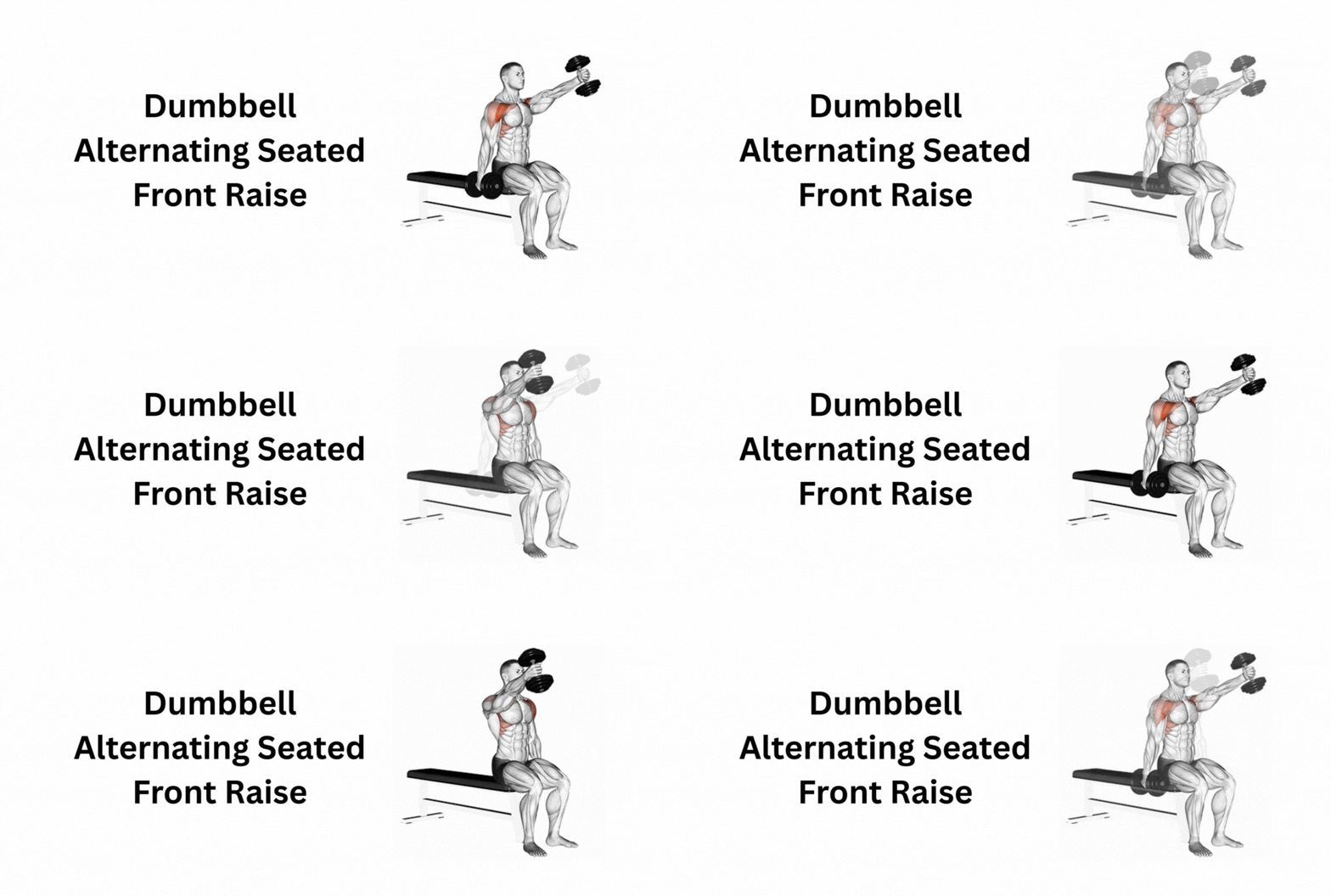
The Dumbbell Alternating Seated Front Raise is a focused shoulder exercise that targets the anterior deltoids while minimizing momentum. By lifting one arm at a time, this alternating approach enhances control, stability, and mind-muscle connection, ensuring each rep fully engages the targeted muscles. Ideal for beginners, those in shoulder rehab, or anyone focused on hypertrophy, this seated variation reduces lower-back strain compared to standing raises. In this guide, you’ll learn proper form, step-by-step execution, optimal sets and reps, and tips to maximize anterior deltoid activation safely and effectively.
What Is the Dumbbell Alternating Seated Front Raise?
The Dumbbell Alternating Seated Front Raise is a shoulder isolation exercise that targets the anterior deltoids by lifting one dumbbell at a time while seated. Unlike a simultaneous front raise, where both arms move together, alternating raises allow you to focus on each shoulder individually, improving mind-muscle connection and control throughout the movement.
Performing the exercise seated provides several benefits: it reduces momentum and lower-back involvement, minimizes the risk of “cheating” with body sway, and enhances muscle isolation, making each lift more effective. This makes it ideal for rehabilitation, hypertrophy-focused training, or anyone seeking precise control and form during shoulder workouts.
Benefits of Dumbbell Alternating Seated Front Raise
- Enhanced anterior delt activation: Focusing on one arm at a time ensures the front shoulder muscles are fully engaged, maximizing hypertrophy and strength gains.
- Improved mind-muscle connection: Alternating lifts allow you to concentrate on each shoulder individually, improving control and form.
- Reduced shoulder joint stress: Seated positioning and controlled movement minimize strain on the shoulder and lower back, making it safer for all fitness levels.
- Controlled movement prevents momentum: By eliminating body sway, each repetition isolates the targeted muscles effectively.
- Ideal for rehab or beginners: The exercise’s controlled nature makes it perfect for rehabilitation, shoulder injury prevention, and those new to resistance training.
Muscles Worked
Primary Muscle:
- Anterior deltoids – The main target of the exercise, responsible for lifting the arms forward.
Secondary Muscles:
- Upper chest (clavicular portion of pectoralis major) – Assists in shoulder flexion.
- Upper trapezius – Helps stabilize the shoulder girdle during the lift.
Stabilizers:
- Core muscles – Engage to maintain a stable seated posture.
- Scapular stabilizers – Ensure proper shoulder mechanics and prevent excessive movement.
Video
How to Perform the Dumbbell Alternating Seated Front Raise
- Sit upright on a bench with your feet flat on the floor for stability.
- Hold a dumbbell in each hand at your sides, using either a neutral (palms facing each other) or pronated (palms facing down) grip.
- Brace your core and keep your back straight to maintain proper posture throughout the exercise.
- Raise one dumbbell to shoulder height while keeping the other arm at rest by your side. Focus on controlled movement and full anterior delt engagement.
- Lower the dumbbell slowly back to the starting position, resisting momentum.
- Repeat with the other arm, alternating sides for the desired number of repetitions.
- Maintain a controlled tempo avoid swinging or using momentum to lift the weights.
- Breathing: Exhale as you lift the dumbbell, inhale as you lower it.
Coaching Cues
- Lift with the shoulder, not the arm: Focus on engaging the anterior deltoid, not just moving the weight with your arms.
- Pause briefly at shoulder height: This increases time under tension and maximizes muscle activation.
- No momentum, slow eccentric: Lower the dumbbell slowly to maintain control and reduce risk of injury.
- Keep elbows slightly bent: Protects the elbow joint and maintains proper shoulder mechanics.
- Core tight, back straight: Ensures a stable seated position and prevents lower-back strain.
Common Mistakes & Fixes
| Mistake | Why It’s a Problem | Fix |
|---|---|---|
| Using momentum | Reduces anterior delt activation | Lower the weight and maintain a slow, controlled tempo |
| Lifting both at once | Less focus on each arm, reduces mind-muscle connection | Perform true alternating raises, focusing on one arm at a time |
| Raising too high | Increases risk of shoulder impingement | Stop the dumbbell at shoulder height |
| Shrugging traps | Overuses upper trapezius, reduces delt isolation | Focus on driving the lift with the shoulder, keeping traps relaxed |
Variations
- Full Can Grip Alternating Seated Front Raise: Uses a thumbs-up grip to reduce shoulder joint stress while maintaining anterior delt activation.
- Incline Bench Alternating Front Raise: Performed on a slightly reclined bench to increase range of motion and deltoid stretch.
- Cable Alternating Front Raise: Uses cables for constant tension throughout the movement, improving control and muscle engagement.
- Single-Arm Seated Front Raise: Focuses on one arm at a time, ideal for correcting imbalances or performing higher reps with perfect form.
Alternatives
- Simultaneous Seated Dumbbell Front Raise: Lift both arms at the same time to increase time efficiency, though it slightly reduces focus on each delt.
- Standing Alternating Front Raise: Adds a core stability challenge and allows for slight momentum, suitable for advanced lifters.
- Cable Front Raise: Provides constant resistance through the full range of motion, enhancing muscle engagement.
- Arnold Press (Lightweight): Combines shoulder press with rotation, targeting all deltoid heads, ideal as a complementary exercise for overall shoulder development.
How to Program the Alternating Seated Front Raise
- Reps & Sets:
- Hypertrophy: 3-4 sets of 10-15 reps
- Endurance: 2-3 sets of 12-20 reps
- Frequency: Perform 2-3 times per week, allowing adequate recovery between sessions.
- Placement in Workout: Best used as a finisher or after compound pressing movements (like bench press or overhead press) to fully fatigue the anterior delts without compromising form on heavy lifts.
Safety & Rehab Notes
- Avoid excessive weight: Using too heavy dumbbells can compromise form and increase shoulder injury risk.
- Focus on controlled movement: Maintain a slow, deliberate tempo to maximize delt activation and reduce momentum.
- Warm up shoulders first: Perform dynamic stretches or light warm-up sets to prepare the joint and muscles.
- Stop if discomfort occurs: Pain, not just fatigue, is a signal to pause or adjust the exercise to prevent injury.
Frequently Asked Questions
1. Alternating vs simultaneous front raise which is better?
Alternating raises allow for better mind-muscle connection and control, while simultaneous raises are more time-efficient but slightly reduce focus on each delt.
2. Should I lift both arms at the same time or alternate?
For maximum anterior delt isolation and control, alternate lifts are preferred. Lifting both arms at once is suitable if time efficiency is a priority.
3. How heavy should I go?
Choose a weight that allows controlled, slow reps with proper form. Avoid excessive weight that forces momentum.
4. Is this safe for beginners?
Yes, the seated alternating variation is beginner-friendly, reduces lower-back strain, and allows focus on proper shoulder mechanics.
5. How high should I raise the dumbbells?
Raise to shoulder height only. Going higher can increase the risk of shoulder impingement.
6. Can this help with shoulder rehab?
Yes, when performed with light weights and strict form, it strengthens the anterior delts without stressing the joint, making it suitable for rehab and injury prevention.
Key Takeaways
- Alternating improves control and mind-muscle connection: Focusing on one arm at a time ensures each shoulder is fully engaged.
- Seated position isolates anterior delts: Reduces momentum and lower-back involvement, maximizing deltoid activation.
- Best for hypertrophy, rehab, or precision training: Ideal for building muscle, recovering from injury, or perfecting form.
See Other Exercises: Dumbbell Seated Front Raise, Dumbbell Full Can Seated Front Raise, Dumbbell Alternating Full Can Seated Front Raise