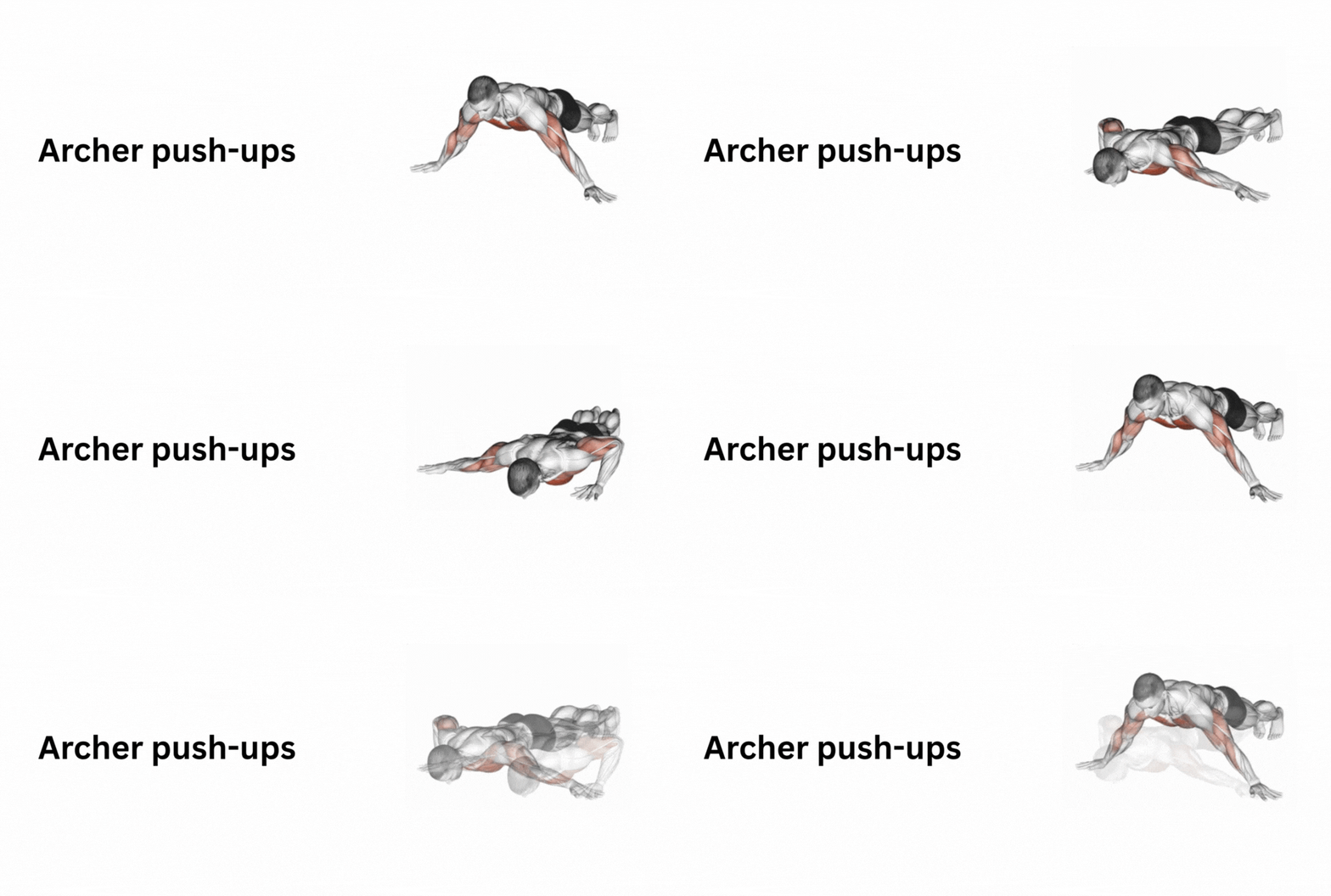
Archer push-ups are an advanced bodyweight exercise that challenges your chest, triceps, shoulders, and core. Unlike a standard push-up, this variation shifts more of your body weight toward one arm while the opposite arm extends out to the side. The result is an asymmetrical pressing movement that demands strength, balance, and control.
Archer push-ups can help you develop unilateral pressing strength and prepare for more advanced bodyweight exercises, including one-arm push-up progressions. However, they require more strength and coordination than regular push-ups, so building a solid foundation first is important.
In this guide, you’ll learn how to perform archer push-ups, which muscles they work, their benefits, common mistakes, easier progressions, and ways to include them in your workout.
Table of Contents
What Are Archer Push-Ups?
An archer push-up is a wide-hand push-up variation in which you bend one elbow and lower your chest toward that side while keeping the opposite arm relatively straight. The extended arm provides some support, but the bent arm handles a greater share of the pressing demand.
The exercise gets its name from the position of the arms, which resembles an archer drawing a bow. Because the load is distributed unevenly, each side works under a different demand during a repetition.
Archer push-ups require no weights or machines. You only need enough clear floor space to position your hands wide apart and move comfortably from side to side.
Exercise overview
- Primary muscle group: Chest (pectoralis major)
- Supporting muscles: Triceps and anterior deltoids
- Stabilizing muscles: Core and muscles that control the shoulder blades
- Equipment: None required
- Exercise type: Compound bodyweight pushing movement
- Difficulty: Advanced
- Main purpose: Develop upper-body pressing strength and control
Muscles Worked by Archer Push-Ups
1. Pectoralis Major (Chest)
The pectoralis major is a primary contributor to the pushing movement. As you lower your chest toward the working hand and press back up, the chest muscles help control and produce the movement.
Because your body weight shifts toward one side, the working side experiences a different loading demand from the supporting side.
2. Triceps Brachii
The triceps help straighten the elbow as you push away from the floor. They contribute to the pressing effort, especially as you return toward the top position.
3. Anterior Deltoids (Front Shoulders)
The front deltoids assist with shoulder movement during the press. They also help control the position of the upper arm as your body moves toward the working side.
4. Serratus Anterior and Shoulder Stabilizers
The serratus anterior and other muscles around the shoulder blades help control scapular movement during push-ups. Maintaining active, controlled shoulders helps you move smoothly through each repetition.
5. Core Muscles
Your abdominal muscles and obliques help resist unwanted twisting and keep your torso steady. Your glutes and legs also help maintain a firm body position from head to heels.
Archer push-ups involve several muscle groups working together. The exact contribution of each muscle varies with hand position, range of motion, strength, and technique.
Benefits of Archer Push-Ups
1. Develops Unilateral Pressing Strength
Archer push-ups place a greater portion of the pressing demand on one side at a time. This makes them useful for developing side-to-side control and strength during bodyweight pressing.
2. Challenges the Chest, Triceps, and Shoulders
The exercise trains several upper-body pushing muscles in one movement. It can complement standard push-ups and other pressing exercises in a bodyweight strength routine.
3. Builds Core Control
The uneven hand position challenges your ability to keep your hips and torso from twisting. Maintaining a stable body position throughout the movement requires active core engagement.
4. Provides a Progression Toward One-Arm Push-Ups
Archer push-ups can serve as one step in a broader progression toward one-arm push-ups. They let you practice shifting your weight to one side while keeping the opposite hand on the floor for support.
They do not guarantee that you will master a one-arm push-up. Progress also depends on strength, technique, training consistency, and appropriate exercise difficulty.
5. Requires No Gym Equipment
You can perform archer push-ups at home or in a gym without weights or machines. A stable, nonslip surface and enough space for a wide hand position are the main requirements.
How to Do Archer Push-Ups
Because archer push-ups are demanding, practice the movement with a reduced range or an easier variation if you cannot maintain control.
Step 1: Set Up in a Wide Push-Up Position
Start in a high-plank position with your hands wider than shoulder-width apart. Spread your fingers comfortably and press your hands into the floor.
Keep your head, torso, hips, and legs aligned. Brace your abdomen and glutes so your lower back does not sag.
Step 2: Shift Your Weight Toward One Side
Choose the side you want to work first. Move your chest and body toward that hand while keeping the opposite arm extended or only slightly bent, depending on your mobility and strength.
Avoid rotating your torso to create extra range. Aim to keep your hips and chest facing the floor.
Step 3: Lower Toward the Working Hand
Bend the elbow of the working arm and lower your chest toward that hand. Keep the working elbow at a comfortable angle rather than forcing it straight out to the side.
Lower only as far as you can while maintaining shoulder control and a stable torso.
Step 4: Press Back Up
Push through the working hand and straighten the bent arm to return to the starting position. The extended arm may provide some assistance, so avoid pretending it contributes no force at all.
Keep the movement smooth rather than bouncing out of the bottom.
Step 5: Repeat on the Other Side
Shift toward the opposite hand and repeat the movement. Alternate sides while maintaining the same controlled technique.
You can also complete a set on one side before switching, provided you train both sides with comparable effort and appropriate volume.
Breathing Tips
- Inhale as you lower your body.
- Exhale as you press back up.
- Keep breathing controlled rather than holding your breath for the entire set.
Form reminder: A clean, controlled repetition is more useful than lowering too far while your hips twist or your shoulder position breaks down.
Common Archer Push-Up Mistakes
1. Starting With an Excessively Wide Hand Position
Hands placed too far apart can make it difficult to control the shoulders and reach a comfortable range of motion.
Correction: Begin with a moderately wide position and adjust gradually until you can move smoothly without shoulder discomfort.
2. Rotating the Hips and Torso
Twisting toward the working arm can make the movement easier but reduces control of the intended asymmetrical pressing pattern.
Correction: Keep your hips and chest facing the floor as much as possible. Reduce the range if you cannot maintain alignment.
3. Letting the Hips Sag
A sagging lower back makes it harder to transfer force efficiently and maintain a stable body position.
Correction: Brace your abdomen and glutes, and keep your body aligned from head to heels.
4. Flaring the Working Elbow Too Far Out
Forcing the elbow directly sideways may feel uncomfortable for the shoulder, particularly when combined with a deep range of motion.
Correction: Allow the elbow to follow a comfortable path, often somewhat diagonally from the torso. Do not force a single angle if it causes discomfort.
5. Bouncing at the Bottom
Dropping quickly and bouncing out of the lowest position reduces control and may irritate the wrists, elbows, or shoulders.
Correction: Lower smoothly, pause briefly if comfortable, and press up without bouncing.
6. Letting the Supporting Arm Do Too Much Work
The extended arm provides assistance, but pushing heavily through it can make the exercise less challenging for the working side.
Correction: Shift your body toward the bent arm while keeping the extended arm available for balance and support. Do not remove support until you have the strength to do so safely.
7. Attempting the Exercise Before Building a Foundation
Archer push-ups demand more strength and coordination than standard push-ups. Attempting them too early can lead to inconsistent technique.
Correction: Build capacity with standard, incline, and controlled wide-hand push-ups before progressing.
Sets, Reps, and Training Tips
Archer push-ups are challenging, so prioritize good technique over high repetition counts.
| Training goal | Starting guideline |
|---|---|
| Learning the movement | 2–3 sets of 3–5 controlled reps per side |
| Building strength | 3–4 sets of 3–6 reps per side |
| Improving control | 2–3 sets of 4–8 reps per side with a manageable range |
These are general starting guidelines, not requirements. Choose a variation that allows you to complete each repetition with control, and rest long enough to maintain good form—often around 90–180 seconds for demanding sets.
Training Tips
- Warm up your wrists, shoulders, and upper body before working sets.
- Train both sides with comparable technique and effort.
- Stop a set when your hips begin twisting or your range of motion becomes uncontrolled.
- Increase repetitions or range of motion gradually rather than changing several difficulty factors at once.
- Allow recovery between demanding upper-body sessions.
You do not need to perform archer push-ups every workout. They can be included as a focused strength movement when your current ability and program support them.
Archer Push-Up Progressions and Variations
1. Incline Archer Push-Up
Place your hands on a stable, elevated surface, such as a secure bench or sturdy bar. Perform the same side-to-side movement with your body at an incline.
The elevated position reduces the amount of body weight you press, making it a useful regression.
For related technique guidance, read SaveDollar’s Incline Push-Up Guide.
2. Standard Push-Up
Standard push-ups build the basic pressing strength and body control needed for more advanced variations. Practice consistent repetitions before introducing the uneven load of archer push-ups.
3. Reduced-Range Archer Push-Up
Lower only partway toward the working hand, then press back up. Gradually increase the range as your control and strength improve.
Do not use a reduced range to justify uncontrolled movement; the goal is to build capacity while maintaining stable technique.
4. Archer Push-Up With Hand Supports
Push-up handles or parallettes can place your wrists in a more neutral position than flat palms. Make sure the equipment is stable and does not slide during the side-to-side movement.
This variation is useful only if the handles improve comfort and control; it does not automatically make the exercise easier.
5. Archer Push-Up to One-Arm Push-Up Progression
Once you can perform controlled archer push-ups through a comfortable range, you can use them as one step toward more unilateral pressing work.
Progress gradually. One-arm push-ups require substantially greater strength and trunk control, so avoid jumping directly to unsupported repetitions.
See SaveDollar’s One-Arm Push-Up Guide for related progression ideas.
6. Explosive Push-Up Variations
Explosive or clap push-ups train rapid force production and are not simply a harder archer push-up. They require a different skill and should be attempted only after building adequate pressing strength and landing control.
Learn more in SaveDollar’s Explosive/Clap Push-Up Guide.
Archer Push-Ups vs. Regular Push-Ups
| Feature | Archer push-up | Standard push-up |
|---|---|---|
| Difficulty | Advanced for most exercisers | Beginner to intermediate, depending on ability |
| Load distribution | Uneven, with more demand on one side | More symmetrical |
| Main muscles | Chest, triceps, shoulders | Chest, triceps, shoulders |
| Core demand | Resisting rotation and maintaining alignment | Maintaining a stable plank position |
| Best use | Advanced bodyweight strength and unilateral control | Building foundational pressing strength |
Neither exercise is universally better. Standard push-ups are an excellent foundation, while archer push-ups provide a more challenging, asymmetrical variation.
Alternatives to Archer Push-Ups
If archer push-ups are too difficult or uncomfortable, choose an alternative that matches your current strength and goal.
1. Incline Push-Ups
Incline push-ups reduce the amount of body weight you press and help you practice consistent technique.
2. Diamond Push-Ups
Diamond push-ups use a narrower hand position and place substantial demand on the triceps alongside the chest and shoulders.
Read SaveDollar’s Diamond Push-Up Guide.
3. Wide-Grip Push-Ups
Wide-grip push-ups provide another chest-focused bodyweight variation, though hand position should remain comfortable and controlled.
Read SaveDollar’s Wide-Grip Push-Up Guide.
4. Pike Push-Ups
Pike push-ups change the body angle to emphasize vertical pressing and the shoulders more than standard horizontal push-ups.
Read SaveDollar’s Pike Push-Up Guide.
Choose the exercise that allows you to train the intended movement with appropriate effort and consistent technique.
Safety Tips
- Warm up your wrists, elbows, and shoulders before beginning.
- Use a stable, nonslip surface and enough room for your hands to move.
- Start with an easier progression if you cannot control the descent or keep your torso stable.
- Avoid forcing a deep range of motion that causes shoulder, elbow, or wrist pain.
- Stop if you experience sharp pain, numbness, or unusual symptoms.
- If a previous injury or ongoing joint problem affects your ability to push, consult an appropriately qualified healthcare professional for individualized guidance.
Normal muscle effort is expected during challenging exercise, but pain should not be ignored.
Frequently Asked Questions
Are archer push-ups good for building chest strength?
They can help develop chest and pressing strength when performed with appropriate difficulty and consistent technique. The chest works alongside the triceps and shoulders, while the core helps maintain body alignment.
Are archer push-ups harder than regular push-ups?
For most people, yes. They shift more of the pressing demand to one side and require greater control of the torso and shoulder position. Beginners should first build a foundation with standard or incline push-ups.
Can archer push-ups help me achieve a one-arm push-up?
They can be one progression toward a one-arm push-up because they let you practice shifting your weight toward one side. However, mastering a one-arm push-up also requires substantial strength, balance, and technique.
How many archer push-ups should I do?
Start with a small number of controlled repetitions per side, such as 3–5, for two or three sets. Adjust the difficulty so that your form remains consistent, and increase volume gradually as you improve.
Do archer push-ups work the triceps?
Yes. The triceps contribute to straightening the elbow during the press. The chest and front shoulders also play important roles, so the movement should not be considered a triceps-only exercise.
Should I keep the non-working arm completely straight?
The opposite arm generally remains extended or nearly extended, but it should not be forced into a locked position. Keep the elbow comfortable and use the supporting arm as needed to maintain control.
Can beginners perform archer push-ups?
Most beginners should start with incline push-ups and standard push-ups. Once they can maintain good alignment and pressing control, they can try a reduced-range or incline archer variation.
Are archer push-ups safe for the wrists and shoulders?
They can be appropriate for people who have the required strength and can perform them without pain, but the wide hand position and uneven loading may be uncomfortable for some individuals. Adjust the hand position, reduce the range, use stable handles if helpful, or choose an easier variation.
Further Reading
- NASM: Archer Push-Up — Exercise Technique and Muscles Worked — Demonstrates the movement, setup, and key technique considerations.
- Healthline: What Muscles Do Push-Ups Work? — Explains the major muscles involved in push-ups and common form errors.
Final Thoughts
Archer push-ups are a challenging bodyweight variation for developing upper-body pressing strength and control. By shifting your body toward one arm while keeping the opposite arm extended, you create an asymmetrical movement that challenges the chest, triceps, shoulders, and core.
Start with a strong foundation in standard push-ups, learn the movement with a manageable range, and progress only when you can keep your body stable and your repetitions controlled. Train both sides consistently and use easier variations whenever your technique begins to break down.
With patient progression, archer push-ups can become a useful part of an advanced bodyweight training routine.