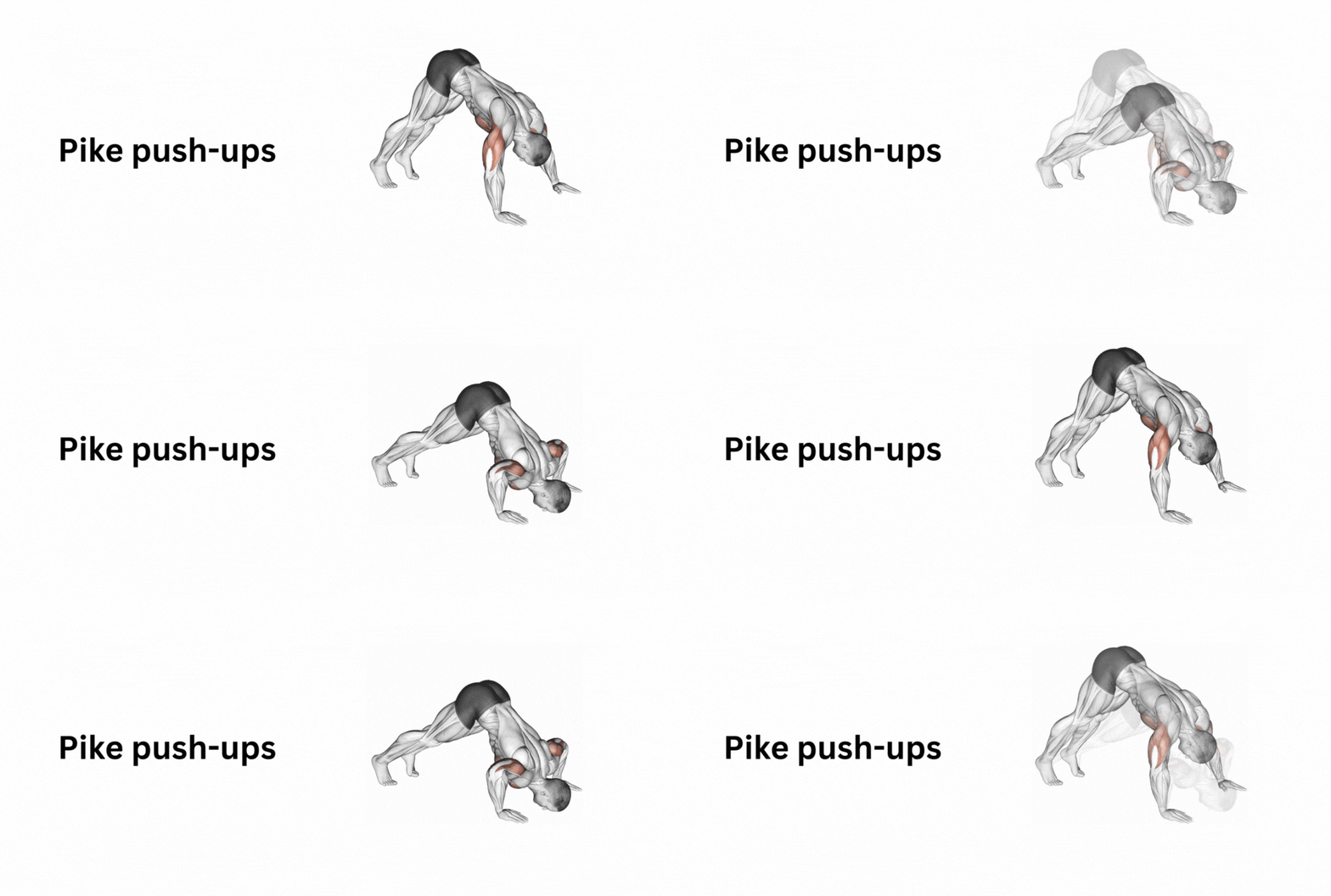
Pike push-ups are a bodyweight exercise that targets the shoulders, triceps, and upper body. By positioning your hips high and your torso at an angle, you shift more of the pressing demand toward your shoulders than you would with a standard push-up.
This makes pike push-ups a useful exercise for building upper-body strength at home without weights. They can also help you develop the pressing strength needed for more challenging bodyweight exercises, including handstand push-ups.
In this guide, you will learn how to perform pike push-ups with proper form, which muscles they work, their main benefits, common mistakes to avoid, and variations for different fitness levels.
Table of Contents
What Are Pike Push-Ups?
Pike push-ups are a bodyweight pressing exercise performed with your hands on the floor, hips raised, and body forming an inverted V shape. From this position, you bend your elbows to lower your head toward the floor, then press back up.
Unlike standard push-ups, which emphasize the chest and triceps, pike push-ups place greater emphasis on the shoulders because of your more vertical torso position.
They require no special equipment, although a yoga mat or other stable, nonslip surface can make the exercise more comfortable. For another exercise demonstration and technique reference, see the NASM Pike Push-Up exercise guide.
Muscles Worked by Pike Push-Ups
Pike push-ups work several upper-body muscles, with the shoulders and triceps doing much of the pressing.
1. Deltoids
The deltoids, particularly the anterior deltoids at the front of the shoulders, help raise your body during the pressing phase. The shoulder muscles work hard because your torso is angled toward a more vertical position.
2. Triceps
The triceps are located at the back of your upper arms. They help extend your elbows as you push yourself away from the floor.
3. Upper Chest
The upper portion of the pectoral muscles contributes to the pressing movement. However, pike push-ups generally place less emphasis on the chest than standard push-ups.
4. Trapezius and Other Scapular Muscles
Muscles around your shoulder blades help control shoulder movement and maintain stability throughout the exercise.
5. Core Muscles
Your abdominal muscles and other core muscles help stabilize your trunk and maintain the inverted V position. They support the movement rather than serving as the primary target.
Benefits of Pike Push-Ups
1. Build Shoulder Strength
Pike push-ups provide a challenging bodyweight movement for your shoulders. You can adjust the difficulty by changing your body position, range of motion, and exercise variation.
2. Strengthen the Triceps
Your triceps help extend your elbows during every repetition. Stronger triceps can support other pressing exercises and everyday pushing movements.
3. Require Little or No Equipment
You can perform pike push-ups at home or in a gym without a barbell, dumbbells, or a cable machine. A stable floor and enough room to move are usually sufficient.
4. Offer Scalable Difficulty
Beginners can start with a smaller range of motion or an easier variation. As strength and control improve, they can progress toward more challenging versions.
5. Help Prepare You for Advanced Bodyweight Pressing
Pike push-ups can be part of a progression toward handstand push-ups. However, advanced movements also require sufficient shoulder mobility, balance, and control, so progress gradually.
How to Do Pike Push-Ups With Proper Form
Follow these steps to perform pike push-ups safely and effectively.
Step 1: Start in a High Plank Position
Place your hands on the floor about shoulder-width apart. Extend your legs behind you and position your feet approximately hip-width apart.
Keep your hands firmly planted and your body controlled.
Step 2: Raise Your Hips
Push your hips upward and move your feet slightly closer to your hands if needed. Your body should form an inverted V shape.
Keep your arms extended and your head positioned between your upper arms.
Step 3: Brace Your Core
Tighten your abdominal muscles and maintain a stable torso. Keep your hips elevated rather than allowing your body to drop into a standard push-up position.
Step 4: Bend Your Elbows and Lower
Bend your elbows in a controlled manner, lowering your head toward the floor slightly in front of your hands. Keep your elbows at a comfortable angle instead of flaring them excessively out to the sides.
Only lower as far as you can maintain control without pain.
Step 5: Press Back Up
Push through your hands to extend your elbows and return to the starting position. Keep your hips high and your movement controlled.
Step 6: Repeat
Complete your planned repetitions while maintaining consistent form. Stop the set if you can no longer control the lowering or pressing phase.
Pike Push-Up Form Tips
Use these tips to get more from each repetition:
- Keep your hips high: This maintains the intended pike position and emphasizes shoulder pressing.
- Spread your fingers: Keep your hands firmly planted to help distribute pressure and maintain stability.
- Control the lowering phase: Avoid dropping your head quickly toward the floor.
- Keep your neck comfortable: Move your head naturally and avoid forcing your chin toward your chest.
- Use a comfortable elbow position: Avoid forcing your elbows excessively wide or tucking them so tightly that the movement feels unnatural.
- Choose an appropriate range of motion: Lower only as far as your strength and mobility allow without pain.
- Breathe consistently: Inhale as you lower and exhale as you press upward.
Common Pike Push-Up Mistakes
1. Letting the Hips Drop
Allowing your hips to sink changes the exercise into something closer to a standard push-up. Keep your hips elevated throughout each repetition.
2. Lowering Too Quickly
Dropping toward the floor reduces control and may make it harder to maintain good positioning. Lower slowly and press up smoothly.
3. Flaring the Elbows Excessively
Your elbows should move in a comfortable path relative to your torso. Excessive flaring can make the movement uncomfortable and less controlled.
4. Using a Range of Motion You Cannot Control
Trying to lower your head all the way to the floor before you are ready can compromise technique. Start with a manageable depth and increase it as your strength improves.
5. Rushing Through Repetitions
Fast, uncontrolled repetitions can reduce the quality of the exercise. Prioritize controlled movement over completing more repetitions.
6. Ignoring Pain
Muscle effort is expected, but sharp pain in the shoulders, wrists, elbows, or neck is not. Stop if pain occurs and consider an easier variation or guidance from a qualified professional.
Pike Push-Up Variations and Progressions
Choose a variation that matches your current strength and control.
1. Elevated Pike Push-Up
Place your hands on a stable, elevated surface to reduce the amount of body weight you need to press. Use an object that cannot slide or tip, and begin with a small range of motion.
2. Standard Pike Push-Up
Perform the exercise with your hands and feet on the floor. This is a practical starting point for people who can maintain the inverted V position and complete controlled repetitions.
3. Feet-Elevated Pike Push-Up
Place your feet on a stable elevated surface while keeping your hands on the floor. This generally increases the challenge by shifting more of your body weight toward your upper body.
Only use an elevation that you can mount and dismount safely.
4. Reduced-Range Pike Push-Up
Lower your head only partway toward the floor, then press back up. Gradually increase the range of motion as you gain strength and confidence.
5. Handstand Push-Up Progression
Handstand push-ups are a more advanced pressing exercise that requires additional strength, balance, and control. Build a solid foundation with pike push-ups before attempting challenging inverted variations.
You can also develop your overall bodyweight pressing ability with other movements, such as archer push-ups, which emphasize unilateral pressing demands and require good control.
Pike Push-Ups vs. Standard Push-Ups
Both exercises strengthen the upper body, but they differ in body position and emphasis.
| Feature | Pike Push-Ups | Standard Push-Ups |
|---|---|---|
| Main emphasis | Shoulders and triceps | Chest, triceps, and shoulders |
| Body position | Hips raised in an inverted V | Body held in a straight line |
| Shoulder demand | Generally higher | Varies with technique |
| Equipment | Usually none | Usually none |
| Difficulty adjustment | Change hip position, range, or elevation | Use an incline, knee variation, or other progression |
| Advanced progression | Handstand push-up variations | More demanding push-up variations |
Neither exercise is universally better. Choose based on your goals, current ability, and the other movements in your training program.
Sets and Reps for Pike Push-Ups
The appropriate number of sets and repetitions depends on your experience, strength, and recovery.
- Beginners: Start with 2–3 sets of 5–8 controlled repetitions, using an easier variation if necessary.
- Intermediate trainees: Try 3–4 sets of 8–12 repetitions if you can maintain consistent technique.
- Strength-focused training: Use a challenging variation for fewer controlled repetitions, allowing enough rest between sets to maintain good form.
These are general starting points, not mandatory targets. Stop each set before technique breaks down, and increase difficulty gradually rather than forcing extra repetitions.
You can include pike push-ups in an upper-body workout alongside other pushing and pulling exercises. Allow enough recovery between demanding sessions, particularly if your shoulders and triceps are already being trained with other movements.
Are Pike Push-Ups Safe?
Pike push-ups are a bodyweight exercise, but they can place considerable demand on the shoulders and wrists. Use a stable surface, select a suitable variation, and progress gradually.
If you are new to exercise, have limited shoulder or wrist mobility, or are recovering from an injury, consider consulting a qualified fitness or healthcare professional before adding the movement to your routine.
Stop exercising if you experience sharp pain, numbness, dizziness, or unusual symptoms. Do not force a deeper range of motion simply to imitate someone else’s technique.
Frequently Asked Questions
Are Pike Push-Ups Good for Shoulders?
Yes. Pike push-ups emphasize the shoulders, particularly the front deltoids, while also working the triceps and stabilizing muscles. Use a variation that allows you to maintain controlled form.
Do Pike Push-Ups Work the Upper Chest?
They involve the chest muscles, including the upper portion, but the shoulders generally receive more emphasis than in standard push-ups.
How Many Pike Push-Ups Should I Do?
Start with a manageable number, such as 2–3 sets of 5–8 repetitions. Adjust the sets and reps according to your ability, and prioritize good technique over volume.
Are Pike Push-Ups Suitable for Beginners?
They can be, provided you use an appropriate variation. Beginners may find elevated hand positions or a reduced range of motion easier than full pike push-ups.
Can Pike Push-Ups Help Me Learn Handstand Push-Ups?
They can help develop relevant pressing strength, but handstand push-ups also require balance, shoulder mobility, and control. Progress gradually and use appropriate support when learning advanced variations.
Should I Do Pike Push-Ups Every Day?
You do not need to perform them daily to make progress. Schedule them according to your overall training plan and allow adequate recovery between challenging shoulder workouts.
Key Takeaways
Pike push-ups are an effective bodyweight exercise for training the shoulders and triceps with minimal equipment. Their inverted V position shifts more of the pressing demand toward the shoulders than a standard push-up.
Focus on keeping your hips elevated, lowering under control, and using a range of motion that suits your current ability. Start with an easier variation if needed, progress gradually, and stop if the movement causes pain.
With consistent practice and sensible progression, pike push-ups can become a useful part of an upper-body strength routine.