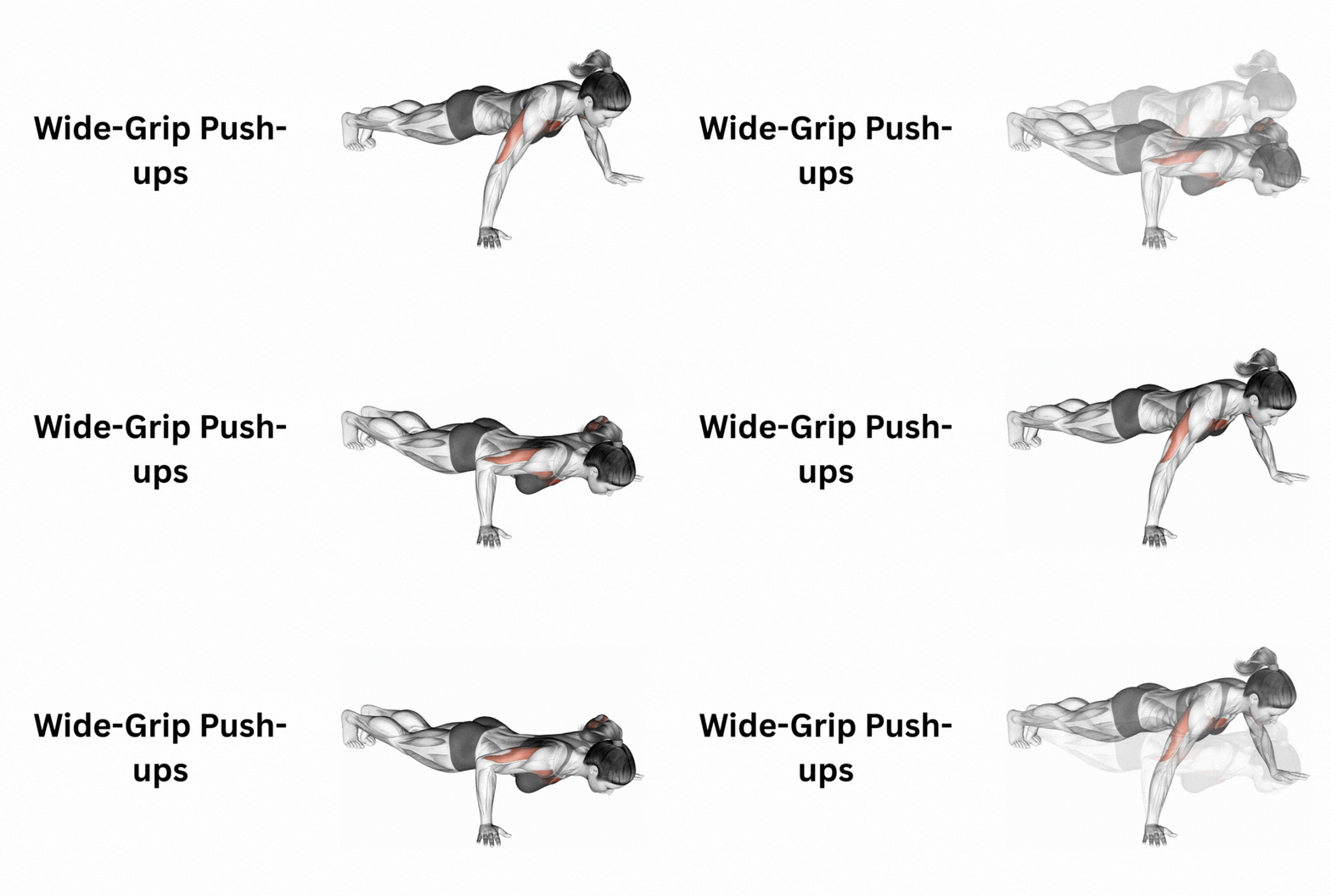
What Are Wide-Grip Push-Ups?
Wide-grip push-ups are a push-up variation performed with your hands positioned wider than shoulder-width apart. They train the chest, shoulders, and triceps while your core helps stabilize your body throughout the movement. The wider hand position changes the mechanics compared with a standard push-up, making it a useful variation for upper-body training.
In this guide, you’ll learn how to perform wide-grip push-ups with proper form, which muscles they work, their benefits and limitations, common mistakes to avoid, useful variations, and how to include them in a workout routine.
How to Do Wide-Grip Push-Ups: Proper Form
Equipment Needed
- Bodyweight only
- Exercise mat (optional, for comfort)
Step-by-Step Instructions
Setup
- Start in a high-plank position with your hands placed slightly wider than shoulder-width apart.
- Point your fingers forward or slightly outward, choosing the position that feels comfortable for your wrists and shoulders.
- Extend your legs behind you and position your feet at a comfortable width for stability.
- Brace your core and glutes and keep your body in a straight line from your head to your heels.
Execution
- Inhale as you slowly bend your elbows and lower your chest toward the floor.
- Keep your elbows controlled rather than deliberately forcing them straight out to the sides.
- Lower your body through a comfortable range of motion while maintaining alignment.
- Pause briefly at the bottom if you can maintain control without discomfort.
- Exhale as you press through your palms to return to the starting position.
- Straighten your arms without aggressively locking your elbows.
- Repeat for the desired number of repetitions while maintaining consistent form.
Form Cues
- Keep your head, shoulders, hips, and heels aligned throughout each repetition.
- Brace your core and glutes to prevent your hips from sagging or piking.
- Keep your neck neutral and look toward the floor slightly ahead of your hands.
- Use a hand width that allows you to control the movement without shoulder discomfort.
- Perform each repetition with a controlled tempo rather than rushing.
- Keep your elbows controlled throughout the movement instead of forcing them into a specific angle.
Repetitions and Sets
Your ideal repetitions and sets depend on your current strength, experience, and training goals.
- Beginners: 2–3 sets of 6–12 repetitions
- Intermediate: 3–4 sets of 8–15 repetitions
- Advanced: 3–4 sets of 12–20 repetitions
Choose a repetition range that allows you to maintain good technique. As the exercise becomes easier, gradually increase repetitions, sets, or tempo difficulty, or progress to a more challenging variation.
Additional Tips for Success
- Warm up with dynamic movements if you need additional preparation before your workout.
- Focus on controlled repetitions rather than sacrificing form to complete more reps.
- If standard wide-grip push-ups are too difficult, try an incline or modified variation.
- If the exercise causes shoulder or wrist discomfort, adjust your hand position or use an easier variation.
- Rest sufficiently between sets so you can maintain good technique.
- Track your repetitions and gradually increase the training challenge as your strength improves.
Wide-Grip Push-Ups: Muscles Worked
Chest (Pectoralis Major)
The pectoralis major is one of the main muscles involved in wide-grip push-ups. The wider hand position changes the movement mechanics and can emphasize the chest, although it does not necessarily produce greater chest activation than every other push-up variation.
Shoulders (Anterior Deltoids)
The front deltoids assist with pressing your body away from the floor and help control the movement, particularly during the lowering and pushing phases.
Triceps
The triceps extend the elbows as you press your body upward. Their contribution can vary depending on hand position and individual technique.
Serratus Anterior
The serratus anterior helps control the shoulder blades and contributes to shoulder stability throughout the push-up.
Core Muscles
The abdominals, obliques, and other trunk muscles work to keep your body aligned and stable while you perform each repetition.
Wide-Grip Push-Ups Benefits
Wide-grip push-ups can be a useful variation when you want to change your hand position and add variety to your upper-body training. Their main benefits include:
1. Trains the Chest and Upper Body
Wide-grip push-ups train the chest along with the shoulders and triceps, while the core helps stabilize your body. The wider hand position changes the mechanics of the exercise and can make it feel different from a standard push-up, but it should be viewed as a useful variation rather than automatically a better option for chest development.
2. Adds Variety to Push-Up Training
Changing your hand position can add variety to your push-up training and give you another way to challenge your upper body. Wide-grip push-ups can be rotated with standard push-ups, close-grip, diamond, and other push-up variations based on your goals and training preferences.
3. Requires Minimal Equipment
Wide-grip push-ups require no specialized equipment, making them convenient for home workouts, travel, or training sessions without access to a gym. All you need is enough stable floor space to perform the movement safely.
4. Builds Upper-Body Strength and Muscular Endurance
Performing controlled repetitions challenges the chest, shoulders, and triceps while requiring your core to stabilize your body. You can gradually increase the challenge by adding repetitions, sets, slower tempo work, or more demanding push-up variations as your strength improves.
5. Can Be Modified for Different Fitness Levels
Wide-grip push-ups can be modified to match your current strength level. Beginners can use an elevated surface or perform the movement from their knees, while more experienced trainees can increase the challenge through additional repetitions, slower tempo, or more demanding variations.
Wide-Grip Push-Ups Common Mistakes to Avoid
1. Placing Hands Too Wide
Placing your hands excessively wide can make the movement harder to control and may increase shoulder discomfort for some people. Choose a hand position that is wider than shoulder-width but still allows you to maintain good alignment, a controlled range of motion, and comfortable shoulder movement.
2. Sagging or Piking Hips
Allowing your hips to drop or rise disrupts proper alignment and decreases core engagement. Keep your body in a straight line from head to heels for optimal results.
3. Flaring Elbows
Excessively flaring the elbows straight out to the sides can place unnecessary stress on the shoulders. Keep your elbows at a controlled angle relative to your torso and avoid forcing them into a fixed position. Choose a hand width that allows you to perform each repetition comfortably while maintaining good shoulder control.
4. Incomplete Range of Motion
Using an unnecessarily shortened range of motion can reduce the training stimulus. Lower your body under control as far as you comfortably can while maintaining good alignment, then press back up without forcing your shoulders into an uncomfortable position. Your range of motion may vary depending on your mobility, hand position, and individual comfort.
Wide-Grip Push-Ups Variations
1. Kneeling Wide-Grip Push-ups
Perform the exercise with your knees on the floor instead of your feet to reduce the amount of bodyweight you need to press. This makes the variation useful for beginners who are still building the strength needed for standard wide-grip push-ups.
2. Incline Wide-Grip Push-ups
Place your hands on a stable elevated surface, such as a bench or sturdy step, while keeping your body aligned. The elevated position reduces the amount of bodyweight you need to press, making this a useful progression for beginners or anyone who finds standard wide-grip push-ups too difficult.
3. Decline Wide-Grip Push-ups
Place your feet on a stable elevated surface while keeping your hands on the floor in a wide-grip position. The elevated feet increase the relative loading on your upper body, making this variation more challenging than a standard wide-grip push-up. For another advanced chest-focused push-up variation, see our Decline Push-Ups guide.
4. Plyometric Wide-Grip Push-ups
Start in a wide-grip push-up position and lower your body under control. Press forcefully through your hands so your upper body leaves the floor, then land softly and immediately control the next repetition. This advanced variation adds an explosive element to the exercise and should only be used when you can perform standard wide-grip push-ups with consistent form.
5. Weighted Wide-Grip Push-ups
Place a suitable weight plate or other secure resistance on your upper back before performing wide-grip push-ups. Keep the added load stable, maintain a straight body position, and use controlled repetitions throughout the movement. This advanced variation increases resistance and should only be used when you can already perform standard wide-grip push-ups with solid form. For another push-up variation that places greater emphasis on the triceps, see our Diamond Push-Ups guide.
How to Add Wide-Grip Push-Ups to Your Workout
Sample Wide-Grip Push-Ups Workout
- Wide-Grip Push-Ups: 3 sets of 8–15 reps
- Incline Wide-Grip Push-Ups: 2 sets of 10–15 reps
- Triceps-focused push-up variation: 2 sets of 8–15 reps
- Plank: 2 sets of 30–45 seconds
Choose a repetition range that allows you to maintain controlled technique. As your strength improves, gradually add repetitions, sets, slower tempo work, or a more challenging variation rather than simply performing more repetitions with poor form.
You can also rotate wide-grip push-ups with other chest-focused variations, such as our Archer Push-Ups guide, to keep your bodyweight training varied.
Wide-Grip Push-Ups Safety Tips
Stop if you experience pain: Muscle fatigue and effort are normal, but sharp or persistent pain is a reason to stop and reassess your technique or exercise selection.
Use a comfortable hand position: Avoid placing your hands excessively wide if it causes shoulder discomfort or makes it difficult to control the movement.
Maintain proper alignment: Keep your head, shoulders, hips, and legs controlled throughout each repetition rather than allowing your hips to sag or rise excessively.
Control the range of motion: Lower only as far as you can while maintaining good technique and comfortable shoulder positioning.
Progress gradually: Increase repetitions, sets, or exercise difficulty gradually instead of adding too much volume at once.
Wide-Grip Push-Ups FAQs
What Muscles Do Wide-Grip Push-Ups Work?
Wide-grip push-ups primarily train the chest while also working the anterior deltoids and triceps. The serratus anterior and core muscles help stabilize your shoulders and body throughout the movement. The exact contribution of each muscle can vary depending on your hand position, range of motion, and technique.
Are Wide-Grip Push-Ups Good for Chest Development?
Wide-grip push-ups can be useful for training the chest, but they are not automatically superior to standard push-ups for chest development. Your results depend on factors such as range of motion, technique, training volume, and progressive overload. Use wide-grip push-ups as one variation within a balanced push-up and chest-training routine.
Can Beginners Do Wide-Grip Push-Ups?
Yes. Beginners can start with an easier variation, such as incline or modified wide-grip push-ups, and gradually progress toward the standard version. Focus on controlled repetitions and a comfortable hand position rather than trying to perform a high number of repetitions immediately.
How Often Should You Do Wide-Grip Push-Ups?
How often you should perform wide-grip push-ups depends on your overall training routine, volume, and recovery. For most people, 2–3 sessions per week can be a practical starting point, with enough recovery between sessions. Adjust the frequency based on how your chest, shoulders, and triceps respond.
What Should You Do If Wide-Grip Push-Ups Cause Shoulder Pain?
If wide-grip push-ups cause shoulder pain, stop the exercise and reassess your hand width, range of motion, and overall technique. You can try a narrower or elevated variation if it feels more comfortable, but do not push through sharp or persistent pain. If pain continues, consider getting advice from a qualified healthcare professional.
Can Wide-Grip Push-Ups Help With Muscle Building and Fat Loss?
Wide-grip push-ups can contribute to building and maintaining upper-body muscle and can increase energy expenditure as part of a workout. However, they do not specifically cause fat loss. Reducing body fat primarily requires a sustainable calorie deficit supported by your overall diet and physical activity.
Conclusion
Wide-grip push-ups are a useful bodyweight exercise for training the chest, shoulders, triceps, and core while adding variety to your upper-body workouts. Focus on a comfortable hand position, controlled repetitions, and consistent technique rather than simply making your grip as wide as possible.
Use wide-grip push-ups alongside other push-up variations and resistance exercises to build a balanced upper-body training routine. As your strength improves, gradually increase training volume or progress to more challenging variations while maintaining good form.