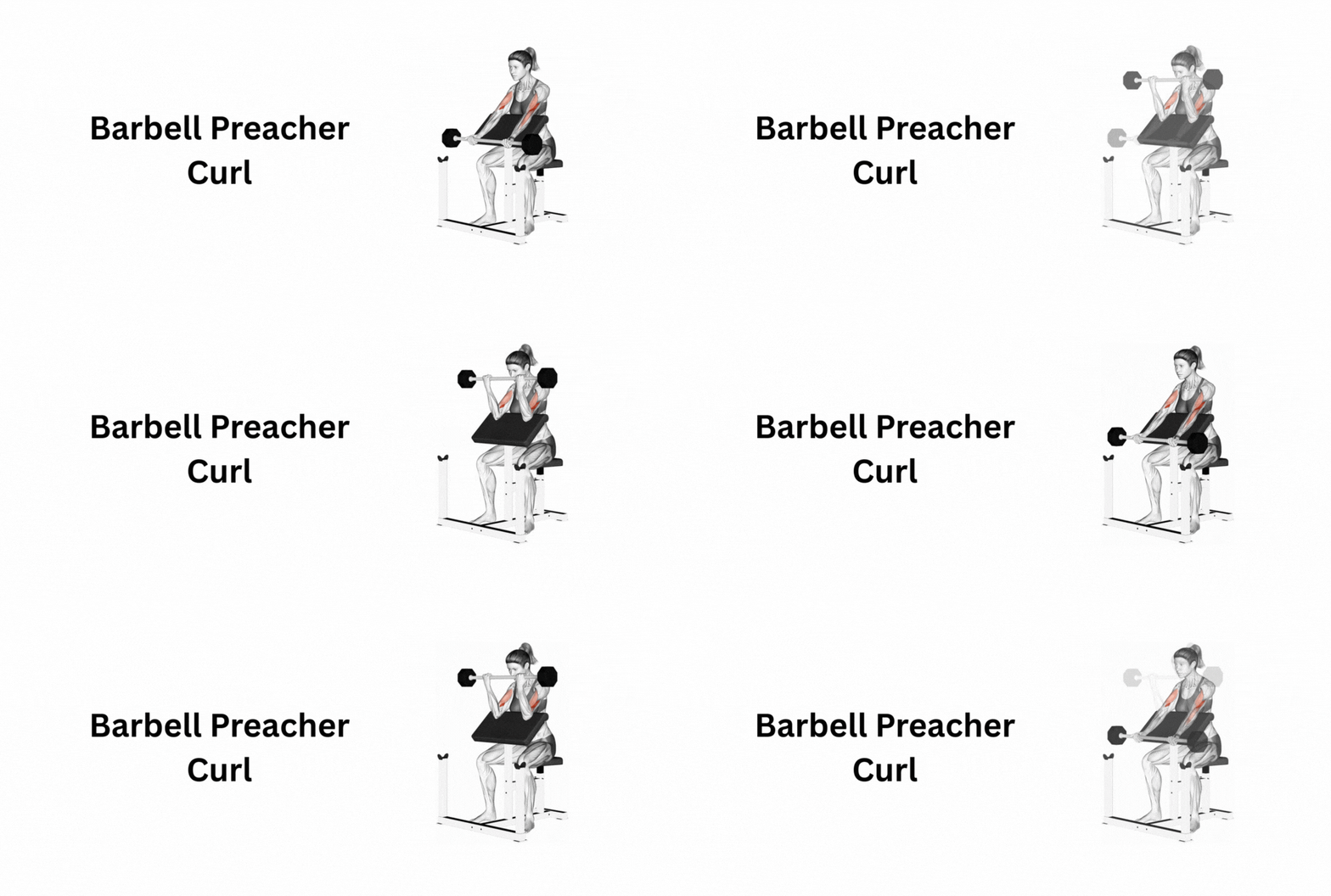
The barbell preacher curl is an arm isolation exercise that trains the biceps while your upper arms rest against an angled preacher bench. This supported position helps reduce body swinging and makes it easier to focus on controlled elbow movement.
Whether you are building a beginner arm routine or adding a more focused exercise to an established strength program, the barbell preacher curl can help develop biceps strength and muscle size. The key is choosing a manageable weight, using a comfortable range of motion, and controlling both the lifting and lowering phases.
This guide explains how to perform the barbell preacher curl, which muscles it works, how to program it, common mistakes to avoid, and how it compares with other curl variations.
Table of Contents
What Is the Barbell Preacher Curl?
The barbell preacher curl is a resistance exercise performed while seated at a preacher curl bench. You rest your upper arms on the angled pad and curl a barbell by bending your elbows.
Unlike a standing barbell curl, the preacher variation provides support for your upper arms. This makes it harder to use excessive torso movement to lift the weight and encourages a more deliberate repetition.
You can perform the exercise with a straight barbell or an EZ bar if the equipment and grip feel comfortable. Both options train the elbow flexors, although the wrist position differs.
Muscles Worked in the Barbell Preacher Curl
1. Biceps brachii
The biceps brachii is the primary muscle targeted by the barbell preacher curl. It contributes to elbow flexion, which brings the bar toward your shoulders, and forearm supination, which turns your palm upward.
The supported position helps you focus on the curling movement without relying heavily on torso momentum.
2. Brachialis
The brachialis lies beneath the biceps and contributes to elbow flexion. It assists throughout the curl and helps develop the overall thickness of the upper arm.
3. Brachioradialis and forearm muscles
The brachioradialis assists with elbow flexion, while the forearm muscles help maintain your grip and stabilize your wrists around the bar.
The precise contribution of each muscle varies with your grip, anatomy, technique, and the equipment used.
Benefits of the Barbell Preacher Curl
Focused biceps training
The preacher bench supports your upper arms, helping you concentrate on elbow flexion. This makes the exercise useful when you want a dedicated biceps movement in your arm workout.
Less body swinging
Because your upper arms rest on a pad, it is more difficult to use large movements of your torso to lift the bar. You still need to maintain control, but the setup encourages stricter repetitions.
Consistent movement
Using the same bench position, grip, and range of motion makes it easier to compare your sets over time. You can track repetitions and load without changing the exercise every workout.
Progressive resistance
A barbell allows you to increase the resistance as your strength improves. Progress should be gradual, and you should maintain the same controlled technique as the weight increases.
A useful addition to an arm routine
The barbell preacher curl complements other pulling exercises and curl variations. It does not need to replace standing curls, rows, or other movements; it can serve as a focused accessory exercise.
How to Do the Barbell Preacher Curl With Proper Form
Step 1: Adjust the preacher bench
Set the seat height so your upper arms can rest securely on the angled pad without your shoulders being forced into an uncomfortable position. Keep your feet flat on the floor for stability.
Load the bar with a light starting weight. If the bench has a bar rack, make sure the bar is secure before you begin.
Step 2: Grip the barbell
Sit down and grasp the bar with an underhand grip, meaning your palms face upward. Start with a comfortable grip around shoulder width.
Keep your wrists in a natural, stable position rather than allowing them to bend sharply backward or forward.
Step 3: Establish your starting position
Place your upper arms against the pad and keep your chest comfortably close to the bench. Maintain a stable torso and relaxed shoulders.
Extend your elbows to a comfortable starting position without forcing them into a hard lockout. The appropriate range depends on your mobility and whether the position causes discomfort.
Step 4: Curl the bar upward
Bend your elbows to lift the bar toward your shoulders. Move smoothly and keep your upper arms supported on the pad.
Avoid lifting your shoulders, jerking the bar, or rocking your torso to complete the repetition. Exhale naturally as you lift.
Step 5: Pause briefly at the top
At the top of the movement, squeeze your biceps briefly without forcing the bar into an uncomfortable position. Keep your wrists steady and avoid bringing your elbows off the pad to gain extra height.
Step 6: Lower the bar under control
Lower the bar slowly until your elbows return to the comfortable starting position. Resist the weight rather than letting it drop.
Maintain control throughout the descent. Do not force your elbows into full extension simply to achieve a deeper stretch.
Step 7: Repeat with consistent technique
Complete your planned repetitions while keeping your upper arms supported and your torso stable. End the set if you can no longer control the weight or maintain a comfortable range of motion.
Breathing and Tempo
Breathe out as you curl the bar upward and breathe in as you lower it. A natural breathing rhythm is more important than trying to synchronize every repetition perfectly.
Use a controlled pace instead of rushing. For example, you might take about one to two seconds to lift the bar and two to three seconds to lower it. These timings are practical guidelines, not mandatory rules.
Common Barbell Preacher Curl Mistakes
Using too much weight
Why it is a problem: Excessive resistance can cause you to jerk the bar, shorten the movement, or lose control during the lowering phase.
How to fix it: Reduce the load until you can complete every repetition smoothly with your upper arms supported.
Lifting the upper arms off the pad
Why it is a problem: Raising your elbows changes the movement and may allow the shoulders to contribute more than intended.
How to fix it: Keep your upper arms in contact with the pad and use a weight you can curl without shifting your position.
Forcing the bottom position
Why it is a problem: Forcing the elbows into full extension can be uncomfortable, particularly when the load is heavy or your joints are not accustomed to the position.
How to fix it: Lower only as far as you can comfortably control. Increase your range gradually if appropriate rather than forcing a stretch.
Bending the wrists excessively
Why it is a problem: Poor wrist positioning can make the grip uncomfortable and reduce your control of the bar.
How to fix it: Keep your wrists relatively straight and choose a grip that feels stable.
Dropping the weight too quickly
Why it is a problem: An uncontrolled descent makes the repetition less consistent and can expose your elbows and wrists to abrupt loading.
How to fix it: Lower the bar smoothly and keep the resistance under control throughout the movement.
Using inconsistent repetitions
Why it is a problem: Changing your range of motion from one repetition to the next makes it difficult to judge progress.
How to fix it: Use a repeatable, comfortable range and record your load and repetitions.
Barbell Preacher Curl Sets and Reps
The right number of sets and repetitions depends on your experience, training goals, and how much other arm work you perform.
Here is a practical starting point:
| Goal | Sets | Repetitions |
|---|---|---|
| General strength and technique | 2–3 | 8–12 |
| Muscle growth | 3–4 | 8–15 |
| Muscular endurance | 2–3 | 12–20 |
These are general programming ranges, not guaranteed optimal prescriptions for every person. Use a load that allows you to maintain control and finish most sets with approximately one to three good repetitions still possible.
Rest for about 60–120 seconds between sets, taking longer if you need it to recover and maintain good technique.
How often should you perform preacher curls?
For many people, one or two sessions per week is a reasonable starting point. Consider the total amount of biceps work in your program, including rows, pulldowns, and other curls.
Allow enough recovery between challenging sessions. More training is not automatically better if your performance is declining or your elbows remain uncomfortable.
How to progress
Start with a weight that lets you perform the lower end of your target repetition range with good form. Over subsequent sessions, gradually add repetitions while keeping your technique consistent.
Once you can reach the top of your chosen range across all sets, consider a small increase in weight. Return to the lower end of the range and build up again.
Do not increase the load if doing so makes you swing the bar, shorten the movement substantially, or lose control of the descent.
Barbell Preacher Curl Variations and Alternatives
EZ-bar preacher curl
An EZ bar places your hands at an angled grip. Some lifters find this position more comfortable for their wrists than a straight bar. Choose the grip that allows you to train without discomfort.
Dumbbell preacher curl
The dumbbell preacher curl lets you train one arm at a time or use two dumbbells, depending on your bench and setup. It can be useful when you want to observe side-to-side differences or prefer the freedom of a dumbbell grip.
Read our guide to the Dumbbell Preacher Curl for setup and technique details.
Single-arm dumbbell preacher curl
The single-arm variation trains each side separately and lets you choose a comfortable wrist position. It may be useful when one arm consistently performs differently from the other.
See our Single-Arm Dumbbell Preacher Curl guide for more information.
Standing barbell curl
The standing barbell curl is another option for training the biceps. It allows more freedom of movement but requires you to control your torso and avoid excessive swinging.
Our Barbell Curl guide explains its technique and programming.
Machine preacher curl
A preacher curl machine provides a guided movement and may be convenient in a commercial gym. Adjust the seat and handles to suit your body, and use a comfortable range of motion.
Barbell Preacher Curl vs. Standing Barbell Curl
Both exercises train the biceps through elbow flexion, but the setup changes how you perform the movement.
Barbell preacher curl: The upper arms rest on a pad, helping reduce body momentum and making the exercise useful for focused, strict curls.
Standing barbell curl: You stand upright and hold the bar in front of your body. This requires greater control of your torso and allows more freedom to adjust your movement.
Neither exercise is automatically better for everyone. You can include both in a well-planned program if they fit your goals, recovery, and available training time.
Safety Tips
- Start with a light load while learning the movement.
- Adjust the seat and pad so your upper arms are supported comfortably.
- Do not force your elbows into a locked position or push through sharp pain.
- Keep your wrists stable and avoid jerking the bar.
- Stop the set if you lose control or cannot maintain your normal technique.
- If you have an existing elbow, wrist, or shoulder problem, seek individualized guidance from a qualified healthcare professional before loading a painful movement.
Muscle fatigue and effort are normal during training, but sharp or persistent joint pain should not be ignored. You can reduce the weight, shorten the range to a comfortable position, or choose a different curl variation.
Frequently Asked Questions
Is the barbell preacher curl good for building biceps?
It can be an effective part of a biceps training program. The preacher bench supports the upper arms and encourages controlled elbow flexion. Results still depend on consistent training, appropriate resistance, recovery, and nutrition.
Which muscles does the barbell preacher curl work most?
The biceps brachii is the main target. The brachialis, brachioradialis, and forearm muscles also contribute to elbow flexion and grip stability.
Should beginners perform barbell preacher curls?
Beginners can learn the exercise by starting with a light weight, adjusting the bench correctly, and practicing controlled repetitions. A qualified trainer can help check setup and technique when needed.
Is a straight bar or EZ bar better for preacher curls?
Neither is universally better. A straight bar provides a straight-bar grip, while an EZ bar offers an angled hand position that some people find more comfortable. Choose the option that lets you maintain control without wrist discomfort.
How heavy should I lift?
Use a weight that allows you to complete your target repetitions without swinging, lifting your upper arms off the pad, or dropping the bar. Increase the load gradually as your control and strength improve.
Should I fully extend my elbows at the bottom?
You do not need to force a hard lockout. Lower the bar through the greatest range you can comfortably control. If the bottom position causes discomfort, stop earlier and consider adjusting the load or exercise.
Can barbell preacher curls cause elbow pain?
Any loaded exercise can aggravate symptoms if the resistance, technique, or range is unsuitable for you. Avoid forcing painful positions, reduce the load when needed, and seek professional advice if pain persists.
How many sets should I do for muscle growth?
Three or four sets of approximately 8–15 repetitions is a reasonable starting point for many lifters. Adjust the volume to your experience, overall training program, and recovery.
Can I perform preacher curls twice a week?
Yes, if your overall program and recovery support it. Account for other biceps exercises and pulling movements, and adjust the workload if performance declines or discomfort develops.
Key Takeaways
- The barbell preacher curl is an isolation exercise that primarily targets the biceps.
- A preacher bench supports the upper arms and helps limit excessive body swinging.
- Use a manageable load, stable wrists, and a controlled range of motion.
- Avoid forcing the bottom position, lifting your elbows off the pad, or dropping the weight.
- Start with a practical set-and-repetition range and progress gradually.
- Consider EZ-bar, dumbbell, machine, or standing curl variations when they better suit your comfort and equipment.
For technique reference, see the StrengthLog Barbell Preacher Curl guide and the NASM Barbell Biceps Curl exercise guide. Use exercise demonstrations as guidance, and adapt the movement to your own comfort and ability.