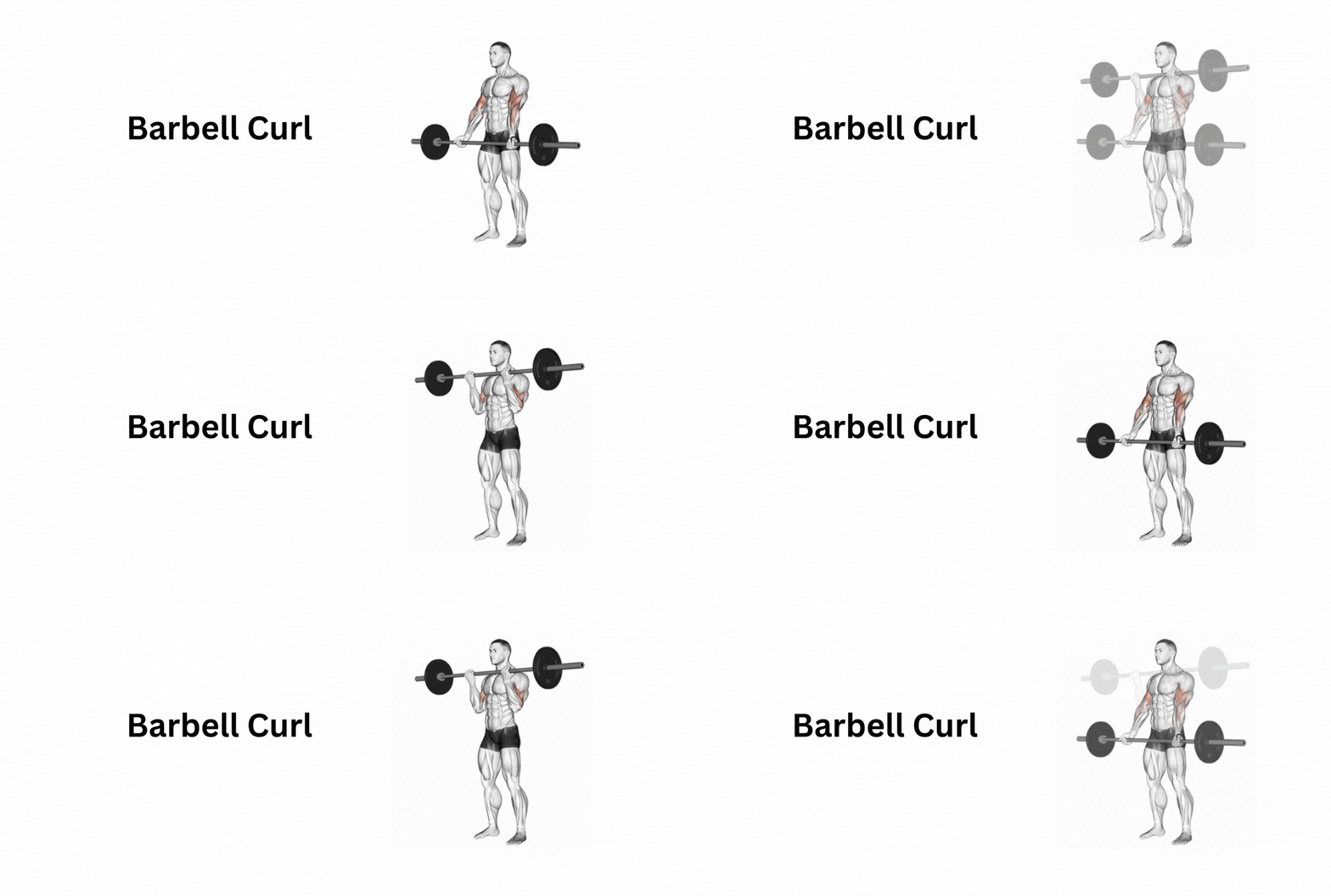
The barbell curl is a classic strength-training exercise for building your biceps and improving elbow-flexion strength. It allows you to train both arms together with a barbell, making it easy to track your weight and progress over time.
However, lifting heavier weights is not always better. Swinging your torso, allowing your elbows to move excessively, or rushing the lowering phase can make the movement less controlled.
This guide explains how to perform the barbell curl with proper form, which muscles it works, its main benefits, common mistakes, useful variations, and how to include it in your workout.
Table of Contents
What Is the Barbell Curl?
The barbell curl is an isolation exercise that trains the muscles responsible for bending your elbows. You stand upright, hold a barbell with your palms facing forward, and curl it toward your shoulders while keeping your upper arms relatively stationary.
Unlike compound exercises such as rows and pull-ups, the barbell curl focuses primarily on elbow flexion. Because both arms work together, it can be convenient for progressively increasing resistance while practicing a consistent movement.
You can perform curls with a straight barbell or choose an EZ-bar variation if its angled grip feels more comfortable for your wrists.
For additional technique guidance, consult the NASM Barbell Bicep Curl exercise guide. For evidence-informed guidance on choosing biceps exercises, read the ACE overview of evidence-based biceps exercises.
Muscles Worked by the Barbell Curl
The barbell curl primarily trains the biceps, with assistance from other elbow-flexor and forearm muscles.
1. Biceps Brachii
The biceps brachii is the main target. It runs along the front of the upper arm and helps bend the elbow and turn the palm upward. During a conventional barbell curl, the biceps produces much of the force needed to raise the bar.
2. Brachialis
The brachialis lies beneath the biceps and contributes to elbow flexion. It assists the movement regardless of whether the exercise is performed with a straight bar or another suitable grip.
3. Brachioradialis and Forearm Muscles
The brachioradialis helps bend the elbow, while the forearm muscles support grip and wrist control. These muscles help you hold the bar securely throughout the set.
4. Stabilizing Muscles
Your core and upper-body muscles help maintain an upright position. They should stabilize your body rather than generate excessive momentum to lift the weight.
Benefits of the Barbell Curl
1. Builds Biceps Strength
Barbell curls directly train elbow flexion against resistance. With consistent training and gradual progression, they can help improve biceps strength.
2. Supports Upper-Arm Muscle Growth
The exercise provides a straightforward way to train the biceps with measurable resistance. Muscle growth depends on consistent training, suitable effort, sufficient recovery, and appropriate nutrition, rather than one exercise alone.
3. Makes Progress Easy to Track
Because both arms use the same bar, you can record the weight, sets, and repetitions and work toward gradual improvements while maintaining good technique.
4. Requires Minimal Equipment
A barbell and suitable weight plates are enough to perform the standard version. This makes the exercise practical for many gym-based strength programs.
5. Fits Different Training Goals
You can adjust the load, repetition range, and tempo to suit your training plan. Use controlled, heavier repetitions when strength is the priority, or moderate loads and additional repetitions when training for muscle growth.
How to Do the Barbell Curl With Proper Form
Follow these steps to perform a standard standing barbell curl.
Step 1: Set Up the Bar
Stand with your feet approximately hip-width apart. Hold the barbell with an underhand grip, with your palms facing forward and your hands positioned around shoulder width.
Choose a weight you can control without swinging your body.
Step 2: Establish Your Starting Position
Hold the bar in front of your thighs with your arms extended comfortably. Keep your torso upright, shoulders relaxed, and elbows close to your sides.
Brace your core so your body remains stable during the movement.
Step 3: Curl the Bar Upward
Bend your elbows to raise the bar toward your shoulders. Focus on moving your forearms while keeping your upper arms relatively still.
Exhale as you lift, and avoid leaning backward to help the weight move.
Step 4: Pause at the Top
When the bar reaches a comfortable position near your upper torso, briefly contract your biceps. Do not force the bar higher by rolling your shoulders forward or moving your elbows excessively.
Step 5: Lower the Bar Under Control
Lower the bar slowly toward your thighs. Keep your torso steady and resist the urge to let the weight drop.
Use a comfortable range of motion that allows you to maintain control at the bottom of each repetition.
Step 6: Repeat
Complete your planned repetitions with consistent technique. If you need to swing your body or cannot control the descent, reduce the weight.
Best Barbell Curl Form Tips
- Keep your elbows close: Let your elbows remain near your sides rather than moving dramatically forward or backward.
- Avoid body momentum: Your torso should stay stable throughout the repetition.
- Use a comfortable grip: Choose a grip width that allows you to maintain control without wrist discomfort.
- Control the lowering phase: Lowering the bar smoothly helps you maintain control of the resistance.
- Use a suitable weight: The correct load is one you can lift without sacrificing your form.
- Keep your wrists comfortable: Avoid forcing your wrists into an awkward position to hold the bar.
Common Barbell Curl Mistakes and How to Fix Them
| Mistake | Why It Matters | How to Fix It |
|---|---|---|
| Swinging the torso | Uses momentum instead of controlled elbow flexion | Reduce the weight and keep your torso steady |
| Moving the elbows excessively | Changes the movement and can involve more shoulder motion | Keep the upper arms relatively stable |
| Dropping the bar quickly | Reduces control during the lowering phase | Lower the weight smoothly |
| Using too much weight | Makes it harder to complete controlled repetitions | Select a load you can manage with good form |
| Cutting the range of motion unnecessarily | Limits the movement you practice | Use the largest comfortable range you can control |
| Bending the wrists awkwardly | May make the grip uncomfortable | Keep your wrists in a comfortable, stable position |
Barbell Curl Variations
Different curl variations can help you adjust the grip, movement, or level of challenge. Choose one that fits your goals and feels comfortable.
1. Strict Barbell Curl
Perform the standard curl with a stable torso and controlled repetitions. This is a useful option for learning technique and building a consistent foundation.
2. EZ-Bar Curl
An EZ-bar uses angled hand positions that some lifters find more comfortable than a straight bar. It still trains the elbow flexors and can be a practical alternative if a straight bar irritates your wrists.
3. Paused Barbell Curl
Pause briefly at a challenging point or near the top of the movement without letting your posture change. This can help you practice control and avoid relying on momentum.
4. Tempo Barbell Curl
Use a deliberately slow lowering phase while keeping the lifting phase controlled. Choose a weight that allows you to maintain this tempo without losing form.
5. Drag Curl
In a drag curl, the bar stays close to the body while the elbows move somewhat backward as the bar rises. It changes the movement compared with a conventional curl, so start light while learning the technique.
6. Cheat Curl
A cheat curl uses some body momentum to help move a heavier load. It is not the best starting point for beginners and can be difficult to control. Most lifters should first establish consistent strict curls before considering this advanced variation.
If you want to compare other biceps exercises, explore the EZ-Bar Curl, Barbell Preacher Curl, and Dumbbell Curl.
Barbell Curl vs. Dumbbell Curl
Both exercises train the biceps, but they differ in how the resistance is held and how each arm moves.
| Feature | Barbell Curl | Dumbbell Curl |
|---|---|---|
| Arm movement | Both arms work on the same bar | Each arm holds its own weight |
| Loading | Convenient for adding weight to a shared bar | Each hand can use an independent load |
| Grip adjustment | Limited by the bar and hand position | Hands can rotate or use different positions |
| Coordination | Shared bar path | Each arm must control its own weight |
| Best use | Consistent two-arm curling and load tracking | Independent arm movement and grip flexibility |
Neither option is universally better. Choose based on your comfort, equipment, training goals, and ability to maintain controlled repetitions.
How to Program Barbell Curls
Your sets and repetitions should fit your overall training plan. The following ranges are practical starting points rather than strict requirements.
For General Strength and Muscle Growth
Try 3 sets of 6–12 controlled repetitions. Choose a weight that allows you to finish each set without swinging the bar or losing control.
For Higher-Repetition Training
Try 2–3 sets of 12–15 repetitions with a lighter load. Maintain consistent technique and stop if fatigue causes your form to deteriorate.
Rest Between Sets
Rest long enough to recover and perform the next set with good technique. Many people start with roughly 1–2 minutes and adjust according to the load and their recovery.
Where to Place Barbell Curls
Barbell curls often fit after larger pulling exercises in an upper-body or back workout. This allows you to complete demanding compound movements before directly training the biceps.
You can pair them with other exercises, but account for the biceps work already performed during rows and pulldowns. Increase training volume gradually rather than adding more sets every session.
Barbell Curl Safety Tips
- Warm up with light movements and a few easy sets before using challenging weights.
- Use collars or another suitable method to secure weight plates when appropriate.
- Keep the bar under control instead of bouncing it at the bottom.
- Stop if you experience sharp or unusual pain in your wrists, elbows, shoulders, or back.
- If a straight bar feels uncomfortable, try a lighter load or an EZ-bar variation.
- If you have an existing injury or are unsure whether the exercise is appropriate for you, seek guidance from a qualified fitness or healthcare professional.
Good technique does not eliminate every risk, but selecting a manageable load and maintaining control can help you train more sensibly.
Frequently Asked Questions
Is the Barbell Curl Good for Beginners?
Yes. It can be a useful beginner exercise when performed with a manageable weight and controlled technique. Start light and focus on learning the movement before increasing resistance.
Which Muscles Do Barbell Curls Work?
Barbell curls primarily target the biceps brachii. The brachialis, brachioradialis, and forearm muscles also contribute to elbow flexion and grip.
Should I Use a Straight Bar or an EZ-Bar?
Use the option that allows you to curl comfortably with good control. A straight bar uses a palms-forward grip, while an EZ-bar provides angled hand positions that some lifters prefer.
How Many Sets and Reps Should I Do?
A practical starting point is 3 sets of 6–12 repetitions. Adjust the load and volume to your experience, training goals, and recovery.
How Often Should I Train Barbell Curls?
Frequency depends on your overall program and how much pulling and direct arm work you already do. One or two weekly sessions may fit many routines, provided you recover adequately between challenging workouts.
Are Barbell Curls Better Than Dumbbell Curls?
Not for everyone. Barbell curls make it easy to train both arms together, while dumbbells allow each arm to move independently. Both can be useful in a balanced program.
Can Barbell Curls Cause Elbow Pain?
Poor load selection, uncomfortable positioning, or excessive training may contribute to discomfort. Reduce or stop the movement if pain occurs, and seek professional guidance if symptoms persist.
Key Takeaways
The barbell curl is a practical isolation exercise for training the biceps and other elbow-flexor muscles. Its main advantages are straightforward setup, convenient load progression, and easy integration into an upper-body workout.
Focus on stable posture, controlled elbow flexion, and a smooth lowering phase. Start with a manageable weight, choose a comfortable grip, and progress gradually. Consistent technique and a balanced training plan matter more than lifting the heaviest bar possible.