Table of Contents
Instruction
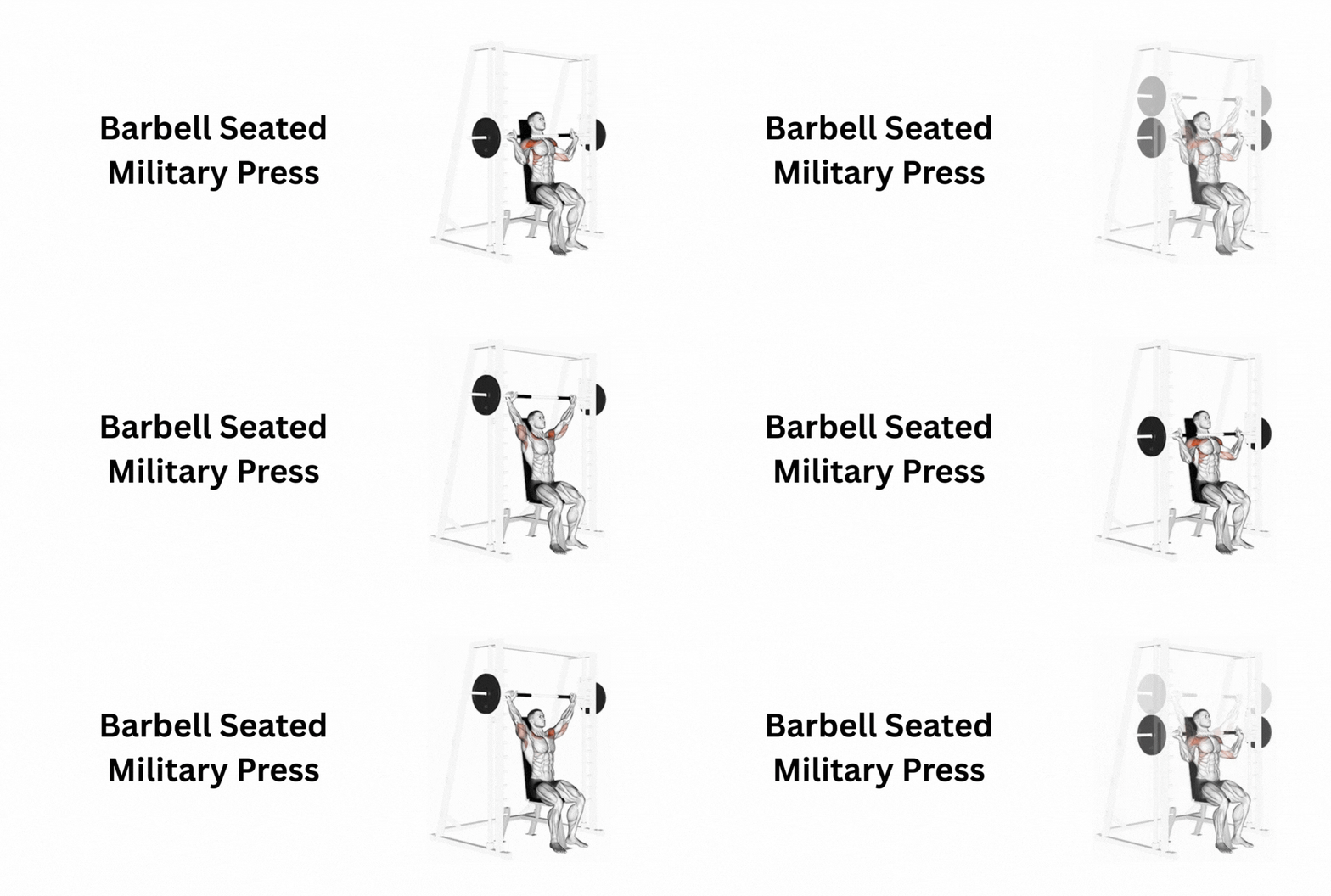
The Barbell Seated Military Press is a fundamental shoulder exercise that targets the deltoids, triceps, and upper chest while minimizing stress on the lower back. By performing the press seated with proper back support, lifters can maintain strict form and controlled movement, making it highly effective for building shoulder strength, size, and overall upper-body pressing power. Perfect for both beginners and advanced lifters, it’s a go-to exercise for hypertrophy-focused workouts and push-day routines.
What is the Barbell Seated Military Press?
The Barbell Seated Military Press is a vertical pressing exercise performed while seated, allowing for strict form and targeted deltoid activation. Unlike the standing military press, the seated version reduces lower back involvement, making it safer for lifters who want to focus on shoulder strength without compromising spinal stability.
Seated vs Standing Military Press
While both variations build strong shoulders and triceps, the seated press emphasizes controlled movement and isolates the delts, whereas the standing press engages the core and stabilizing muscles more intensely. For hypertrophy-focused training, the seated variation is often preferred, but for overall functional strength, alternating between both can maximize results.
Benefits of the Seated Military Press
The Barbell Seated Military Press offers multiple advantages for shoulder and upper-body development:
- Isolates anterior and medial delts – The seated position ensures the deltoids take the majority of the load, promoting hypertrophy and definition.
- Reduces lower-back strain – By sitting with back support, spinal stress is minimized compared to the standing variation.
- Improves shoulder stability and posture – Strengthening the delts and surrounding stabilizers helps maintain proper alignment during lifting and daily activities.
- Enhances triceps lockout strength – The pressing motion trains the triceps effectively, improving performance in other pressing exercises.
- Transfers to other pressing exercises – Gains in shoulder and triceps strength directly benefit lifts like the bench press and push press.
This combination of deltoid isolation, reduced injury risk, and functional strength transfer makes the seated military press a staple for hypertrophy and upper-body power.
Muscles Worked in the Barbell Seated Military Press
The Barbell Seated Military Press targets multiple upper-body muscles, making it an effective exercise for shoulder development and pressing strength:
| Muscle Group | Role |
|---|---|
| Anterior Deltoid | Primary mover, driving the press upward |
| Medial Deltoid | Secondary support, adding width to shoulders |
| Triceps | Assists in lockout, extending the elbows |
| Upper Pectorals | Provides stabilization during pressing |
| Traps | Supports scapular movement and stability |
| Core | Maintains posture and spinal alignment |
By engaging both primary and secondary muscles, this exercise not only enhances deltoid hypertrophy but also improves functional upper-body strength and stability.
How to Perform the Barbell Seated Military Press
Mastering the Barbell Seated Military Press requires proper setup, grip, and controlled movement to maximize shoulder activation while minimizing injury risk. Follow these steps for optimal form:
Step 1: Bench Setup
- Use a bench with back support to reduce lower-back strain.
- Adjust the bench height so the bar starts at upper chest level, ensuring a comfortable pressing path.
Step 2: Grip & Start Position
- Take a pronated grip slightly wider than shoulder width.
- Keep your core tight and glutes pressed against the bench for stability.
- Position the bar over your chest while maintaining a neutral spine.
Step 3: Pressing Motion
- Press the bar overhead in a straight vertical line, avoiding forward or backward drift.
- Slightly move your head forward to clear the bar path.
- Keep elbows directly under the wrists to protect shoulder joints.
Step 4: Lockout
- Fully extend your elbows without leaning backward.
- Pause briefly at the top to maintain tension on the shoulders and triceps.
Step 5: Lowering Phase
- Slowly lower the bar in a controlled eccentric motion (3-4 seconds).
- Maintain tension on the delts throughout, avoiding dropping the weight too quickly.
Video
Best Form Cues for the Barbell Seated Military Press
Maintaining proper form is essential for maximizing shoulder activation and reducing injury risk during the Barbell Seated Military Press. Keep these cues in mind:
- Back against bench at all times – Ensures lower-back safety and stability.
- Core braced, glutes tight – Provides a solid foundation for pressing and improves overall control.
- Elbows under wrists, avoid flaring – Protects shoulder joints and optimizes force transfer.
- Lift with shoulders, not traps – Focuses on deltoid engagement for hypertrophy.
- Maintain strict vertical bar path – Promotes proper biomechanics and prevents strain.
Following these form cues consistently will enhance your shoulder growth, pressing power, and overall safety during seated military press workouts.
Common Mistakes & How to Fix Them in the Barbell Seated Military Press
Even experienced lifters can fall into form errors that reduce effectiveness or increase injury risk. Avoid these common mistakes:
| Mistake | Problem | Fix |
|---|---|---|
| Arching back | Puts stress on the lower spine | Keep your back pressed against the bench throughout the press. |
| Elbows flared | Causes shoulder strain | Keep elbows slightly forward to protect joints and optimize deltoid activation. |
| Using momentum | Reduces deltoid engagement | Control the tempo and lower the weight if necessary to maintain strict form. |
| Too heavy | Leads to poor form | Focus on strict form with a moderate load rather than maximal weight. |
Correcting these errors ensures the Barbell Seated Military Press effectively targets the delts, triceps, and upper chest while minimizing injury risk.
Variations & Alternatives to the Barbell Seated Military Press
To keep your shoulder training fresh and target the delts from different angles, consider these variations and alternatives:
Variations
- Seated Dumbbell Press – Allows for a greater range of motion and independent arm movement.
- Arnold Press (Seated) – Combines rotation with pressing to engage all heads of the deltoids.
- Machine Shoulder Press – Provides stability and consistent resistance, ideal for beginners or hypertrophy-focused sets.
Alternatives
- Standing Military Press – Engages core stabilizers and improves functional strength.
- Landmine Press – Reduces shoulder stress while allowing for a natural pressing arc.
- Cable Overhead Press – Maintains constant tension on the delts for controlled hypertrophy.
Incorporating these variations and alternatives into your workout plan can enhance shoulder growth, improve pressing strength, and prevent training plateaus.
Programming the Barbell Seated Military Press
Proper programming ensures that the Barbell Seated Military Press effectively builds strength, size, and endurance. Here’s how to structure your sets, reps, and frequency:
Rep Ranges
- Strength: 3-6 reps per set, using heavier loads to maximize power.
- Hypertrophy: 6-12 reps per set, focusing on controlled movement and muscle growth.
- Endurance: 12-20 reps per set, emphasizing stamina and deltoid conditioning.
Frequency
- Perform the seated military press 1-2 times per week.
- Best placed after compound pressing exercises on an upper-body day to avoid pre-fatiguing the delts.
Sample 4-Week Plan
- Week 1: 3×8 @ moderate weight
- Week 2: 3×10 @ moderate weight
- Week 3: 4×6 @ heavier weight
- Week 4: 4×8 (progressive overload to increase strength and size)
Following a structured programming approach helps maximize shoulder growth, improve pressing performance, and prevent training plateaus.
Safety Tips & Who Should Avoid the Barbell Seated Military Press
While the Barbell Seated Military Press is highly effective for shoulder development, it’s important to prioritize safety to prevent injury:
- Avoid if you have shoulder impingement or mobility issues – This exercise can aggravate pre-existing conditions.
- Always warm up shoulders and rotator cuff – Dynamic warm-ups and activation exercises reduce injury risk.
- Start with light weight until form is mastered – Proper technique is more important than heavy loading.
- Stop immediately if pain occurs – Discomfort in the elbows or shoulders may indicate improper form or excessive load.
By following these safety guidelines, lifters can perform the seated military press effectively while minimizing risk and maximizing gains.
FAQs: Barbell Seated Military Press
Seated vs Standing Military Press Which is Better?
The seated military press isolates the deltoids and reduces lower-back strain, making it ideal for hypertrophy and strict form. The standing version engages the core more and improves functional strength. Both have benefits, and alternating them can maximize results.
What Grip Width Should I Use?
Use a pronated grip slightly wider than shoulder width. This positioning protects the shoulders, optimizes deltoid engagement, and allows a safe pressing path.
How Heavy Should Beginners Go?
Start with a light to moderate weight that allows strict form for 8-12 reps. Focus on mastering technique before increasing load.
Should I Use Barbell or Dumbbells?
A barbell allows for heavier lifting and even load distribution, while dumbbells provide a greater range of motion and independent arm movement. Both are effective for shoulder development.
How Often Can I Train Shoulders with This Exercise?
Perform the seated press 1-2 times per week, ideally after other compound pressing movements to avoid pre-fatiguing the delts.
Can People with Lower Back Issues Safely Do Seated Press?
Yes. The seated position with back support reduces lower-back involvement, making it safer than the standing press for individuals with lumbar concerns.
Is the Seated Press Effective for Hypertrophy?
Absolutely. The controlled movement and strict form focus tension on the anterior and medial delts, promoting muscle growth and shoulder width.
Key Takeaways
- The Barbell Seated Military Press effectively isolates the delts while reducing lower-back strain, making it safer than the standing variation.
- Prioritize strict form, controlled tempo, and moderate weight to maximize shoulder activation and minimize injury risk.
- Ideal for hypertrophy, improving shoulder stability, and enhancing pressing strength, making it a staple for upper-body workouts.
See Other Exercises: Barbell Military Press, Barbell Incline Front Raise, Barbell Behind Neck Press