Table of Contents
The dumbbell shoulder press is a compound upper-body exercise that primarily trains the deltoids, with the triceps assisting the pressing movement. Using dumbbells allows each arm to move independently and offers flexibility in grip and movement path compared with a barbell. The exercise can be performed seated or standing, depending on your training goals and comfort. In this guide, you’ll learn the proper technique, muscles worked, benefits, variations, common mistakes, safety considerations, and general training recommendations.
Dumbbell Shoulder Press Step-by-Step Guide
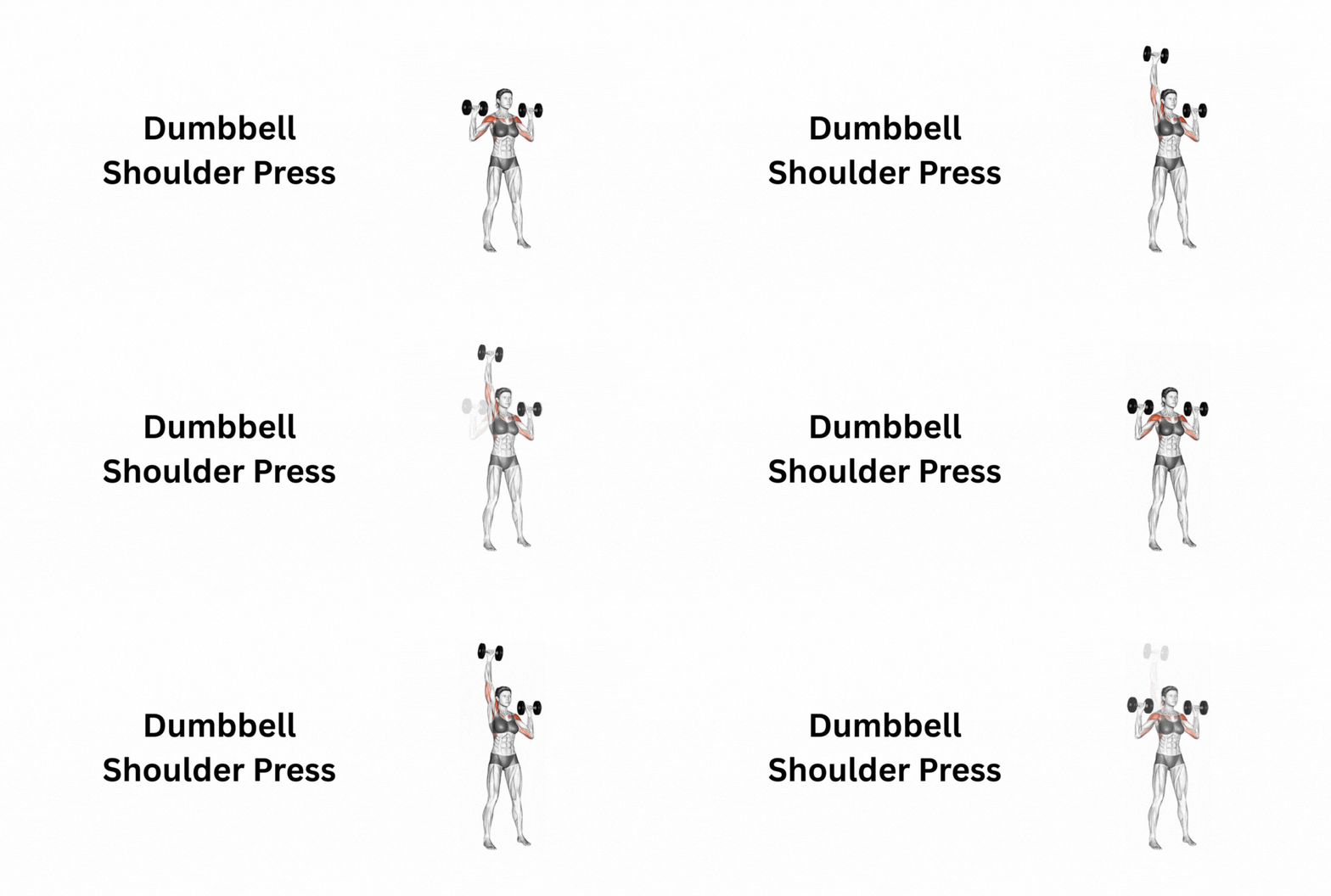
Follow these steps to perform the Dumbbell Shoulder Press safely and effectively:
Equipment Needed:
A pair of dumbbells and, for the seated variation, a stable weight bench with back support. Choose a weight that allows you to maintain controlled movement and proper form throughout the set.
1. Setup
Sit on a bench with back support or stand with your feet about shoulder-width apart. Hold a dumbbell in each hand and bring the dumbbells to shoulder height.
Keep your palms facing forward or use a neutral grip if that feels more comfortable. Position your elbows slightly in front of your torso rather than forcing them directly out to the sides. Keep your wrists straight and stacked over your elbows.
If performing the seated variation, keep your back and hips supported by the bench and your feet firmly planted on the floor. For the standing variation, keep your torso upright and maintain a stable stance.
Before starting the press, brace your core and keep your ribs controlled so you do not compensate by excessively arching your lower back.
Key setup cues:
- Dumbbells at shoulder height
- Wrists stacked over elbows
- Elbows slightly in front of the torso
- Feet firmly planted
- Torso stable and upright
- Core braced before pressing
This keeps the setup clear without adding unnecessary claims, and it aligns with the form guidance from current exercise references.
2. Engage Core
Before pressing, brace your core and keep your ribs stacked over your hips. Take a controlled breath and tighten your abdominal muscles as if preparing for a light impact to the stomach.
Maintain this brace throughout the movement. Keep your torso stable and avoid leaning backward or excessively arching your lower back to help move the dumbbells.
For the standing variation, keep your feet firmly planted and maintain a stable stance. For the seated variation, keep your back supported by the bench while maintaining tension through your core.
Key cues:
- Brace your abdominal muscles before the first rep.
- Keep your ribs controlled rather than allowing them to flare upward.
- Maintain a neutral, stable torso.
- Avoid using your lower back to create momentum.
- Re-brace as needed between repetitions.
Keeping the torso stable helps you maintain consistent pressing mechanics and prevents the movement from turning into a back-assisted press. Current form references similarly emphasize core bracing, controlled ribs, and avoiding excessive backward lean.
3. Press
From the shoulder-height starting position, press both dumbbells upward in a controlled motion. As the dumbbells rise, allow them to travel slightly inward toward each other while keeping your wrists stacked over your elbows.
Keep your torso stable and maintain the core brace established during setup. Do not lean backward or use momentum from your legs to drive the dumbbells upward.
Continue pressing until your arms are close to fully extended overhead. Keep the movement controlled and avoid forcing the dumbbells to touch at the top.
Key cues:
- Press the dumbbells up and slightly inward.
- Keep your wrists straight and stacked over your elbows.
- Keep your core braced and torso stable.
- Avoid leaning backward to move the weight.
- Do not use leg drive unless intentionally performing a push-press variation.
- Keep both arms moving under control.
The exact path can vary slightly between individuals because dumbbells allow each arm to find its own natural path; forcing the dumbbells into a rigid path is unnecessary.
4. Lockout
At the top of the movement, continue pressing until your arms are fully or nearly fully extended overhead. Position the dumbbells over your shoulders rather than allowing them to drift forward.
Keep your wrists straight and your elbows aligned with your wrists. Maintain your core brace and a stable torso throughout the top position.
Do not forcefully hyperextend your elbows or slam the dumbbells together. Finish the repetition in a controlled position before beginning the descent.
Key cues:
- Finish with the dumbbells stacked over your shoulders.
- Keep your wrists aligned with your forearms.
- Extend the elbows without forcing them beyond their natural range.
- Keep your core and torso stable.
- Do not bring the dumbbells together aggressively at the top.
The exact top position can vary slightly based on individual anatomy and mobility, so the goal is a stable, controlled overhead position rather than forcing an identical position for everyone.
5. Lower
After reaching the top position, lower both dumbbells back toward shoulder height in a slow and controlled manner.
Keep your wrists aligned over your elbows and maintain the same general elbow position used during the press. Keep your core braced and your torso stable throughout the descent.
Lower the dumbbells until they return to a comfortable shoulder-height position that allows you to maintain control and good form. Avoid dropping the weights quickly or allowing your elbows to collapse inward.
The lowering phase should remain controlled rather than passive. Once the dumbbells reach the starting position, you are ready to begin the next repetition.
Key cues:
- Lower the dumbbells under control.
- Keep your wrists aligned with your forearms.
- Maintain a stable torso and braced core.
- Keep the movement smooth and controlled.
- Return to a consistent shoulder-height position.
- Avoid dropping or bouncing the weights at the bottom.
6. Breathing
Use controlled breathing throughout each repetition rather than holding your breath unnecessarily.
Take a controlled breath in before starting the press and lightly brace your core. As you press the dumbbells overhead, gradually exhale while maintaining a stable torso.
At the top of the movement, take another controlled breath in or begin inhaling as you lower the dumbbells back toward your shoulders. Maintain control throughout the descent and prepare for the next repetition.
Breathing pattern:
- Before pressing: Inhale and brace your core.
- During the press: Exhale in a controlled manner.
- At the top: Inhale or begin preparing your next breath.
- During the lowering phase: Continue inhaling as you return the dumbbells to shoulder height.
- Between repetitions: Reset your brace and breathing as needed.
For heavier sets, experienced lifters may use more deliberate bracing and breathing strategies, but beginners should prioritize controlled breathing and consistent exercise technique.
Video
What is the Dumbbell Shoulder Press?
The dumbbell shoulder press is a compound shoulder exercise that primarily targets the deltoids, with the triceps assisting the pressing movement. Using dumbbells allows each arm to move independently and provides flexibility in the movement path and grip. This can help you notice differences in strength or control between sides, but it does not automatically correct muscle imbalances. The exercise can be performed seated or standing and can be incorporated into training programs focused on shoulder strength and muscle development.
Seated vs. Standing Variations
- Seated Dumbbell Shoulder Press: Offers greater support for the lower back, isolates the shoulders more effectively, and is ideal for focusing purely on deltoid hypertrophy.
- Standing Dumbbell Shoulder Press: Requires core engagement for stability, offering a full-body challenge while still building strong shoulders.
Benefits Over the Barbell Press
- Flexible movement path: Dumbbells allow each arm to follow a comfortable path rather than requiring both hands to stay on a fixed bar.
- Independent arm movement: Each arm controls its own dumbbell, which can help you notice differences in control or strength between sides.
- Grip flexibility: You can adjust your hand position, including using a neutral grip with palms facing each other, if it feels more comfortable.
- Seated or standing options: You can choose a position based on your stability, equipment and training goals.
Best Form Cues
Use these cues throughout each repetition to keep the dumbbell shoulder press controlled and consistent:
- Keep your torso stable: Maintain an upright, controlled position without excessive backward lean.
- Brace your core: Keep your abdominal muscles engaged throughout the movement.
- Keep your wrists aligned: Maintain straight wrists with the dumbbells controlled over your forearms.
- Press smoothly: Drive the dumbbells upward without using momentum from your legs or torso.
- Press up and slightly inward: Allow the dumbbells to follow a natural path as they move overhead.
- Keep your elbows controlled: Avoid forcing your elbows into an excessively wide position.
- Use a controlled range of motion: Lower the dumbbells under control and return to a consistent starting position.
- Keep both sides working evenly: Avoid allowing one dumbbell to rise or fall significantly ahead of the other.
- Use a weight you can control: If you need to lean back, shorten the range of motion, or swing the weights, reduce the load.
- Stop if you experience pain: Normal muscular effort is different from sharp or persistent joint pain. If the movement causes pain, stop and reassess your technique or seek appropriate professional guidance.
- The goal is not simply to move the dumbbells from your shoulders to overhead. Each repetition should be controlled, stable, and repeatable. If your technique changes significantly as the set progresses, reduce the weight or stop the set.
Muscles Worked
The Dumbbell Shoulder Press is a compound exercise that engages multiple muscle groups, making it highly effective for shoulder development and upper-body strength.
Primary Muscles
- Anterior Deltoids – front portion of the shoulder, responsible for lifting the arms forward and overhead.
- Medial Deltoids – middle portion of the shoulder, contributes to arm abduction and rounded shoulder appearance.
Secondary Muscles
- Triceps Brachii – assists in extending the elbows during the pressing motion.
- Upper Chest (Clavicular Portion of Pectoralis Major) – slightly engaged, especially during the initial push phase.
- Trapezius (Upper Fibers) – helps stabilize the shoulder blades and assists in overhead movement.
Stabilizer Muscles
- Core (Abdominals & Obliques) – maintains posture and prevents excessive arching of the lower back.
- Rotator Cuff Muscles – help stabilize the shoulder joint and control the position of the upper arm during the pressing movement.
Key Benefits of the Dumbbell Shoulder Press
The dumbbell shoulder press is a compound upper-body exercise that can be used to develop pressing strength and build the muscles involved in overhead movement.
1. Builds Shoulder Strength
The exercise places substantial demand on the deltoids while pressing the dumbbells overhead. Regularly training the movement can help improve your ability to perform overhead pressing tasks.
2. Develops the Deltoids
The anterior and lateral deltoids contribute significantly to the dumbbell shoulder press. The anterior deltoids help raise the arms overhead, while the lateral deltoids contribute to shoulder movement and stabilization during the lift.
3. Trains the Triceps
The triceps assist with extending the elbows as the dumbbells are pressed overhead, making the shoulder press a useful compound movement for upper-body pressing strength.
4. Helps Identify Side-to-Side Differences
Unlike a barbell, dumbbells allow each arm to control its own weight and movement path. This can make differences in strength or control between the two sides easier to identify during training.
5. Requires Control and Stabilization
Because each arm controls its own dumbbell, the exercise requires you to stabilize the weights throughout the pressing and lowering phases. The demand for stabilization can vary depending on whether you perform the exercise seated or standing.
6. Supports Progressive Strength Training
The exercise can be progressed by gradually increasing the dumbbell weight, repetitions, or training volume while maintaining consistent technique. This makes it suitable for incorporating into strength and hypertrophy-focused programs.
7. Can Be Performed Seated or Standing
The dumbbell shoulder press can be performed from a seated or standing position. A seated variation with back support provides more external support, while the standing variation requires greater control of the torso and overall body position.
Common Mistakes & How to Fix Them
Avoid these common mistakes to keep the dumbbell shoulder press controlled and consistent.
1. Leaning Back Excessively
What happens:
Leaning too far backward can change the pressing angle and shift more of the movement toward the upper chest.
How to fix it:
Brace your core and keep your torso stable throughout the repetition. If you cannot maintain your position, reduce the weight.
2. Using Momentum
What happens:
Swinging the dumbbells or using your legs and torso to generate momentum reduces control of the movement.
How to fix it:
Use a controlled tempo and press the dumbbells without bouncing or driving through your legs. If you need momentum to complete the repetitions, use a lighter weight.
3. Using Too Much Weight
What happens:
A weight that is too heavy can make it difficult to maintain your starting position, pressing path, and controlled range of motion.
How to fix it:
Choose a weight that allows you to complete your target repetitions with consistent technique.
4. Bending the Wrists
What happens:
Allowing the wrists to bend backward can make the dumbbells harder to control and reduce pressing stability.
How to fix it:
Keep your wrists relatively straight and aligned with your forearms throughout the movement.
5. Forcing an Uncomfortable Movement Pattern
What happens:
Trying to copy another person’s exact elbow position, grip, or dumbbell path may not work well for your individual mobility and anatomy.
How to fix it:
Use a natural, controlled pressing path that allows you to perform the exercise without pain or unnecessary discomfort. A slightly different elbow or hand position may be appropriate for different individuals.
6. Cutting the Range of Motion Short
What happens:
Stopping the movement too early can reduce the amount of movement performed during each repetition.
How to fix it:
Use a consistent range of motion that you can control comfortably. Press the dumbbells overhead and lower them back toward shoulder height without forcing a position that causes pain or loss of control.
7. Dropping the Dumbbells
What happens:
Dropping heavy dumbbells from shoulder height after a set can create unnecessary risk to you, the equipment, and people around you.
How to fix it:
Finish the set under control and lower the dumbbells safely. With very heavy dumbbells, consider using appropriate assistance or a controlled method of returning the weights to the floor.
Dumbbell Shoulder Press Variations
The dumbbell shoulder press can be modified by changing your body position, grip, or whether you press with one or both arms. These variations can change the stability and movement demands of the exercise.
1. Seated Dumbbell Shoulder Press
Perform the exercise while seated on a bench with back support.
The bench provides additional torso support, allowing you to focus on the pressing movement while maintaining a stable position. Keep your feet firmly planted and maintain control throughout each repetition.
For a more detailed guide, see our Seated Dumbbell Shoulder Press guide.
2. Standing Dumbbell Shoulder Press
Perform the shoulder press while standing instead of using a bench.
Without back support, you need to maintain a stable torso while pressing the dumbbells overhead. Keep your feet firmly planted, brace your core, and avoid using your legs to drive the weights upward.
3. Neutral-Grip Dumbbell Shoulder Press
Hold the dumbbells with your palms facing each other throughout the movement.
This changes the hand and forearm position compared with the traditional palms-forward grip. A neutral grip may feel more comfortable for some people, but the appropriate grip depends on individual mobility, technique, and comfort.
For a related single-arm neutral-grip variation, see our Single-arm Palm-in Dumbbell Shoulder Press guide.
4. Arnold Press
Start with the dumbbells near shoulder height with your palms facing toward you. As you press upward, rotate your hands so your palms face forward near the top of the movement.
The additional rotation creates a different movement pattern from the standard dumbbell shoulder press. Use a controlled rotation rather than turning the hands abruptly.
For a detailed guide, see our Dumbbell Arnold Press guide.
5. Single-Arm Dumbbell Shoulder Press
Perform the press with one dumbbell at a time while the other arm remains relaxed.
Because the load is on only one side, you need to maintain a stable torso and resist leaning toward or away from the working side. This variation can be useful for unilateral training and controlled side-to-side work.
For a related one-arm variation, see our Dumbbell One Arm Shoulder Press guide.
6. Alternating Dumbbell Shoulder Press
Start with both dumbbells at shoulder height. Press one dumbbell overhead, return it under control, and then press the opposite dumbbell.
This allows you to focus on one arm at a time while keeping the other arm under load at the starting position. Maintain a stable torso rather than rotating or leaning as you alternate sides.
Choosing a Variation
Start with the standard seated or standing dumbbell shoulder press and establish consistent technique before adding more complex variations. Choose a variation that allows you to maintain controlled movement, a stable position, and a comfortable range of motion.
Alternatives if Dumbbells Are Not Available
If you do not have dumbbells available, you can use other overhead pressing exercises to train similar upper-body pressing muscles. Choose an alternative based on the equipment available and the movement pattern you want to use.
1. Barbell Shoulder Press
The barbell shoulder press uses both arms to press a barbell overhead. Because the hands are connected by the bar, the movement follows a more fixed path than a dumbbell press.
See our Barbell Shoulder Press guide for proper form, muscles worked, benefits, and common mistakes.
2. Seated Barbell Overhead Press
The seated barbell overhead press provides a supported alternative to a standing dumbbell press while still allowing you to train the overhead pressing movement.
See our Seated Barbell Overhead Press guide for more information.
3. Smith Machine Shoulder Press
The Smith machine shoulder press uses a guided bar path, which can provide a more stable setup than free-weight pressing.
See our Smith Machine Shoulder Press guide for proper technique and training information.
4. Cable Standing Shoulder Press
A cable standing shoulder press provides another option when dumbbells are unavailable. The resistance comes from the cable system, allowing you to perform the movement while standing.
See our Cable Standing Shoulder Press guide for more information.
Choosing an Alternative
Choose an exercise that allows you to maintain a controlled range of motion, stable body position, and consistent technique. The best alternative depends on the equipment available, your training experience, and which variation you can perform comfortably.
Sets, Reps & Frequency
The appropriate sets, repetitions, and training frequency for the dumbbell shoulder press depend on your training experience and goal. Start with a manageable amount of volume and increase the workload gradually while maintaining consistent technique.
Rep & Set Guidelines
For Beginners
Start with:
- 2–3 sets
- 8–12 repetitions
- A weight that allows you to complete every repetition with controlled technique
A moderate repetition range gives beginners an opportunity to practice the movement while building strength and familiarity with the exercise. Current beginner programs commonly use around 2–3 sets of approximately 10 repetitions.
For Muscle Growth
A practical starting point is:
- 3–4 sets
- 6–12 repetitions
- A challenging weight that you can control throughout the set
The dumbbell shoulder press can be used as a compound movement within a hypertrophy-focused shoulder or upper-body workout. Current exercise programming examples commonly place the movement in the 6–12 repetition range.
For Strength
For a strength-focused approach, you can use:
- 3–5 sets
- 5–8 repetitions
- A heavier load that still allows you to maintain proper technique
Lower repetitions generally allow you to use a heavier load, but technique should remain the priority. Increase the weight gradually rather than sacrificing your movement quality to complete additional repetitions.
Frequency
For most people, performing the dumbbell shoulder press 1–2 times per week is a practical starting point.
Your overall shoulder-training frequency should also account for other pressing exercises, such as bench presses, overhead presses, and other movements that train the shoulders and triceps.
If you train the exercise twice per week, you can vary the workload—for example, use a heavier session with fewer repetitions and a lighter session with more repetitions.
Progression
Progress gradually rather than increasing the weight every workout regardless of performance.
One simple approach is double progression:
- Choose a weight you can control for your target repetition range.
- Start near the lower end of the range.
- Gradually add repetitions while maintaining good form.
- Once you can complete the upper end of the range for all sets with consistent technique, increase the dumbbell weight slightly.
- Return to the lower end of the repetition range and build up again.
For example, if your target is 3 sets of 8–12 repetitions, you might progress like this:
| Workout | Set 1 | Set 2 | Set 3 |
|---|---|---|---|
| 1 | 8 | 8 | 8 |
| 2 | 9 | 8 | 8 |
| 3 | 9 | 9 | 8 |
| 4 | 10 | 9 | 9 |
| 5 | 10 | 10 | 10 |
| Continue | Gradually build toward 12 | Gradually build toward 12 | Gradually build toward 12 |
Once you can consistently perform 3 × 12 with good technique, increase the dumbbell weight slightly and begin again around 3 × 8.
Rest Between Sets
Rest long enough to perform the next set with good technique.
As a general starting point, 2–3 minutes can be appropriate for challenging compound sets. Shorter rest periods may be suitable when using lighter weights, while heavier or more demanding sets may require additional recovery.
Training Priority
Do not increase weight, repetitions, or training frequency at the same time. Progress one variable at a time while keeping your technique consistent.
If your form deteriorates substantially before you complete the planned repetitions, reduce the weight or stop the set.
Safety & Who Should Avoid
The dumbbell shoulder press is a demanding overhead movement. Use an appropriate weight and prioritize controlled technique throughout every repetition.
Use an Appropriate Weight
Choose a weight that allows you to maintain your posture, range of motion, and control throughout the set. If you need to lean backward, swing the dumbbells, or use momentum to complete repetitions, reduce the weight.
Maintain a Controlled Range of Motion
Use a range of motion that you can perform comfortably and with control. Do not force your shoulders or elbows into positions that cause pain or discomfort.
Avoid Excessive Backward Lean
Keep your core engaged and your torso stable. Excessive backward leaning can change the movement pattern and may place unnecessary stress on the lower back.
Pay Attention to Shoulder Comfort
Overhead pressing may not be suitable for everyone, particularly people with an existing shoulder problem. If you have a current shoulder injury, persistent shoulder pain, or a significant limitation in your range of motion, consult a qualified healthcare professional about suitable exercise options.
Stop if You Experience Pain
Normal muscular effort during resistance training is different from sharp, sudden, or persistent pain.
Stop the exercise if you experience significant pain, loss of normal movement, or symptoms that worsen during the exercise. Do not attempt to push through sharp or persistent pain.
Use a Spotter When Appropriate
If you are using heavy dumbbells and have difficulty getting them safely into position or completing the exercise under control, consider having an appropriately trained spotter assist you.
Who Should Modify or Avoid the Exercise?
Consider modifying or temporarily avoiding the dumbbell shoulder press if you:
- Have a current shoulder injury or significant shoulder pain.
- Have recently undergone shoulder surgery or another upper-body procedure.
- Cannot perform the overhead movement comfortably through an appropriate range of motion.
- Experience sharp or persistent pain while performing the exercise.
- Cannot maintain controlled technique even after reducing the weight.
If any of these situations apply, seek individualized guidance from an appropriate healthcare professional before returning to overhead pressing.
Safety Reminder
Start with a manageable weight, warm up appropriately, and focus on consistent technique rather than lifting as much weight as possible. If your form deteriorates during a set, stop the set or reduce the load.
Frequently Asked Questions
What muscles does the dumbbell shoulder press work?
The dumbbell shoulder press primarily trains the deltoids, particularly the front and side portions of the shoulders. The triceps also contribute to the pressing movement, while the core and other stabilizing muscles help maintain a controlled position.
Is the dumbbell shoulder press better seated or standing?
Neither variation is universally better. The seated version with back support provides more external support for the torso, while the standing version requires you to control your body position while pressing. Choose the variation that best fits your training goal, equipment, mobility, and ability to maintain good technique.
How heavy should dumbbells be for shoulder presses?
Use a weight that allows you to complete your planned repetitions while maintaining controlled technique. If you need to lean backward, use momentum, or substantially shorten your range of motion to complete the set, reduce the weight.
How many sets and reps should I do?
A practical starting point is 2–4 sets of 6–12 repetitions, depending on your training experience and goal. Beginners can start with fewer sets and a manageable weight, while more experienced lifters can adjust their training volume to suit their program. Finish each set with controlled technique rather than sacrificing form to complete extra repetitions.
How often should I do dumbbell shoulder presses?
For many training programs, 1–2 sessions per week can be a practical starting point. Your overall training frequency should also account for other pressing exercises that train the shoulders and triceps.
Can beginners do the dumbbell shoulder press?
Yes. Beginners can use the exercise as long as they can perform the movement with controlled technique. Starting with lighter dumbbells and a manageable range of motion can make it easier to learn the movement before gradually increasing the load.
Should I do the dumbbell shoulder press before or after other shoulder exercises?
If the shoulder press is one of your main strength or compound exercises, performing it earlier in the workout can allow you to use more focus and energy on the movement. Isolation exercises such as lateral raises can then be performed later in the session.
The best order depends on your overall workout and training priorities.
Can I do the dumbbell shoulder press with one arm at a time?
Yes. A single-arm variation can be used instead of pressing both dumbbells simultaneously. Keep your torso stable and avoid leaning toward or away from the working side.
You can also see our Dumbbell One Arm Shoulder Press guide for a related variation.
What should I do if the dumbbell shoulder press causes shoulder pain?
Stop the exercise if you experience sharp or persistent shoulder pain, and do not force the movement through discomfort. If the pain continues, or if you have an existing shoulder injury, consult an appropriate healthcare professional before resuming overhead pressing. A suitable alternative or modified range of motion depends on the cause of the symptoms and your individual circumstances.
Can I do the dumbbell shoulder press without a bench?
Yes. The exercise can be performed standing with a dumbbell in each hand. The standing variation requires you to maintain your torso position without the support of a bench. Keep your core braced and avoid using your legs to drive the dumbbells upward unless you intentionally want to perform a push-press variation.
What is the difference between a dumbbell shoulder press and an Arnold press?
The standard dumbbell shoulder press uses a relatively consistent hand position while pressing overhead. The Arnold press adds rotation as the dumbbells move from a palms-in starting position toward a palms-forward position.
See our Dumbbell Arnold Press guide for the variation.
Key Takeaways
- The dumbbell shoulder press primarily trains the deltoids and also involves the triceps and stabilizing muscles.
- Set up with the dumbbells at shoulder height, wrists aligned, feet firmly planted, and your core braced.
- Press the dumbbells overhead using a controlled, natural movement path.
- Keep your torso stable and avoid excessive backward lean or momentum.
- Lower the dumbbells under control to a comfortable shoulder-height position.
- Choose a weight that allows you to maintain consistent technique throughout the set.
- Seated, standing, neutral-grip, Arnold, and single-arm variations can change the movement and stability demands.
- Progress gradually by increasing repetitions or weight while maintaining good form.
- Stop if you experience sharp or persistent pain and seek appropriate professional guidance when necessary.
Conclusion
The dumbbell shoulder press is a versatile exercise for building shoulder and upper-body pressing strength. Focus on controlled movement, stable positioning, and a weight that allows you to maintain proper form. Choose a variation that suits your training needs and progress gradually. If you experience sharp or persistent pain, stop and seek appropriate professional guidance.