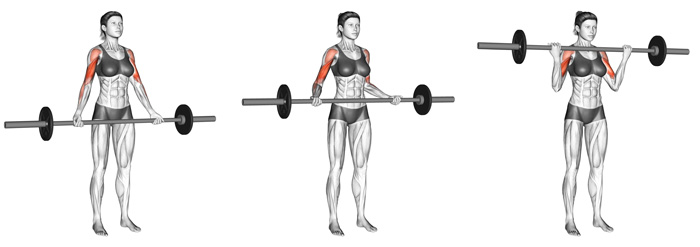
The drag curl is a biceps exercise that differs from a traditional curl by keeping the bar close to your body as you lift it. Instead of allowing the bar to travel forward in an arc, you pull it upward along your torso while your elbows move backward.
This movement emphasizes elbow flexion and challenges the biceps brachii, with assistance from other elbow-flexor and forearm muscles. Because the movement path is different from a regular barbell curl, drag curls are best performed with a manageable weight and controlled technique.
In this guide, you will learn how to do the drag curl with proper form, which muscles it works, its benefits, common mistakes, useful variations, and how to program it into your arm workout.
Table of Contents
What Is a Drag Curl?
A drag curl is a resistance-training exercise usually performed with a barbell or EZ bar. You hold the bar with an underhand grip and pull it upward while keeping it close to the front of your torso.
As you lift the bar, your elbows travel backward rather than moving forward to help raise the weight. This makes the exercise feel different from a conventional biceps curl and requires you to control your shoulders and torso throughout each repetition.
Drag curls are commonly included in biceps-focused workouts after larger pulling exercises or standard curls. They can complement other arm exercises, but they are not a replacement for balanced training.
Muscles Worked by the Drag Curl
1. Biceps Brachii
The biceps brachii is the primary target of the drag curl. Located at the front of the upper arm, it contributes to elbow flexion and forearm supination.
The drag curl’s distinctive bar path changes shoulder and elbow positioning compared with a conventional curl. However, it should not be assumed to isolate one biceps head completely or guarantee greater muscle growth than other curl variations.
2. Brachialis
The brachialis sits beneath the biceps and helps bend the elbow. It contributes to the movement regardless of whether your forearms are fully supinated or in another grip position.
3. Brachioradialis and Forearm Muscles
The brachioradialis assists elbow flexion, while the forearm muscles help you maintain a secure grip on the bar. Their contribution depends on your grip, technique, and the load used.
4. Supporting Muscles
Muscles around the shoulders, upper back, and torso help stabilize your position as you move the bar. Keep your shoulders controlled and your torso steady rather than using these muscles to swing the weight upward.
For another step-by-step exercise reference, see StrengthLog’s drag curl guide.
Benefits of the Drag Curl
1. Adds Variety to Biceps Training
The drag curl provides a different movement pattern from conventional barbell curls. Adding it to a well-planned program can help you train your elbow flexors using more than one exercise variation.
2. Encourages Controlled Lifting
Because the bar stays close to your torso, the exercise encourages you to pay attention to its path. Using a suitable load makes it easier to focus on the target muscles instead of relying on momentum.
3. Trains the Biceps and Supporting Elbow Flexors
The biceps work alongside the brachialis and brachioradialis during the movement. This makes the drag curl a useful accessory exercise for general arm development.
4. Requires Little Equipment
You typically need only a barbell or EZ bar and enough space to stand comfortably. This makes the exercise convenient for many gym-based arm workouts.
5. Complements Other Curl Variations
Drag curls can be combined with other biceps exercises to provide a range of grips and movement patterns. For example, you can pair them with the conventional Barbell Curl or an incline variation rather than performing several nearly identical curls in the same session.
How to Do the Drag Curl With Proper Form
Step 1: Choose Your Equipment
Use a barbell or EZ bar. Begin with a light load so you can learn the movement path without swinging your torso or straining your wrists.
Step 2: Stand in a Stable Position
Stand upright with your feet approximately shoulder-width apart. Keep your knees relaxed, your chest comfortably lifted, and your torso steady.
Step 3: Grip the Bar
Hold the bar with an underhand grip, with your palms facing forward. A roughly shoulder-width grip is a practical starting point, but choose a hand position that feels comfortable.
Allow your arms to extend naturally in front of your thighs without forcing your elbows into a locked position.
Step 4: Brace Your Torso
Keep your abdomen engaged and your shoulders down. Avoid leaning backward or shrugging your shoulders to prepare for the lift.
Step 5: Drag the Bar Upward
Bend your elbows and pull the bar upward close to your torso. Allow your elbows to travel backward as the bar rises rather than pushing them forward to create momentum.
Keep your wrists aligned with your forearms and avoid swinging your hips.
Step 6: Stop at a Comfortable Height
Raise the bar as high as you can while maintaining control and a comfortable shoulder position. For many people, this is around the lower chest, but your range of motion may differ.
Do not force the bar higher if doing so requires you to shrug, lean backward, or experience discomfort.
Step 7: Lower the Bar Slowly
Reverse the movement and lower the bar along the same close-to-the-body path. Control the descent instead of allowing gravity to pull the weight down quickly.
Step 8: Repeat With Consistent Technique
Complete your planned repetitions without changing your posture or using momentum. If you cannot maintain the movement path, reduce the weight.
Drag Curl Form Tips
- Keep the bar close: Avoid letting it swing far away from your body.
- Move your elbows backward: This is the defining feature of the drag curl.
- Keep your shoulders down: Avoid shrugging or lifting your shoulders toward your ears.
- Stay upright: Do not lean backward to finish a difficult repetition.
- Control the lowering phase: Return the bar smoothly to the starting position.
- Use a comfortable range of motion: Do not force your wrists, elbows, or shoulders into uncomfortable positions.
- Start light: Drag curls often require a lighter load than a conventional barbell curl because the movement path is more restrictive.
Common Drag Curl Mistakes to Avoid
1. Using Too Much Weight
A heavy load can cause you to swing your torso, shrug your shoulders, or abandon the intended bar path.
How to fix it: Reduce the resistance and perform repetitions you can control from beginning to end.
2. Swinging the Torso
Leaning backward creates momentum and makes it harder to assess how well you are controlling the exercise.
How to fix it: Brace your abdomen, keep your torso steady, and stop the set when you can no longer maintain your position.
3. Letting the Bar Move Away From the Body
Allowing the bar to travel forward changes the exercise into something closer to a conventional curl.
How to fix it: Keep the bar near your torso throughout the lift and lowering phase, without forcing it against your body.
4. Shrugging the Shoulders
Lifting the shoulders toward your ears to raise the bar can make the movement uncomfortable and reduce consistency.
How to fix it: Keep your shoulders relaxed and use a lighter weight if you cannot maintain that position.
5. Forcing the Top Position
Trying to bring the bar excessively high can lead to awkward shoulder movement or wrist strain.
How to fix it: End the upward phase when your comfortable range of motion is reached. A controlled repetition is more useful than an exaggerated one.
6. Dropping the Weight Too Quickly
A rapid descent reduces control and can place unnecessary stress on the joints.
How to fix it: Lower the bar smoothly and maintain control throughout the repetition.
Drag Curl Variations
1. Barbell Drag Curl
The standard version uses a straight bar and an underhand grip. It is a practical option if you want to train both arms together using one piece of equipment.
2. EZ-Bar Drag Curl
An EZ bar has angled grip sections that some people find more comfortable for their wrists. Use a hand position that feels natural and maintain the same controlled, close-to-the-body movement.
3. Dumbbell Drag Curl
Hold a dumbbell in each hand and pull the weights upward close to your torso. Dumbbells allow each arm to move independently, although maintaining a consistent path can require additional control.
4. Smith Machine Drag Curl
A Smith machine guides the bar along a fixed track. This can make the movement easier to set up, but the machine’s path must suit your body and shoulder comfort. Do not force the movement if the fixed track feels awkward.
5. Conventional Barbell Curl
The conventional barbell curl allows the bar to travel forward in a natural arc while you bend your elbows. It is a useful alternative if the drag curl feels uncomfortable or does not suit your training goals.
Drag Curl vs. Barbell Curl
Both exercises train the biceps and other elbow flexors, but they use different bar paths.
| Feature | Drag Curl | Conventional Barbell Curl |
|---|---|---|
| Bar path | Travels close to the torso | Travels in a natural arc in front of the body |
| Elbow movement | Elbows move backward as the bar rises | Elbows generally stay near the sides |
| Main target | Biceps, with supporting elbow flexors | Biceps, with supporting elbow flexors |
| Technique focus | Close bar path and controlled elbow movement | Stable torso and controlled elbow flexion |
| Best use | Adding a different curl pattern | General biceps strength and muscle development |
Neither exercise is automatically superior. Choose based on your comfort, technique, available equipment, and overall training program.
Sets and Reps for Drag Curls
Your ideal training volume depends on your experience, recovery, and the other exercises in your workout.
- Beginners: Start with 2 sets of 10–15 controlled repetitions using a light load while learning the technique.
- Intermediate lifters: Try 2–3 sets of 8–12 repetitions if you can maintain a consistent bar path.
- Rest periods: Begin with approximately 60–120 seconds between sets and take longer if needed to recover your technique.
These are starting guidelines rather than strict rules. Increase the weight gradually only when you can complete your repetitions with good control.
Drag curls can be placed after larger pulling exercises or conventional curls. Because rows and pulldowns also recruit the elbow flexors, consider your total training volume rather than adding more curl sets automatically.
How to Include Drag Curls in an Arm Workout
Here is one example of how to organize a simple biceps-focused session:
- Barbell Curl – 3 sets of 8–12 repetitions.
- Drag Curl – 2 sets of 10–12 repetitions.
- Alternate Incline Dumbbell Curl – 2 sets of 10–15 repetitions per arm.
Choose loads that allow you to maintain proper form and adjust the total number of sets to your training experience. You do not need to use this exact routine every session; it is an example of how different curl variations can fit into one workout.
Safety Tips
- Check that the bar and any weight plates are secure before beginning.
- Use a load that allows controlled repetitions without swinging.
- Keep your wrists in a comfortable position.
- Avoid forcing your shoulders or elbows through painful ranges of motion.
- Stop if you experience sharp pain, numbness, or unusual symptoms.
- If you have an existing injury or are uncertain whether the exercise is appropriate for you, consult a qualified fitness or healthcare professional.
Frequently Asked Questions
What Muscles Do Drag Curls Work?
Drag curls primarily train the biceps brachii. The brachialis, brachioradialis, and forearm muscles also contribute to the movement.
Are Drag Curls Better Than Regular Barbell Curls?
Not necessarily. Drag curls change the bar path and elbow movement, while regular curls use a more conventional arc. Both can contribute to biceps development when performed consistently and included in a suitable program.
Can Beginners Do Drag Curls?
Beginners can learn the movement with a light load, but it may be easier to master a conventional curl first. Focus on stable posture and controlled repetitions before increasing resistance.
Should the Bar Touch My Body During a Drag Curl?
The bar should travel very close to your torso, but you should not force it against your body. Maintain a natural, comfortable path throughout the repetition.
How Heavy Should I Go on Drag Curls?
Start lighter than you might use for a conventional barbell curl. Choose a load that allows you to move the bar close to your torso without swinging, shrugging, or leaning backward.
Do Drag Curls Target the Long Head of the Biceps?
The long head contributes to the exercise, but the drag curl does not completely isolate it. Both heads of the biceps and other elbow-flexor muscles can participate in the movement.
How Often Should I Perform Drag Curls?
For many people, once or twice weekly can fit into a broader arm-training plan, depending on total training volume and recovery. Adjust your schedule according to your experience and how well you recover between sessions.
Key Takeaways
The drag curl is a biceps exercise that keeps the bar close to your torso while your elbows move backward. It trains the biceps along with supporting elbow-flexor and forearm muscles, providing a different movement pattern from a conventional curl.
For best results, start with a manageable load, maintain a steady torso, control both the lifting and lowering phases, and avoid forcing the top position. Use drag curls as one part of a balanced training program rather than relying on a single exercise for complete arm development.