Table of Contents
Instructions
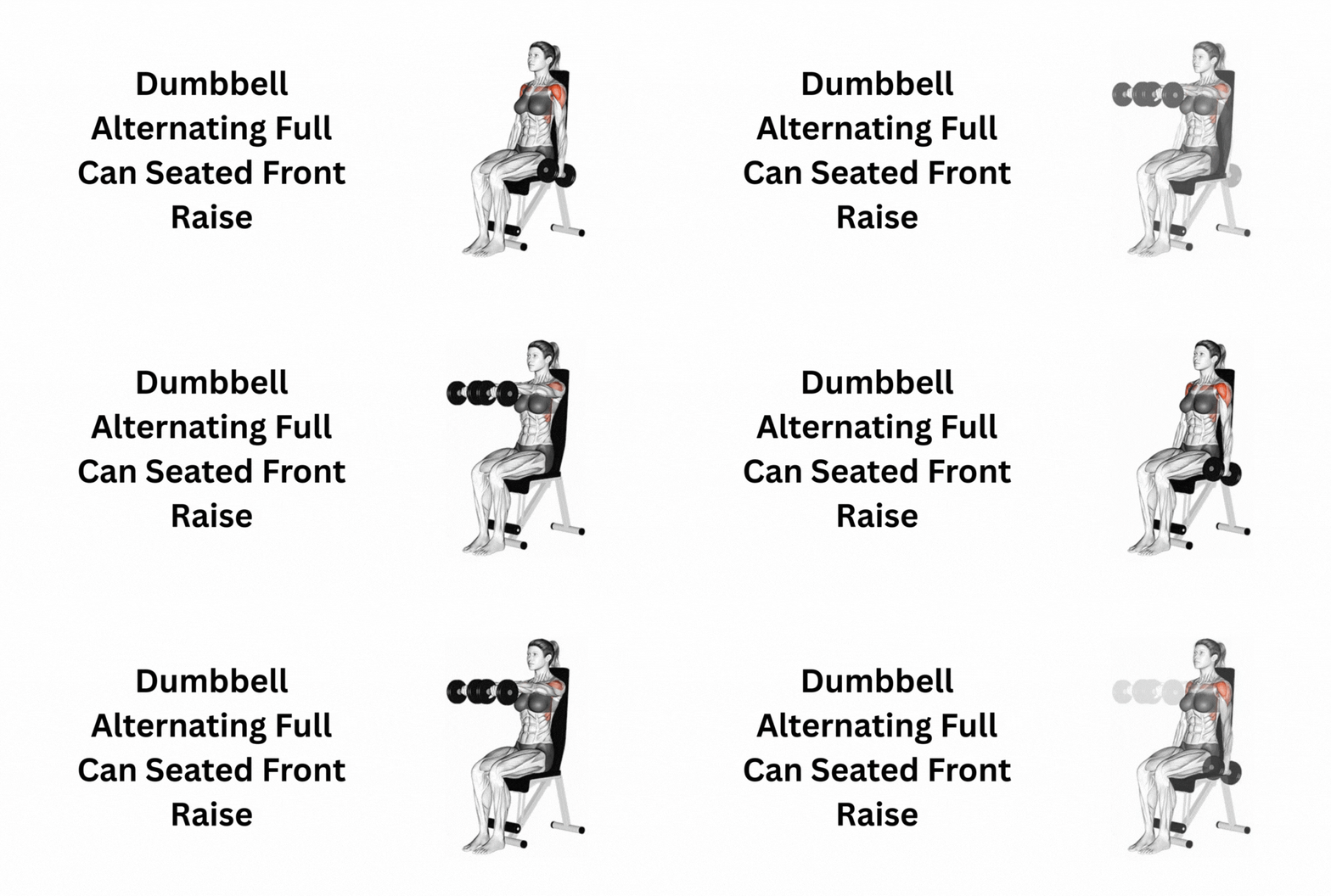
The Dumbbell Alternating Full Can Seated Front Raise is a seated shoulder isolation exercise that uses a full can (thumb-up) grip. This technique emphasizes the anterior deltoids while minimizing the risk of shoulder impingement, enabling safe, controlled movement for muscle growth and improved shoulder stability.
What is the Dumbbell Alternating Full Can Seated Front Raise?
The Dumbbell Alternating Full Can Seated Front Raise is a shoulder isolation exercise designed to target the anterior deltoids. Performing it in a seated position minimizes lower-back compensation, keeping the focus on the shoulders. Using a full can (thumb-up) grip reduces the risk of shoulder impingement, while alternating arms allows for controlled tension and better activation of each deltoid individually.
Benefits of the Dumbbell Alternating Full Can Seated Front Raise
- Reduces risk of rotator cuff impingement: The full can (thumb-up) grip keeps the shoulder joint in a safer position.
- Precise anterior deltoid activation: Isolates the front delts for focused hypertrophy.
- Enhances mind-muscle connection: Alternating arms allows better concentration on each shoulder individually.
- Improves shoulder aesthetics and strength: Builds definition and functional strength over time.
- Effective shoulder finisher: Ideal as the final exercise in a shoulder workout to fully fatigue the delts.
Muscles Worked in the Dumbbell Alternating Full Can Seated Front Raise
| Muscle Group | Role |
|---|---|
| Anterior Deltoid | Primary mover, responsible for lifting the arms forward |
| Upper Pectorals | Secondary support, assists in shoulder flexion |
| Trapezius | Stabilization of shoulder girdle during movement |
| Core | Maintains seated posture and prevents lower-back compensation |
| Rotator Cuff | Stabilizes the shoulder joint throughout the lift |
How to Perform the Dumbbell Alternating Full Can Seated Front Raise
Step 1: Setup
- Sit on a bench with back support.
- Keep your feet flat on the floor for stability.
- Hold a dumbbell in each hand with thumbs pointing up (full can grip).
Step 2: Starting Position
- Let your arms hang naturally at your sides.
- Maintain a slight bend in your elbows.
- Engage your core to stabilize your torso.
Step 3: Lifting
- Raise one dumbbell to shoulder height in a slow, controlled motion.
- Pause briefly at the top for maximum contraction.
- Keep your thumb-up orientation throughout the lift.
Step 4: Lowering
- Slowly lower the dumbbell back to the starting position.
- Alternate to the opposite arm, maintaining control.
- Avoid swinging, jerking, or leaning backward.
Step 5: Breathing
- Exhale as you lift the dumbbell.
- Inhale as you lower it back down.
Video
Best Form Tips for the Dumbbell Alternating Full Can Seated Front Raise
- Engage your core: Keep your core tight and back pressed firmly against the bench.
- Avoid shrugging: Do not raise your shoulders toward your ears; keep traps relaxed.
- Use controlled motion: Focus on a smooth, slow lift and lower to maximize muscle activation.
- Limit range of motion: Raise the dumbbells only to shoulder height to prevent strain.
- Maintain thumb-up grip: Keep the full can (thumb-up) position throughout for shoulder safety.
Common Mistakes & Fixes for the Dumbbell Alternating Full Can Seated Front Raise
| Mistake | Issue | Fix |
|---|---|---|
| Swinging dumbbells | Reduces deltoid activation | Use lighter weights and lift in a slow, controlled motion |
| Locking elbows | Reduces muscle tension | Keep a slight bend in the elbows throughout the movement |
| Leaning forward/back | Uses momentum, reduces effectiveness | Sit tall and engage your core to stabilize the torso |
| Lifting too high | Increases risk of shoulder impingement | Raise dumbbells only to shoulder height |
Variations & Alternatives for the Dumbbell Alternating Full Can Front Raise
Variations:
- Dumbbell Alternating Full Can Standing Front Raise: Performed standing to engage core stability more.
- Single-Arm Full Can Front Raise: Focuses on one shoulder at a time for improved mind-muscle connection.
- Incline Full Can Front Raise: Done on an incline bench to reduce momentum and enhance anterior delt isolation.
Alternatives:
- Dumbbell Front Raise (Neutral Grip): Classic front delt exercise using a neutral hand position.
- Cable Front Raise: Provides constant tension throughout the range of motion.
- Plate Front Raise: Uses a weight plate for a different grip and loading pattern.
Programming the Dumbbell Alternating Full Can Seated Front Raise
General Guidelines:
- Sets: 3-4
- Reps: 10-15 per arm
- Frequency: 1-2 times per week
- Tempo: Controlled, 2-3 seconds for both lifting and lowering
Sample 4-Week Progression Plan:
- Week 1: 3×12 reps, light weight, focus on form
- Week 2: 3×15 reps, maintain controlled tempo
- Week 3: 4×12 reps, slightly heavier load
- Week 4: 4×15 reps, emphasize strict form and full range of motion
Safety & Who Should Avoid the Dumbbell Alternating Full Can Seated Front Raise
- Shoulder injuries: Avoid this exercise if you are recovering from shoulder impingement or rotator cuff issues.
- Warm-up first: Always warm up the rotator cuff and delts before performing the exercise.
- Start light: Do not use heavy dumbbells until proper form is mastered.
- Maintain proper grip: Keep the thumb-up (full can) position throughout to reduce the risk of shoulder strain or impingement.
FAQs: Dumbbell Alternating Full Can Seated Front Raise
1. Full can grip vs standard grip which is better?
The full can (thumb-up) grip reduces the risk of shoulder impingement and is safer for long-term shoulder health, while the standard grip can place more stress on the rotator cuff.
2. Can beginners safely perform this exercise?
Yes, beginners can safely perform it using light dumbbells, focusing on controlled motion and proper form before increasing weight.
3. Should I do both arms simultaneously?
Alternating arms allows better focus on each deltoid, ensures strict form, and reduces momentum, making it ideal for hypertrophy and safety.
4. How high should I lift the dumbbells?
Raise dumbbells only to shoulder height to maximize anterior delt activation while minimizing shoulder impingement risk.
5. Can this help with shoulder rehab?
It can be beneficial when performed with light weights and proper form, but anyone recovering from injury should consult a physiotherapist first.
6. How many sets/reps are ideal per week?
Generally, 3-4 sets of 10-15 reps per arm, 1-2 times per week is effective for strength and hypertrophy, progressing gradually over time.
Key Takeaways & CTA
- The Dumbbell Alternating Full Can Seated Front Raise effectively isolates the anterior delts while minimizing shoulder impingement risk.
- Alternating arms enhances control, focus, and mind-muscle connection.
- Ideal as an accessory or finisher in shoulder routines to build strength, definition, and stability.
See Other Exercises: Dumbbell Arnold Press, Dumbbell Alternating Incline Front Raise, Dumbbell Alternating Front Raise