Table of Contents
Instructions
The Dumbbell Shoulder Press is a fundamental upper-body exercise that targets the deltoids, triceps, and upper chest while promoting overall shoulder stability. Unlike barbell presses, dumbbells allow for a natural range of motion, reducing joint stress and encouraging balanced muscle development on both sides. This exercise is essential for building shoulder strength, enhancing hypertrophy, and improving functional upper-body performance. Suitable for beginners, intermediates, and hypertrophy-focused lifters, it can also be adapted for rehabilitation purposes under proper guidance. In this article, we’ll cover proper technique, variations, benefits, common mistakes, safety tips, and programming strategies to help you maximize your shoulder gains.
What is the Dumbbell Shoulder Press?
The Dumbbell Shoulder Press is a compound shoulder exercise that primarily targets the deltoids while also engaging the triceps and upper chest. By using dumbbells instead of a barbell, you allow each arm to move independently, which promotes unilateral strength, corrects muscle imbalances, and encourages a more natural range of motion.
Seated vs. Standing Variations
- Seated Dumbbell Shoulder Press: Offers greater support for the lower back, isolates the shoulders more effectively, and is ideal for focusing purely on deltoid hypertrophy.
- Standing Dumbbell Shoulder Press: Requires core engagement for stability, offering a full-body challenge while still building strong shoulders.
Benefits Over the Barbell Press
- Better range of motion: Dumbbells allow a more natural upward and outward path for the arms.
- Unilateral control: Each arm works independently, reducing strength imbalances.
- Joint-friendly: Less strain on the shoulder and elbow joints compared to a fixed barbell path.
Key Benefits of the Dumbbell Shoulder Press
The Dumbbell Shoulder Press offers several advantages for both strength and aesthetics:
- Builds Shoulder Strength & Hypertrophy: Targets all three heads of the deltoid, promoting balanced muscle growth and increased pressing power.
- Improves Stabilization & Coordination: Each arm moves independently, engaging stabilizing muscles and enhancing neuromuscular control.
- Enhances Upper Body Pressing Power: Transfers to other pressing movements such as bench press, push-ups, and overhead lifts.
- Reduces Imbalances Between Left & Right Shoulders: Unilateral work corrects strength differences, preventing overcompensation by the dominant arm.
- Versatile for Training Programs: Can be integrated into push days, upper-body routines, or full-body workouts for strength, hypertrophy, or functional performance.
Muscles Worked
The Dumbbell Shoulder Press is a compound exercise that engages multiple muscle groups, making it highly effective for shoulder development and upper-body strength.
Primary Muscles
- Anterior Deltoids – front portion of the shoulder, responsible for lifting the arms forward and overhead.
- Medial Deltoids – middle portion of the shoulder, contributes to arm abduction and rounded shoulder appearance.
Secondary Muscles
- Triceps Brachii – assists in extending the elbows during the pressing motion.
- Upper Chest (Clavicular Portion of Pectoralis Major) – slightly engaged, especially during the initial push phase.
- Trapezius (Upper Fibers) – helps stabilize the shoulder blades and assists in overhead movement.
Stabilizer Muscles
- Core (Abdominals & Obliques) – maintains posture and prevents excessive arching of the lower back.
- Rotator Cuff Muscles – stabilize the shoulder joint throughout the pressing motion, reducing injury risk.
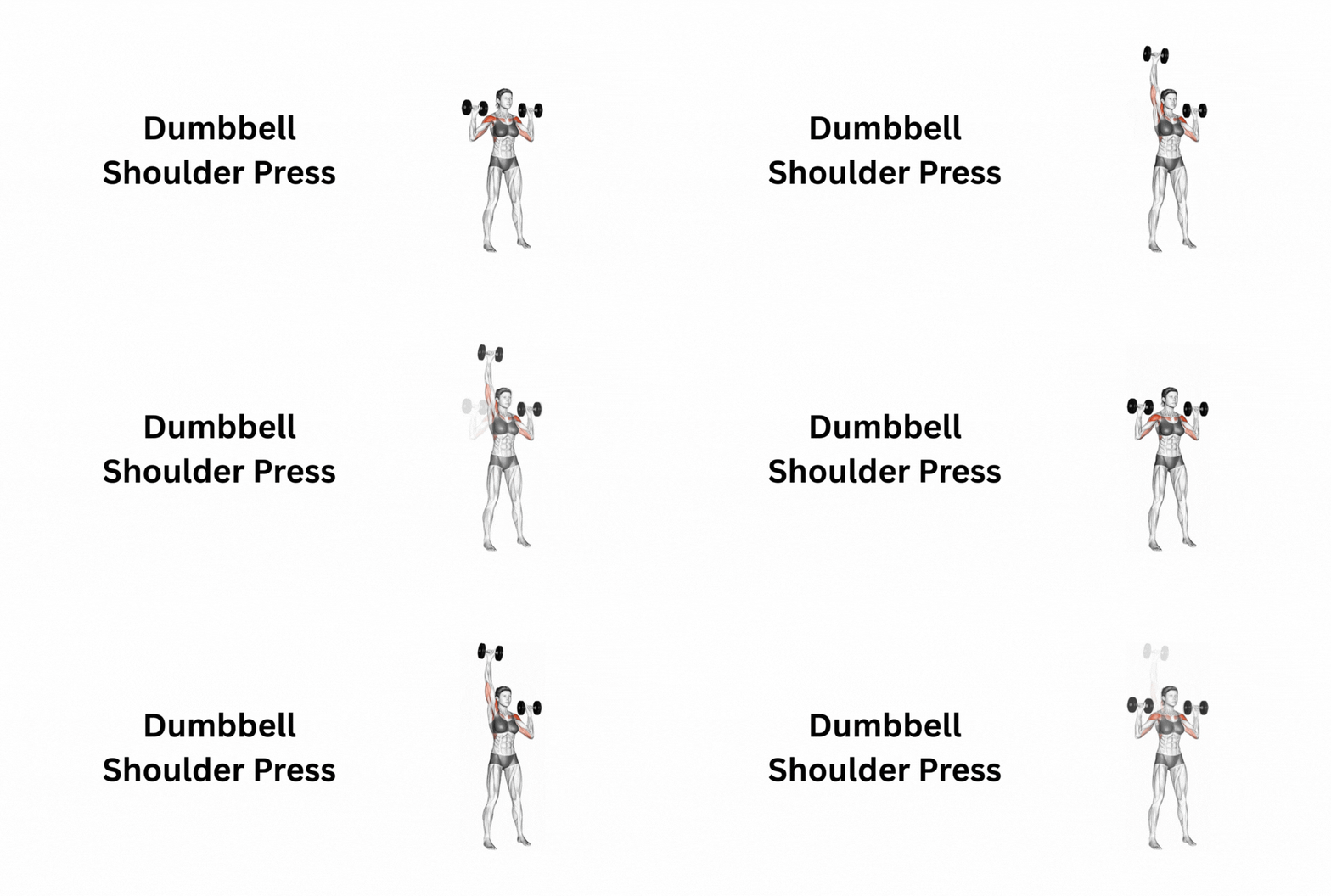
Dumbbell Shoulder Press Step-by-Step Guide
Follow these steps to perform the Dumbbell Shoulder Press safely and effectively:
1. Setup
- Choose a seated or standing position.
- Hold a dumbbell in each hand at shoulder height, with palms facing forward.
- Ensure your feet are flat on the floor, and your spine is neutral.
2. Engage Core
- Tighten your abdominal muscles and brace your spine to protect your lower back.
- Maintain a slight bend in the knees if standing.
3. Press
- Push the dumbbells overhead in a controlled path, keeping elbows slightly in front of your shoulders.
- Avoid using momentum; focus on muscle engagement.
4. Lockout
- Raise the dumbbells until your arms are almost fully extended, but do not overextend the elbows.
- Dumbbells should align roughly with your ears at the top.
5. Lower
- Slowly bring the dumbbells back to the starting position, maintaining control throughout.
- Do not drop the weights or let your shoulders slump forward.
6. Breathing
- Exhale while pressing upward, and inhale while lowering the dumbbells.
- Maintain steady, rhythmic breathing to support performance and core stability.
Video
Best Form Cues
Maintaining proper form during the Dumbbell Shoulder Press is key to maximizing results and preventing injury. Keep these cues in mind:
- Keep wrists neutral – avoid bending or letting them collapse backward.
- Elbows slightly forward – prevents shoulder strain and ensures proper deltoid engagement.
- Press straight up – avoid tilting the dumbbells inward or outward.
- Engage core – maintain a stable spine and prevent excessive back arch.
Common Mistakes & How to Fix Them
| Mistake | Fix |
|---|---|
| Excessive back arch | Tighten your core and use lighter weight to maintain stability |
| Elbows flaring outward | Slightly tuck elbows toward the body to protect the shoulder joint |
| Using momentum / jerking | Perform slow, controlled reps focusing on muscle contraction |
| Wrists bending backward | Keep wrists neutral and aligned with forearms throughout the press |
Dumbbell Shoulder Press Variations
Adding variations to your shoulder press routine can target muscles differently, prevent plateaus, and reduce injury risk.
- Seated vs. Standing:
- Seated: Isolates the deltoids, reduces lower back strain.
- Standing: Engages core stabilizers and improves functional strength.
- Arnold Press: Rotate the palms during the press from facing you to facing forward, increasing anterior deltoid activation.
- Neutral Grip Press: Palms face each other; easier on the shoulder joint, ideal for lifters with discomfort or mobility limitations.
- Machine or Resistance Band Press: Provides constant tension and controlled movement, suitable for beginners or rehab-focused training.
Alternatives if Dumbbells Are Not Available
If dumbbells aren’t accessible, try these effective shoulder exercises:
- Barbell Shoulder Press: Classic compound press for overall deltoid strength.
- Push Press: Incorporates slight leg drive to lift heavier loads safely.
- Pike Press (Bodyweight Option): Overhead pressing using your body weight, great for beginners or home workouts.
Sets, Reps & Frequency
Proper programming ensures you get the most out of the Dumbbell Shoulder Press, whether your goal is strength, hypertrophy, or endurance.
Rep & Set Guidelines
- Strength: 4-6 reps × 3-5 sets – focus on heavier weights with longer rest periods (2-3 minutes).
- Hypertrophy (Muscle Growth): 8-12 reps × 3-4 sets – moderate weight with controlled tempo and 60-90 seconds rest.
- Endurance: 12-20 reps × 2-3 sets – lighter weight with shorter rest periods (30-60 seconds).
Frequency
- Perform the Dumbbell Shoulder Press 1-3 times per week, depending on your training split and recovery.
- Ideal for push-focused routines or upper-body workouts.
Optional 4-Week Progression Example
- Week 1: Choose a weight that allows completing target reps with good form.
- Week 2: Increase weight by 2-5% or add 1 extra rep per set.
- Week 3: Maintain weight; focus on slower tempo and full range of motion.
- Week 4: Increase weight again slightly, aiming for progressive overload without compromising form.
Safety & Who Should Avoid
Performing the Dumbbell Shoulder Press safely is crucial to prevent injuries and ensure long-term shoulder health.
- Warm-Up First: Always warm up the rotator cuff and shoulder muscles with dynamic stretches or light resistance exercises before pressing.
- Avoid Heavy Loads if Mobility Is Limited: Using too much weight with restricted shoulder mobility can strain joints and ligaments.
- Stop if Pain Occurs: Discomfort in the shoulder or elbow may indicate improper form or underlying issues; do not push through pain.
- Focus on Posture & Controlled Tempo: Keep your spine neutral, engage your core, and lift-lower dumbbells slowly to maintain stability and reduce injury risk.
Frequently Asked Questions
1. Dumbbell Shoulder Press vs. Barbell Shoulder Press which is better?
Dumbbells allow a more natural range of motion, promote balanced strength between arms, and are generally easier on the shoulders. Barbells allow heavier loads and may be better for maximal strength development.
2. How much weight should beginners use?
Start with light dumbbells that allow you to complete 8-12 controlled reps with proper form. Gradually increase the weight as strength and technique improve.
3. Should I do seated or standing?
- Seated: Better for isolating the deltoids and minimizing lower back strain.
- Standing: Engages the core and stabilizers more, offering a functional strength benefit.
4. Can it help with shoulder rehab?
Yes, but only with light weights or resistance bands and proper form. Focus on controlled movement and avoid pain-inducing ranges. Always consult a professional if recovering from injury.
5. How high should I lift dumbbells?
Lift until your arms are almost fully extended, roughly in line with your ears. Avoid locking elbows or tilting the dumbbells inward.
6. Is it safe for older adults?
Yes, with light weights, proper warm-up, and controlled tempo. Seated variations and neutral grips are particularly shoulder-friendly.
7. How often should I perform it weekly?
1-3 times per week depending on your training split, recovery, and overall shoulder workload.
Key Takeaways
The Dumbbell Shoulder Press is a highly effective exercise for developing shoulder strength, hypertrophy, and stability. To maximize benefits and prevent injury:
- Focus on proper form keep wrists neutral, elbows slightly forward, and core engaged.
- Use weight appropriate to your goal, whether strength, hypertrophy, or endurance, and follow a progressive overload plan.
- Incorporate this exercise into push or upper-body routines and combine with other shoulder variations for balanced development.
See Other Exercises: Dumbbell Front Raise, Dumbbell Alternating Seated Front Raise, Dumbbell Seated Front Raise