Table of Contents
Instructions
The EZ-Bar Curl is a classic biceps exercise that uses an angled bar to reduce wrist and elbow strain while still allowing heavy loading. Suitable for everyone from beginners to advanced lifters, it strikes a balance between comfort and muscle activation. The semi-supinated grip makes it easier on the joints while effectively targeting the biceps. Compared to straight barbell and dumbbell curls, it often feels smoother and more sustainable for long-term growth.
What Is the EZ-Bar Curl?
The EZ-bar curl is a biceps isolation exercise performed with an EZ bar, which features a zigzag, angled grip design. The bar was created to reduce stress on the wrists and elbows by allowing a more natural hand position compared to a straight bar. This makes it especially useful for lifters who experience joint discomfort during traditional curls.
Unlike straight barbell curls, the EZ-bar curl places the forearms in a semi-supinated position rather than fully supinated. This slightly reduces peak biceps activation but significantly improves joint comfort and control, allowing many lifters to train heavier or with better form over time.
The EZ-bar curl is ideal for lifters with elbow or wrist pain, beginners still developing joint tolerance, and advanced athletes managing long-term training volume. It fits best in a program as a primary biceps movement on arm days or as a secondary curl variation after heavy barbell work, particularly during hypertrophy-focused training blocks.
Benefits of EZ-Bar Curl
- Reduced wrist and elbow stress
The angled grip places your hands in a more natural position, lowering joint strain and making curls more comfortable especially for lifters with past elbow or wrist issues. - Strong biceps activation
Despite being easier on the joints, the EZ-bar curl still delivers high tension through the biceps, particularly the long head, supporting size and strength gains. - Easier progression for beginners
The stable bar path and joint-friendly grip help beginners learn proper curling mechanics and progressively add weight with better control. - Excellent long-term arm builder
Because it’s more comfortable than straight-bar curls, the EZ bar allows consistent training over months and years key for sustained arm growth. - Safer heavy loading compared to straight bar
Most lifters can handle heavier loads with less discomfort, making it a reliable option for hypertrophy-focused training without excessive joint stress.
Muscles Worked in EZ-Bar Curl
Primary Muscles
- Biceps brachii (long & short head)
The EZ-bar curl primarily targets the biceps brachii, which consists of two heads.- The long head contributes more to overall arm thickness and the biceps “peak.”
- The short head adds width and fullness to the upper arm.
The angled grip places the arms in a semi-supinated position, balancing activation between both heads.
Where you should feel it:
You should feel a strong contraction in the front of the upper arm, especially at the top of the curl when you squeeze the biceps.
Secondary Muscles
- Brachialis
Located underneath the biceps, the brachialis assists elbow flexion and plays a major role in increasing overall arm size.
Where you should feel it:
A deep, dense tension just above the elbow and under the biceps, especially when lowering the weight slowly.
- Brachioradialis
This forearm muscle helps stabilize and flex the elbow, contributing to arm strength and thickness near the elbow.
Where you should feel it:
Along the outer forearm, particularly when using a slightly wider grip on the EZ bar.
- Forearms (grip stabilization)
The forearm flexors work isometrically to maintain grip and control the bar throughout the movement.
Where you should feel it:
A steady grip fatigue in the forearms, without them overpowering the biceps during the curl.
Mind–muscle connection tip:
Focus on pulling the bar up by driving your pinkies slightly upward and squeezing the biceps hard at the top. If you feel it more in your shoulders or lower back, reduce the weight and slow the tempo.
How to Do the EZ-Bar Curl
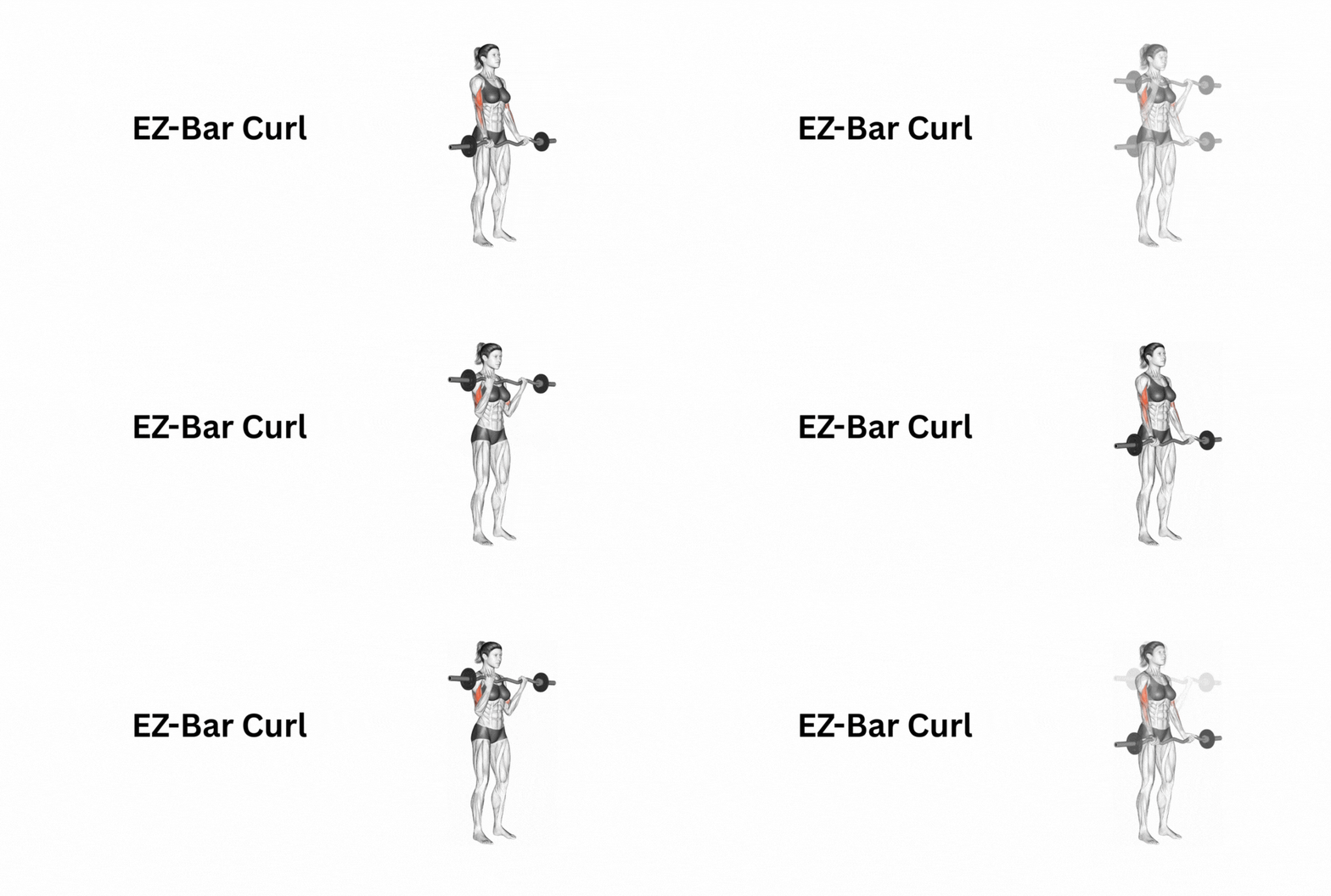
Step 1: Setup
Grip the angled portions of the EZ bar using a comfortable, semi-supinated grip. Place your hands about shoulder-width apart. Stand tall with your chest up, core braced, and feet planted firmly on the floor. Let the bar rest against your thighs.
Step 2: Starting Position
Begin with your arms fully extended and the bar hanging naturally. Keep your elbows tucked close to your torso and your wrists in a neutral, straight alignment. Avoid bending or cocking the wrists before initiating the curl.
Step 3: Curl Phase
Curl the bar upward in a smooth, controlled motion. Drive the movement by flexing the elbows, not swinging the body. Keep your elbows pinned in place as you lift. At the top, squeeze the biceps hard for a brief pause.
Step 4: Lowering Phase
Lower the bar slowly under control, resisting gravity throughout the descent. Focus on a controlled eccentric and return to a full stretch at the bottom without letting the elbows drift forward. Maintain tension before starting the next rep.
Video
Best EZ-Bar Curl Cues
- Elbows glued to your sides
Keep your elbows locked in place to prevent shoulder involvement and keep tension on the biceps. - Curl, don’t swing
Lift the bar using elbow flexion only. Avoid using momentum or leaning back to move the weight. - Squeeze at the top
Pause briefly at the top of each rep and contract the biceps hard to maximize muscle activation. - Control the negative
Lower the bar slowly and deliberately to increase time under tension and improve hypertrophy results. - Wrists neutral
Maintain a straight wrist position throughout the movement to reduce joint strain and improve force transfer.
Common EZ-Bar Curl Mistakes And Fixes
| Mistake | Why It’s Bad | Fix |
|---|---|---|
| Swinging the weight | Uses momentum instead of muscle, reducing biceps tension and increasing injury risk | Lower the weight and slow the tempo |
| Elbows drifting forward | Shifts the load to the shoulders, turning the curl into a front raise | Pin your elbows to your sides and keep them still |
| Partial reps | Limits muscle activation and reduces long-term growth | Use a full range of motion on every rep |
| Excess wrist bend | Increases stress on the wrists and elbows | Adjust your grip on the angled bar and keep wrists neutral |
If your lower back or shoulders feel more fatigued than your biceps, the weight is too heavy or your form has broken down.
EZ-Bar Curl Variations
For Size
- Standing EZ-Bar Curl
The classic version, ideal for general biceps growth. Use as a main biceps movement in hypertrophy-focused programs. - EZ-Bar Drag Curl
Bar is pulled close to the torso, elbows back, emphasizing the long head of the biceps. Great for adding arm thickness and peak.
For Strict Form
- EZ-Bar Preacher Curl
Performed on a preacher bench to isolate the biceps fully and prevent cheating. Best for strict form and controlled hypertrophy. - Seated EZ-Bar Curl
Reduces momentum and forces constant tension on the biceps. Ideal for focusing on the squeeze without swinging.
For Advanced Lifters
- Tempo EZ-Bar Curls
Slow, controlled lifting and lowering phases (e.g., 3-1-3 tempo) to increase time under tension. Perfect for advanced hypertrophy cycles. - Rest-Pause Sets
Use near failure, rest 10-15 seconds, then continue reps to push past normal fatigue limits. Effective for advanced trainees seeking maximal arm growth.
EZ-Bar Curl Alternatives
- Barbell Curl
A classic curl that allows heavy loading and overall biceps development. Best for strength and mass, but may strain wrists for some lifters. - Dumbbell Curl
Offers unilateral training, helping correct imbalances between arms. Also allows a natural rotation of the wrists for joint comfort. - Cable Curl
Provides constant tension throughout the range of motion, making it excellent for hypertrophy and controlled contractions. - Hammer Curl
Targets the brachialis and brachioradialis more than traditional curls, adding arm thickness and forearm strength. Ideal as a supplementary curl in any arm routine.
How to Program EZ-Bar Curls
Sets & Reps
- Strength: 4-6 reps per set
- Hypertrophy: 8-12 reps per set
- Endurance: 12-15 reps per set
Weekly Frequency
Perform EZ-bar curls 2-3 times per week. They are best placed after compound pulling exercises like rows or pull-ups, when the biceps are pre-activated but not overly fatigued.
Sample Progression
- Week 1: 3×10
- Week 2: 3×11
- Week 3: 3×12
- Week 4: Increase weight slightly and repeat the cycle
Focus on controlled form and gradual progression rather than chasing heavy weights. This ensures safe, consistent biceps growth over time.
Safety Tips
- Warm up elbows and wrists
Perform light curls or mobility drills to prepare joints and prevent strain. - Avoid ego lifting
Use a weight you can control with proper form; heavy cheating increases injury risk. - Stop if elbow pain appears
Sharp or persistent pain is a signal to rest or adjust your technique. - Focus on controlled tempo
Slow, deliberate reps reduce momentum, improve muscle activation, and protect joints.
EZ-Bar Curl FAQs
Is EZ-bar curl better than barbell curl?
The EZ-bar curl is easier on the wrists and elbows due to its angled grip, while still effectively targeting the biceps. Barbell curls allow slightly heavier loading but may cause joint discomfort for some lifters. Choose based on comfort and training goals.
EZ-bar curl vs dumbbell curl which is better?
Both have benefits:
- EZ-bar: Great for lifting heavier with both arms simultaneously and joint comfort.
- Dumbbells: Allow unilateral training, natural wrist rotation, and correct imbalances. Use a mix for balanced growth.
Which grip should I use on EZ-bar?
- Shoulder-width for standard curls and hypertrophy.
- Narrow to emphasize the short head of the biceps.
- Wide for long head emphasis.
Semi-supinated grip reduces wrist and elbow strain.
Can beginners do EZ-bar curls?
Yes. The angled grip makes it beginner-friendly, allowing safe progression while learning proper curl mechanics. Start with light weight and focus on form over load.
Why does EZ-bar feel easier on elbows?
The zigzag/angled grip places the forearms in a natural, semi-supinated position, reducing stress on elbow tendons compared to straight-bar curls.
How heavy should I go?
Choose a weight that allows full range of motion and controlled reps. Avoid swinging the bar; you should feel the biceps working, not your shoulders or lower back. Gradually increase weight as strength improves.
Key Takeaways
- Joint-friendly biceps builder
The angled grip reduces wrist and elbow strain while still effectively targeting the biceps. - Ideal for hypertrophy
Perfect for building size and shaping the biceps over time when used correctly. - Use full ROM and strict form
Maintain controlled movements, elbows pinned, and wrists neutral to maximize gains and reduce injury risk. - Progress load gradually
Increase weight or reps systematically to ensure safe and consistent strength and size improvements.
See Other Exercises: Barbell Preacher Curl, Barbell Curl, Barbell Upright Row