The standing cable chest fly is an isolation exercise that trains the chest by bringing your arms together in front of your body against cable resistance. Unlike a chest press, which involves substantial elbow extension, the fly uses a relatively fixed bend in the elbows and emphasizes movement at the shoulders.
You can adjust the cable height to change the direction of the movement. The standard chest-height fly brings your arms forward across your chest, while low-to-high and high-to-low variations use different arm paths.
Good technique starts with a manageable weight, a stable stance, and a comfortable range of motion. Focus on controlling the movement rather than pulling the heaviest possible load.
Table of Contents
How to Do the Standing Cable Chest Fly
Equipment
- Cable crossover machine with two adjustable pulleys
- Two single-hand cable handles
Setup
- Set both pulleys to approximately chest height for the standard standing cable fly.
- Attach a handle to each cable and select a light starting weight.
- Stand centered between the pulleys, holding one handle in each hand.
- Step forward until the cables provide resistance while your arms are open to the sides.
- Adopt a balanced stance, with one foot slightly ahead if that feels more stable. Keep your knees relaxed and your torso steady.
- Maintain a slight bend in your elbows and keep your wrists aligned comfortably with your forearms.
Execution
- Begin with your arms open to the sides and your elbows slightly bent.
- Exhale as you bring your arms forward in a wide, controlled arc.
- Bring your hands together in front of your chest without forcefully snapping them together or turning the movement into a press.
- Pause briefly if you can maintain control and a comfortable shoulder position.
- Inhale as you slowly return your arms to the starting position.
- Repeat while keeping the same approximate elbow angle and avoiding torso swinging.
Technique cue: Think of bringing your upper arms toward one another rather than pushing the handles forward with your triceps. Keep the movement smooth from the stretched position to the front of your body.
Muscles Worked by the Standing Cable Chest Fly
Pectoralis Major (Chest)
The pectoralis major is the primary target. It helps bring the upper arms across the front of the body, which is the main action in a chest fly.
The chest has different fiber regions, including the clavicular region near the collarbone and the sternocostal region across the middle and lower chest. Cable height changes the direction of the arm path and may change the relative demands on these regions, but no fly variation completely isolates one region.
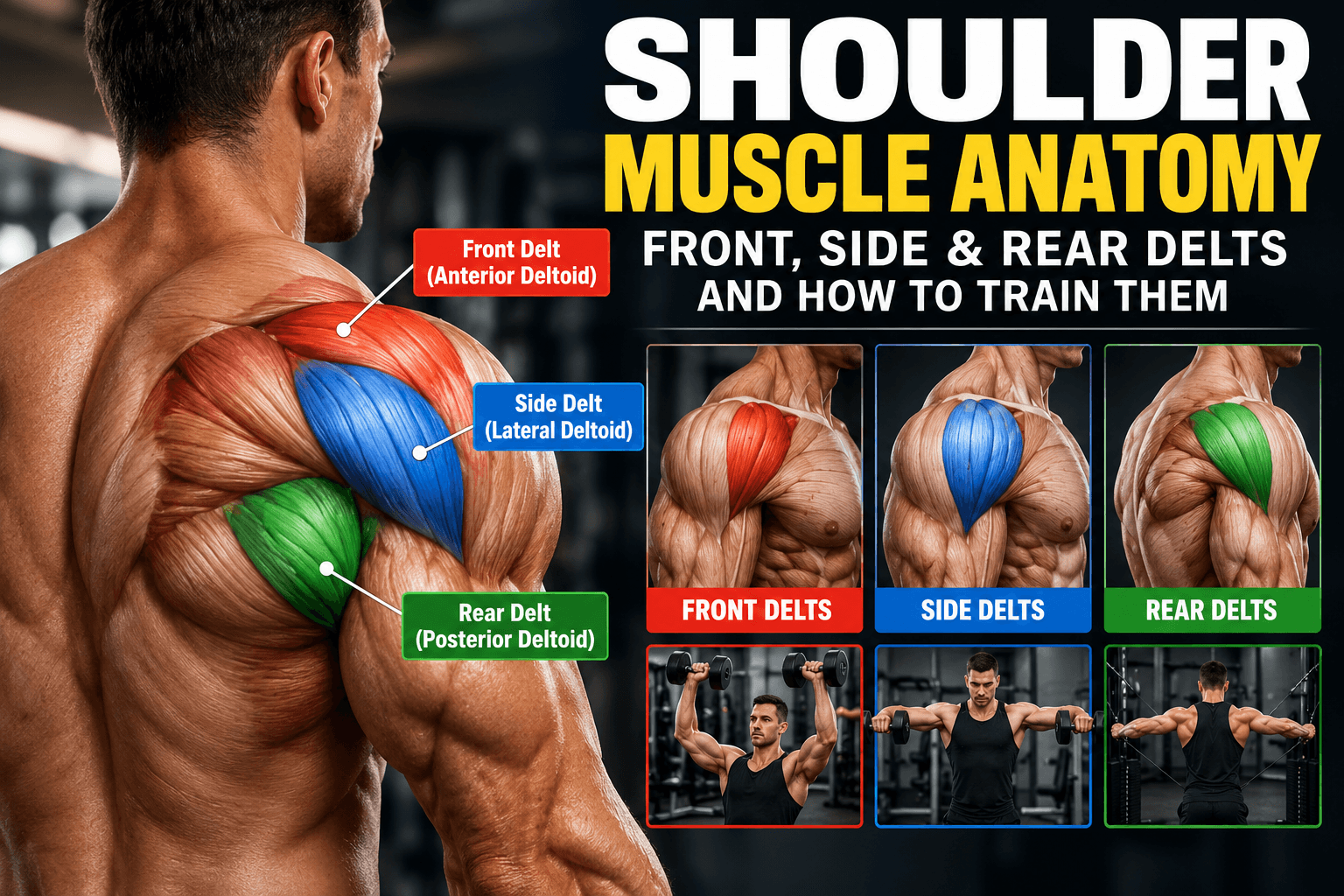
Anterior Deltoids (Front Shoulders)
The front deltoids assist with moving the arms forward. Their contribution depends on your arm path and shoulder position.
Trunk and Other Stabilizing Muscles
Your abdominal and other trunk muscles help keep your body steady against the cable pull. The muscles around the shoulder blades also help control the shoulder girdle during the movement.
The biceps and triceps help maintain the elbow position, but the exercise is primarily intended to train the chest rather than the arms.
Benefits of the Standing Cable Chest Fly
Trains the Chest With a Fly Movement
The exercise emphasizes bringing the arms together across the chest, making it a useful accessory to pressing exercises such as push-ups and bench presses.
Allows Adjustable Resistance and Cable Height
You can change the load and pulley position to suit your experience and training goal. Use a position that lets you maintain a comfortable shoulder path and consistent technique.
Provides Resistance Through Much of the Movement
Cables continue to apply an external pull as your arms move. The actual demand on your muscles changes with your body position, cable direction, and joint angles, so resistance is not identical at every point of the repetition.
Fits Different Training Levels
The cable load can be adjusted in small increments. Beginners should start light and learn the movement before increasing resistance.
Common Standing Cable Chest Fly Mistakes
| Mistake | Why It Is a Problem | How to Correct It |
|---|---|---|
| Using too much weight | Encourages swinging and changes the movement into more of a press | Reduce the load until you can control each repetition |
| Bending and straightening the elbows repeatedly | Changes the exercise mechanics and increases the pressing component | Keep a slight, comfortable elbow bend throughout |
| Letting the shoulders roll forward excessively | Can make the end position uncomfortable and harder to control | Finish where you can bring the arms together without forcing the shoulders |
| Arching or rocking the torso | Uses momentum instead of controlled arm movement | Maintain a stable trunk and adjust your stance |
| Letting the cables pull the arms back too quickly | Reduces control in the stretched position | Return slowly and stop before the stretch becomes uncomfortable |
| Bending the wrists backward | Makes the grip less stable and may cause discomfort | Keep your wrists aligned with your forearms |
| Using an uncomfortable range of motion | May irritate the shoulders, especially under heavy resistance | Reduce the range or adjust the pulley height and load |
Sets, Reps, and Progression
Your sets and repetitions should fit your experience and overall chest-training plan. As a practical starting point, try 2–3 sets of 10–15 controlled repetitions.
Rest long enough between sets to regain control and perform the next set with good technique. The appropriate rest period will vary with the load and your training program.
How to Progress
- Begin with a load that allows you to complete the planned repetitions without swinging.
- Maintain the same approximate elbow bend and a comfortable range of motion.
- When all sets feel controlled at the top of your target repetition range, increase the load by a small increment if available.
- Reduce the weight if increasing it causes you to shorten the movement or lose control.
- Count the cable fly as part of your overall weekly chest training rather than assuming more sets are always better.
There is no single set-and-repetition prescription that is best for everyone. Consistency, appropriate overall training volume, and gradual progression matter more than forcing a specific number.
Standing Cable Chest Fly Variations and Alternatives
Cable height changes the direction in which your arms travel. Choose the version that feels comfortable and suits the purpose of your workout.
Standard Standing Cable Chest Fly
Set the pulleys around chest height and bring your arms together in front of your chest. This is a useful starting variation for learning the basic movement.
Low-to-High Cable Fly
Set the pulleys low and bring your arms upward and inward. The upward path changes the shoulder movement and may place relatively more emphasis on the clavicular region of the pectoralis major. It does not isolate the upper chest completely.
High-to-Low Cable Fly
Set the pulleys high and bring your arms downward and inward. This changes the direction of resistance and may place relatively more emphasis on the lower, sternocostal region of the chest. Use a controlled path without leaning excessively or turning the movement into a downward press.
Dumbbell Chest Fly
The Dumbbell Chest Fly uses free weights rather than cables. The resistance profile differs because gravity acts downward, and the exercise typically requires a bench.
Machine Chest Fly
The Machine Chest Fly uses a guided movement path and can be helpful for people who prefer a supported setup. Adjust the seat and handles to suit your body and comfortable range of motion.
Push-Ups
Push-ups are a bodyweight pressing exercise that trains the chest, triceps, and front shoulders. They are not a direct mechanical substitute for a fly, but they are a useful option when you want a chest exercise without a cable machine.
Pec Deck Machine
The Pec Deck Machine provides a supported fly-like movement. Adjust the machine so that the starting position feels comfortable and does not force your shoulders too far backward.
Safety Tips
- Check that both handles are securely attached before starting.
- Use a load you can control without losing your balance.
- Avoid forcing your arms far behind your body to chase a deeper stretch.
- Keep your elbows slightly bent rather than locking them rigidly.
- Adjust the cable height and your stance if the movement feels awkward.
- Stop if you experience sharp pain, numbness, or unusual shoulder discomfort. If symptoms persist, seek advice from a qualified healthcare professional.
Frequently Asked Questions
What muscles does the standing cable chest fly work?
It primarily trains the pectoralis major, with the front deltoids assisting. The trunk and muscles around the shoulder blades help stabilize your position.
What cable height should I use for chest flyes?
For the standard standing cable chest fly, start with the pulleys around chest height. Lower pulleys create an upward arm path, while higher pulleys create a downward path. Choose a position that feels comfortable and lets you maintain control.
Are standing cable chest flyes better than dumbbell flyes?
Neither variation is universally better. Cables and dumbbells provide different resistance profiles and setup demands. Choose the version that suits your equipment, comfort, and training plan.
Should I straighten my arms during a cable chest fly?
Keep a slight bend in your elbows throughout the movement. Avoid repeatedly bending and straightening your elbows, which changes the exercise into more of a press.
How many sets of standing cable chest flyes should I do?
Two or three sets of 10–15 repetitions can be a reasonable starting point. Adjust the volume based on your experience, the rest of your chest workout, and your recovery.
Can beginners do standing cable chest flyes?
Beginners can learn the exercise by using a light load, a comfortable range of motion, and controlled repetitions. If you are unsure about the setup, ask a qualified trainer to demonstrate the movement.
Conclusion
The standing cable chest fly is a chest isolation exercise that brings your arms together against cable resistance. Set the pulleys to a suitable height, keep a slight bend in your elbows, maintain a stable torso, and control the return.
Use a load that allows consistent technique and include the exercise as one part of a balanced chest-training program. Progress gradually and choose the variation that feels comfortable for your shoulders.