Table of Contents
Instructions
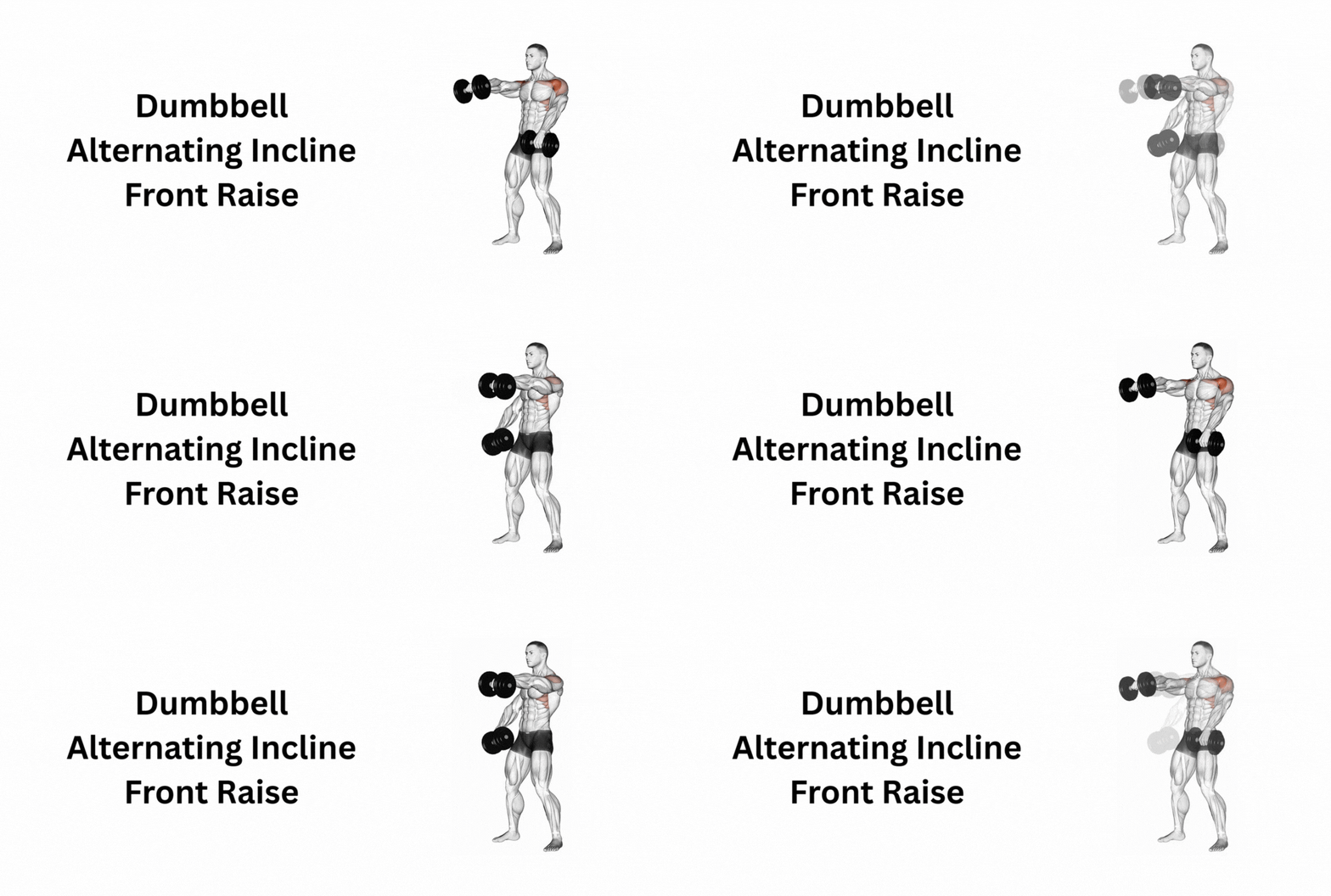
The Dumbbell Alternating Incline Front Raise is a focused shoulder isolation exercise that targets the anterior deltoids while minimizing momentum. Performed on an incline bench, this variation places the shoulders under constant tension, making it more effective than standard standing front raises. It’s suitable for beginners learning proper control, intermediates building hypertrophy, and advanced lifters refining front-delt detail. Alternating arms allows better mind-muscle connection and reduced fatigue per rep. In this guide, you’ll learn correct setup, step-by-step execution, key form cues, common mistakes, and how to program the movement for maximum shoulder growth and performance.
Dumbbell Alternating Incline Front Raise Overview
- Equipment: Dumbbells, Incline Bench
- Primary Muscle Group: Shoulders (Anterior Deltoid)
- Secondary Muscles: Upper chest, core stabilizers
- Exercise Type: Isolation
- Mechanics: Single-Joint
- Difficulty Level: Intermediate
- Grip: Neutral or Overhand
- Bench Angle: 30-45° incline
The incline position reduces momentum and limits lower-body assistance, placing greater emphasis on the front delts compared to standing front raises.
Muscles Worked in Dumbbell Alternating Incline Front Raise
Primary Muscles
Anterior Deltoids (Front Shoulders)
The front delts are the main drivers of the movement, responsible for shoulder flexion as the dumbbell is raised in front of the body. The incline bench position keeps constant tension on the anterior deltoids, increasing activation compared to standing variations.
Secondary Muscles
Upper Chest (Clavicular Pectorals)
Assists during the initial lifting phase, especially at higher arm angles.
Serratus Anterior
Plays a key role in scapular control and smooth shoulder movement throughout the raise.
Core Stabilizers
Engaged to maintain torso stability against the incline bench and prevent unwanted shifting.
Stabilizing Muscles
Rotator Cuff
Helps stabilize the shoulder joint and maintain proper humeral alignment during the lift.
Upper Trapezius
Provides support for scapular elevation and stabilization, particularly near the top of the movement.
SEO Advantage:
Including stabilizing muscles improves topical depth, matching search intent and outperforming thinner exercise pages that overlook joint support and control.
How to Do Dumbbell Alternating Incline Front Raise
Step 1: Bench Setup
- Set the incline bench to 30-45°
- Sit back fully with your upper back and head supported
- Keep feet flat on the floor for stability
Step 2: Starting Position
- Hold dumbbells resting lightly on your thighs
- Palms facing your thighs (neutral grip) or floor (overhand grip)
- Brace your core and keep shoulders down and back
Step 3: Lifting Phase
- Raise one arm at a time directly in front of your body
- Lift until the dumbbell reaches shoulder height
- Use a controlled tempo of 2-3 seconds on the way up
- Keep the non-working arm relaxed but stable
Step 4: Lowering Phase
- Lower the dumbbell slowly under full control
- Maintain tension do not rest the weight at the bottom
- Alternate arms smoothly without swinging
Step 5: Breathing
- Exhale as you lift the dumbbell
- Inhale as you lower it back down
Video
Proper Form Tips for Incline Front Raises
- Do not swing the weights
The incline bench already limits momentum keep the movement strict and controlled to isolate the anterior deltoids. - Keep shoulders depressed
Actively pull your shoulders down and away from your ears to prevent upper-trap dominance and protect the shoulder joint. - Avoid elbow lockout
Maintain a slight bend in the elbows throughout the lift to keep continuous tension on the front delts and reduce joint stress. - Keep constant tension
Don’t let the dumbbells rest at the bottom. Continuous tension increases muscle activation and improves hypertrophy outcomes. - Use lighter weight than standing raises
The incline position increases difficulty. Lighter loads with slower tempo will deliver better front-delt engagement and cleaner form.
Benefits of Dumbbell Alternating Incline Front Raise
- Greater anterior deltoid isolation
The incline bench places the shoulders in a fixed position, keeping constant tension on the front delts throughout the movement. - Reduced momentum vs standing raises
Eliminating lower-body assistance forces the shoulders to do the work, improving muscle activation and exercise effectiveness. - Improved shoulder symmetry
Alternating arms helps identify and correct left-right strength imbalances, leading to more balanced shoulder development. - Better mind-muscle connection
Slower tempo and unilateral execution enhance control and awareness of the working muscle, ideal for hypertrophy-focused training. - Safer for the lower back
Back support from the incline bench minimizes spinal loading, making this variation more joint-friendly than standing front raises.
Common Mistakes to Avoid
- Using too much weight
Heavy dumbbells shift tension away from the front delts and increase trap involvement. Prioritize control over load. - Raising above shoulder height
Lifting too high reduces delt tension and places unnecessary stress on the shoulder joint. Stop at shoulder level. - Arching the lower back
Excessive arching compensates for weak shoulders and defeats the purpose of the incline setup. Keep your core braced and back supported. - Moving both arms together
Alternating arms improves isolation and balance. Raising both dumbbells at once increases momentum and reduces effectiveness. - Rushing the reps
Fast, uncontrolled reps limit muscle engagement. Use a slow, deliberate tempo to maximize time under tension and results.
Variations of Incline Front Raise
Both-Arms Incline Front Raise
Both dumbbells are raised simultaneously instead of alternating. This variation allows heavier loading but requires strict control to avoid momentum. Best suited for intermediate to advanced lifters focusing on front-delt strength and size.
Incline Front Raise with Neutral Grip
Performed with palms facing each other, this grip reduces shoulder joint stress and minimizes upper-trap involvement. Ideal for lifters with shoulder discomfort or those emphasizing controlled hypertrophy.
Cable Incline Front Raise
Using a low cable pulley provides constant tension throughout the entire range of motion. This variation is excellent for improving time under tension and achieving a strong mind-muscle connection.
Resistance Band Incline Front Raise
Resistance bands increase tension as the arm rises, making the top portion of the movement more challenging. A great option for home workouts, warm-ups, or joint-friendly shoulder training.
Incline vs Standing Front Raise
| Factor | Incline Front Raise | Standing Front Raise |
|---|---|---|
| Muscle Isolation | Higher anterior delt activation due to fixed torso position | Moderate isolation; more assistance from body movement |
| Momentum | Minimal momentum because of bench support | Higher chance of swinging and leg drive |
| Lower-Back Stress | Very low; back fully supported | Moderate; requires core and spinal stabilization |
| Difficulty | Higher with lighter weights due to constant tension | Lower; typically allows heavier loads |
Incline front raises prioritize strict form and delt isolation, while standing front raises are better suited for heavier loading but come with greater momentum and lower-back involvement.
How to Program Dumbbell Alternating Incline Front Raise
- Reps: 10-15 per arm
- Sets: 3-4
- Tempo: Slow and controlled (2-3 seconds up, 2-3 seconds down)
- Rest: 45-75 seconds between sets
- Best Used On: Shoulder day or Push day
Programming Tips:
- Perform this exercise after compound presses to fully isolate the anterior deltoids.
- Use moderate to light weights to maintain constant tension and proper form.
- Pair with lateral raises or rear-delt movements for balanced shoulder development.
Safety Tips & Precautions
- Shoulder impingement caution
If you experience pinching or sharp pain at the front of the shoulder, stop the exercise immediately. Avoid raising the dumbbell above shoulder height and use a neutral grip to reduce joint stress. - Avoid during rotator cuff recovery
Those recovering from rotator cuff injuries or recent shoulder surgery should skip this movement unless cleared by a qualified medical or rehab professional. - Warm up properly
Perform light shoulder mobility drills, band pull-aparts, and low-weight front raises before starting. A thorough warm-up improves joint stability, blood flow, and reduces injury risk.
Frequently Asked Questions
Is the incline front raise better than the standing front raise?
For isolation and strict form, yes. The incline version reduces momentum and keeps constant tension on the anterior deltoids, making it more effective for hypertrophy than standing raises.
Should I go heavy on dumbbell alternating incline front raises?
No. This exercise works best with light to moderate weights. Going too heavy shifts tension to the traps and increases injury risk.
Can beginners do this exercise?
Yes, beginners can perform it using very light dumbbells and slow tempo. Proper setup and control are essential before increasing weight.
Is this exercise safe for shoulders?
It’s generally safe when performed with correct form, controlled range of motion, and appropriate load. Those with shoulder pain or past injuries should proceed cautiously.
How often should I train front delts?
Front delts are already heavily involved in pressing movements. Direct front-delt training 1–2 times per week is usually sufficient.
Key Takeaways
- Best use case:
Ideal as a finisher or accessory movement on shoulder day or push day to isolate and refine the anterior deltoids. - Top benefit:
Superior front-delt isolation with minimal momentum, leading to better muscle activation and hypertrophy. - Most important form cue:
Use light weights and maintain slow, controlled reps with constant tension—never swing the dumbbells.
See Other Exercises: Dumbbell Alternating Front Raise, Barbell Reclined Shoulder Press, Barbell Shoulder Press