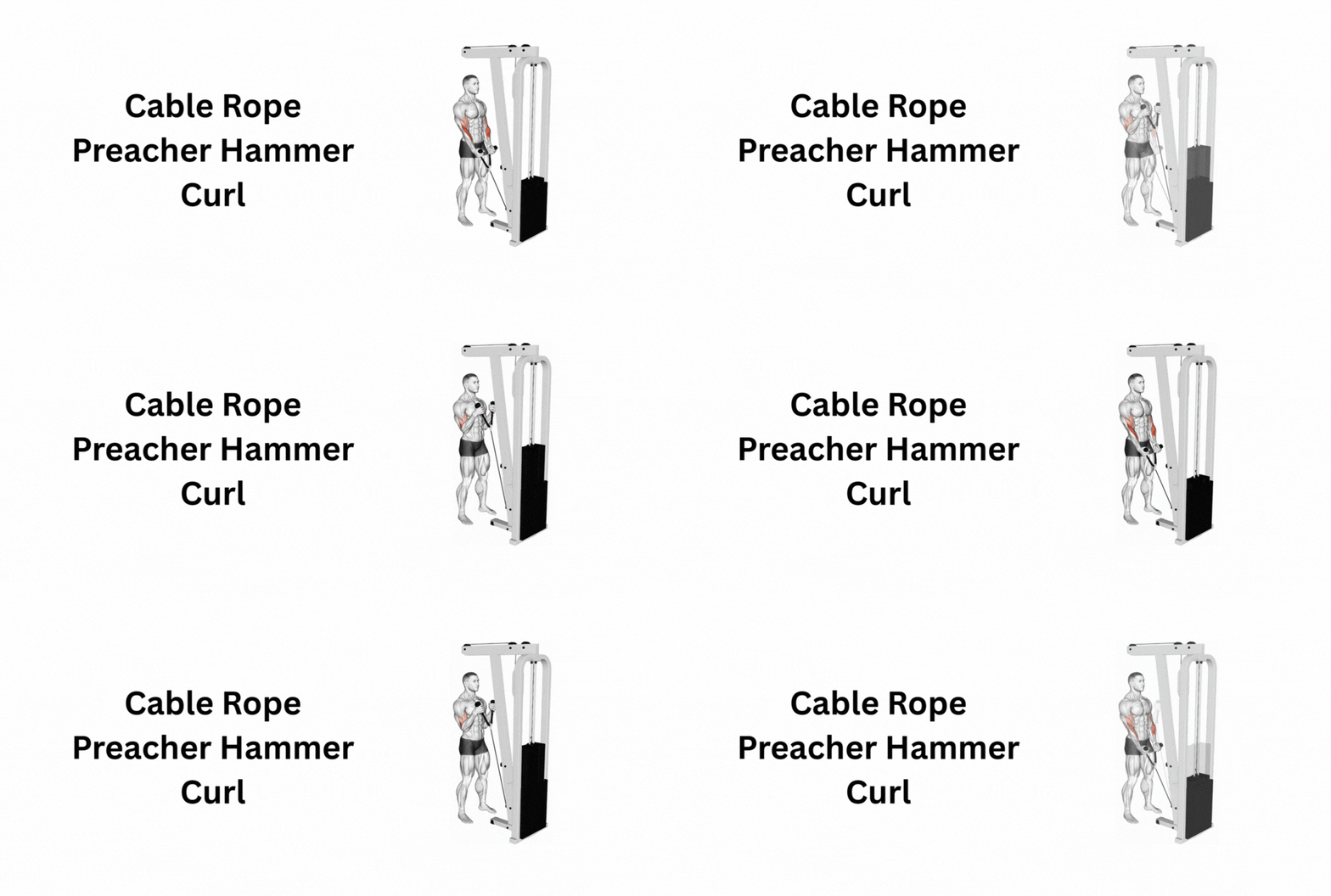
The cable rope preacher hammer curl is an isolation exercise that trains the muscles responsible for bending your elbows. It combines the support of a preacher bench with the neutral grip of a rope attachment, helping you practice controlled repetitions without relying heavily on body momentum.
Unlike a conventional biceps curl performed with your palms facing upward, this variation uses a neutral grip, with your palms facing each other. This brings the brachialis and brachioradialis into the movement alongside the biceps.
In this guide, you will learn how to perform the cable rope preacher hammer curl, which muscles it works, its benefits, common mistakes, variations, and how to include it in your arm workout.
Table of Contents
What Is the Cable Rope Preacher Hammer Curl?
The cable rope preacher hammer curl is performed using a low-pulley cable machine, a rope attachment, and a preacher bench or preacher pad. You rest your upper arms on the pad and curl the rope upward while maintaining a neutral grip.
The preacher pad helps limit unnecessary upper-arm movement, while the cable provides resistance throughout the exercise. Your elbows bend to raise the rope, and your forearms return to the starting position during the lowering phase.
For a visual reference, see the Cable Rope Preacher Curl (Hammer) exercise demonstration on JEFIT.
Muscles Worked by the Cable Rope Preacher Hammer Curl
This exercise primarily trains the elbow flexors, with the neutral grip influencing how the muscles contribute to the movement.
1. Brachialis
The brachialis lies beneath the biceps brachii and contributes strongly to elbow flexion. It works during hammer-grip curls and helps build the muscles around the upper arm.
2. Biceps Brachii
The biceps brachii is located at the front of the upper arm. Although the neutral grip changes its contribution compared with a palms-up curl, the biceps still assists in bending the elbows.
3. Brachioradialis
The brachioradialis is a forearm muscle that assists elbow flexion. The neutral hand position makes it an important contributor to hammer-style curls.
4. Forearm and Grip Muscles
Your forearm muscles help maintain a secure grip on the rope and control the movement. Avoid squeezing so aggressively that your wrists become uncomfortable.
Benefits of the Cable Rope Preacher Hammer Curl
1. Trains the Elbow Flexors
The exercise trains the brachialis, biceps, and brachioradialis together. This makes it a useful addition to a balanced arm-training program.
2. Encourages Controlled Repetitions
Resting your upper arms on the preacher pad helps reduce excessive movement at the shoulders. This can make it easier to focus on bending your elbows rather than swinging the weight.
3. Provides Cable Resistance
The cable maintains resistance through much of the movement. This can help you perform smooth repetitions when the machine and pulley setup are appropriate.
4. Offers a Neutral Grip
Some people find a neutral grip more comfortable than holding a straight bar with the palms facing upward. Choose the grip that allows you to train without wrist or elbow discomfort.
5. Fits Into an Arm Workout
The exercise can complement other biceps movements by adding a hammer-grip variation. You do not need to perform every curl variation in one workout; select exercises that fit your overall training volume.
How to Do the Cable Rope Preacher Hammer Curl With Proper Form
Step 1: Set Up the Cable Machine
Attach a rope handle to a low pulley. Position a preacher bench in front of the machine so that the cable can move freely without pulling the bench out of place.
Adjust the bench height so your upper arms can rest comfortably on the pad.
Step 2: Select a Suitable Weight
Choose a light or moderate starting load that allows you to complete controlled repetitions. Check that the rope attachment is secure before beginning.
Step 3: Grip the Rope
Hold one end of the rope in each hand with your palms facing each other. Keep your wrists in a comfortable, neutral position rather than bending them sharply.
Step 4: Position Your Arms
Sit or stand in the position allowed by the preacher bench. Rest your upper arms firmly on the pad and allow your elbows to extend comfortably without forcing them into a locked position.
Keep your shoulders relaxed and your torso stable.
Step 5: Curl the Rope Upward
Bend your elbows to bring your hands toward your shoulders. Keep your upper arms supported by the pad and avoid lifting your elbows to help the weight move.
Exhale as you curl the rope upward.
Step 6: Pause Briefly
At the top, pause for a moment if you can do so without changing your wrist or elbow position. Focus on a controlled contraction rather than pulling the rope as high as possible.
Step 7: Lower the Rope Slowly
Extend your elbows to return to the starting position. Lower the rope under control and avoid letting the weight stack drop suddenly.
Step 8: Repeat
Complete your planned repetitions while maintaining a stable position. If you have to lift your upper arms off the pad or swing your torso, reduce the weight.
Form Tips for Better Repetitions
- Keep your upper arms supported: Avoid lifting them off the preacher pad during the curl.
- Maintain a neutral grip: Keep your palms facing each other throughout the movement.
- Control both phases: Raise and lower the rope smoothly instead of letting the weight move you.
- Use a manageable load: Choose a weight that allows you to maintain good technique.
- Avoid forcing the bottom position: Extend your elbows only as far as you can comfortably control.
- Keep your wrists aligned: Avoid letting your hands bend backward or sideways under the load.
- Adjust the bench: Make sure the pad supports your upper arms without causing shoulder discomfort.
Common Mistakes to Avoid
1. Using Too Much Weight
Excessive resistance can make you lift your elbows off the pad or use momentum. Reduce the load until you can complete each repetition with control.
2. Moving the Upper Arms
The preacher pad is intended to support your upper arms. Repeatedly lifting them to finish a repetition reduces the consistency of the movement.
3. Rushing the Lowering Phase
Allowing the rope to return too quickly reduces control and can make the exercise uncomfortable. Lower the weight smoothly.
4. Bending the Wrists
Do not compensate for a heavy load by bending your wrists. Keep them comfortable and aligned with your forearms.
5. Using an Incorrect Attachment
This exercise uses a rope attachment and a neutral grip. A straight bar changes the hand position and makes it a different curl variation.
6. Ignoring Discomfort
Stop if you experience sharp pain in your wrists, elbows, or shoulders. Check your setup and load, and seek qualified guidance if discomfort persists.
Cable Rope Preacher Hammer Curl Variations
1. Standing Cable Rope Hammer Curl
Perform a hammer curl while standing in front of a low pulley without the preacher bench. Keep your elbows close to your sides and avoid swinging your torso.
2. Dumbbell Hammer Curl
Hold a dumbbell in each hand with your palms facing each other. Curl the weights toward your shoulders while keeping your upper arms relatively still.
3. Dumbbell Preacher Curl
Use a preacher bench and a dumbbell to train one arm at a time. This variation allows each arm to move independently, although the grip and resistance differ from the cable rope version.
4. Cable Preacher Curl With a Supinated Grip
Use a suitable straight-bar attachment and a palms-up grip if your setup allows it. This changes the grip from the hammer position and places a different emphasis on the elbow flexors.
For more arm-training options, read SaveDollar’s guides to the Dumbbell Preacher Curl and Cable Rope Hammer Curl.
Cable Rope Preacher Hammer Curl vs. Standing Hammer Curl
Both exercises use a neutral grip, but the preacher bench changes how you support your upper arms.
| Feature | Cable Rope Preacher Hammer Curl | Standing Cable Rope Hammer Curl |
|---|---|---|
| Equipment | Cable machine, rope, preacher bench | Cable machine and rope |
| Upper-arm support | Supported by the preacher pad | Arms held near the sides |
| Body movement | Bench helps limit upper-arm movement | Requires more active control of posture |
| Grip | Neutral | Neutral |
| Main use | Controlled, supported curling | Convenient hammer-grip curling without a bench |
Neither variation is automatically better. Choose the version that suits your equipment, comfort, and ability to maintain good technique.
Sets and Reps for the Cable Rope Preacher Hammer Curl
Your sets and repetitions depend on your training experience and the rest of your workout.
- Beginners: Start with 2–3 sets of 10–15 controlled repetitions using a light load.
- Intermediate trainees: Try 3 sets of 8–15 repetitions if you can maintain consistent form.
- Rest: Begin with approximately 60–120 seconds between sets and adjust based on your recovery.
These ranges are starting points, not strict rules. Stop the set when you can no longer maintain control, and increase resistance gradually as your technique improves.
You can place this exercise after larger pulling movements or alongside other direct arm exercises. Remember that rows and pulldowns already involve the elbow flexors, so account for that work when planning total training volume.
Safety Tips
- Check that the rope attachment is securely connected to the cable.
- Make sure the preacher bench is stable before starting.
- Select a weight that you can lower under control.
- Do not force your elbows into a painful or uncomfortable position.
- Stop if the exercise causes sharp pain or unusual symptoms.
- If you have an existing injury or are unsure whether the exercise is appropriate for you, consult a qualified fitness or healthcare professional.
Frequently Asked Questions
What Muscles Does the Cable Rope Preacher Hammer Curl Work?
It primarily trains the elbow flexors, including the brachialis and biceps brachii, while the brachioradialis and forearm muscles also contribute.
Is the Cable Rope Preacher Hammer Curl Good for Beginners?
It can be suitable for beginners who have access to a stable preacher bench and cable station. Start with a light load and learn to keep your upper arms supported.
What Is the Difference Between a Hammer Curl and a Regular Preacher Curl?
A hammer curl uses a neutral grip, with the palms facing each other. A conventional preacher curl commonly uses a palms-up grip. The grip changes how the elbow-flexor muscles contribute to the movement.
How Many Repetitions Should I Do?
A practical starting point is 2–3 sets of 10–15 controlled repetitions. Adjust the load and volume according to your training experience and recovery.
Can I Do This Exercise Instead of Dumbbell Hammer Curls?
Yes, if the cable machine and preacher bench are available and the movement feels comfortable. Both variations train the elbow flexors, but the equipment and upper-arm support differ.
Should I Perform This Exercise Every Workout?
Not necessarily. Include it according to your overall arm-training plan and allow adequate recovery between challenging sessions.
Key Takeaways
The cable rope preacher hammer curl combines a neutral grip with preacher-bench support to train the brachialis, biceps, and brachioradialis. Its supported position can help you practice controlled elbow flexion without relying heavily on momentum.
Set up the rope and bench correctly, choose a manageable load, keep your upper arms supported, and lower the weight slowly. Progress gradually and choose variations that suit your goals and comfort.