Table of Contents
Instructions
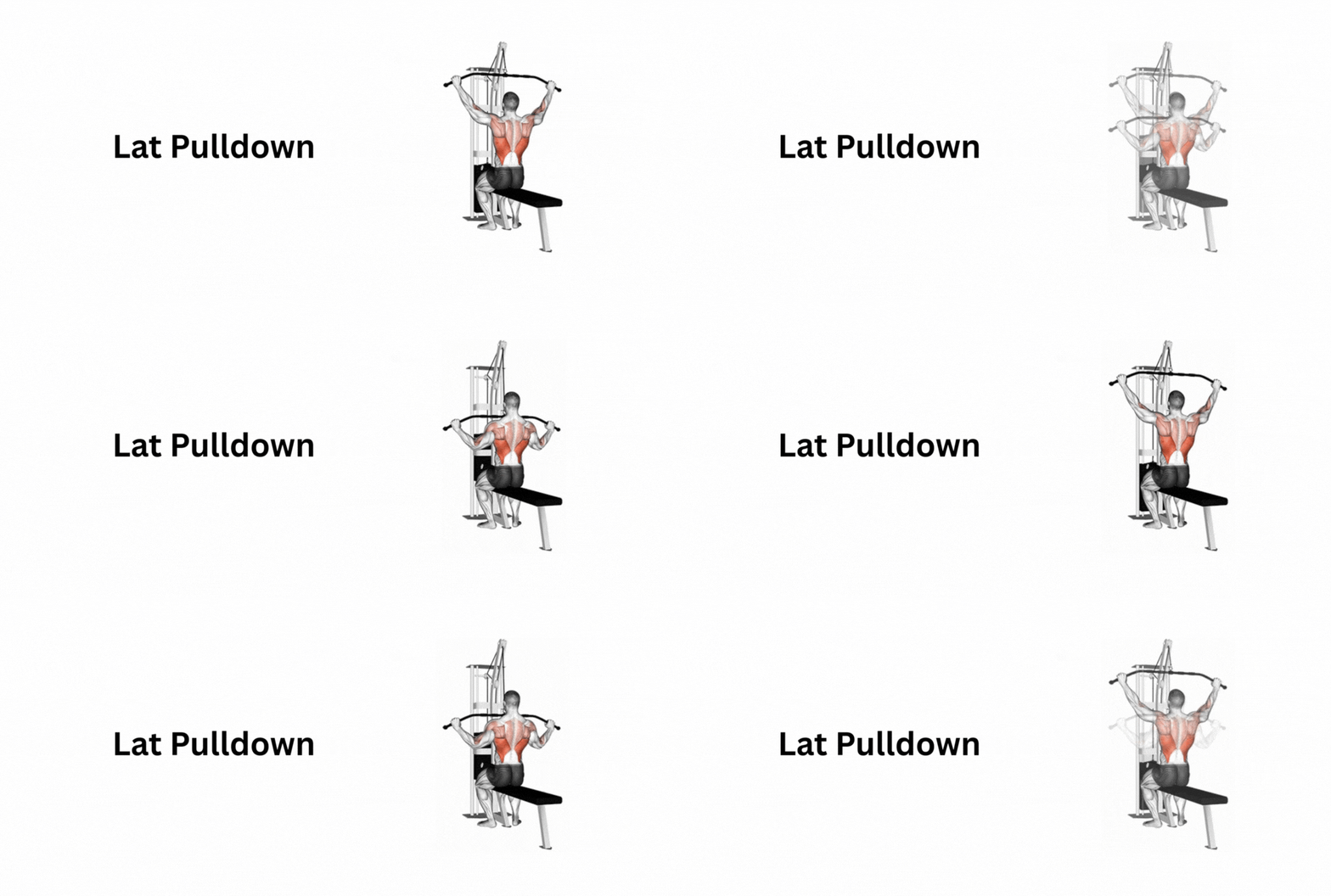
The lat pulldown is a fundamental vertical pulling exercise that primarily targets the latissimus dorsi, while also engaging the upper back, biceps, and core. It’s an effective alternative to pull-ups and a staple for building back width, improving posture, and developing upper-body strength with controlled, adjustable resistance making it suitable for beginners and advanced lifters alike.
What Is the Lat Pulldown?
The lat pulldown is a machine-based vertical pulling exercise designed to strengthen and develop the latissimus dorsi, the largest muscles of the back. Performed on a cable pulldown machine, the movement involves pulling a weighted bar or handle from overhead down toward the upper chest using controlled form.
Definition and Purpose
The primary purpose of the lat pulldown is to build back width, improve upper-body pulling strength, and reinforce proper scapular movement. Because the resistance is adjustable, it allows lifters to focus on technique, full range of motion, and muscle engagement without relying on bodyweight alone.
Why It’s Ideal for Beginners and Hypertrophy
The lat pulldown is especially beginner-friendly because it:
- Allows precise load selection
- Reduces coordination demands compared to pull-ups
- Supports strict form and controlled tempo
For hypertrophy, it provides consistent tension throughout the movement, making it highly effective for muscle growth, especially in the mid-to-lower lats when performed with proper technique and moderate-to-high reps.
How It Mimics Pull-Up Mechanics
Biomechanically, the lat pulldown closely replicates the pull-up pattern:
- Shoulder adduction and extension
- Elbow flexion
- Scapular depression
The main difference is that the body remains fixed while the load moves, making it easier to scale resistance and emphasize lat activation ideal for building strength toward strict pull-ups.
When to Use It in a Back Workout
The lat pulldown can be placed:
- Early in the workout as a primary compound movement for back width
- After pull-ups as a volume builder
- Later in the session with lighter loads for controlled hypertrophy or mind-muscle focus
It pairs well with rows, pull-ups, and straight-arm pulldowns for complete back development.
Benefits of the Lat Pulldown
The lat pulldown is one of the most effective exercises for developing a strong, wide back while remaining accessible to lifters of all experience levels. Its controlled setup and scalable resistance make it a staple in both strength and hypertrophy programs.
Builds Back Width and Lat Thickness
The lat pulldown directly targets the latissimus dorsi, which is responsible for creating a wide, V-shaped torso. Consistent training helps increase both back width and overall lat thickness, especially when using full range of motion and controlled eccentrics.
Improves Posture and Scapular Control
By reinforcing scapular depression and retraction, the lat pulldown helps counteract rounded shoulders caused by prolonged sitting and excessive pressing. Stronger lats and upper-back muscles contribute to better posture, shoulder stability, and improved pulling mechanics.
Easier Progression Than Bodyweight Pull-Ups
Unlike pull-ups, the lat pulldown allows precise load adjustments, making progression more gradual and predictable. This is ideal for beginners building pulling strength or advanced lifters accumulating volume without being limited by bodyweight.
Adjustable Resistance for All Fitness Levels
From beginners to elite athletes, the lat pulldown accommodates everyone. The ability to fine-tune resistance enables:
- Technique-focused learning for new lifters
- Progressive overload for hypertrophy
- Deloading or rehab-friendly training when needed
Safer Option for High-Volume Training
Because the movement is stable and controlled, the lat pulldown places less stress on the elbows, shoulders, and lower back compared to free-hanging pull-ups. This makes it a safer choice for high-volume back training, drop sets, and intensity techniques while maintaining proper form.
Muscles Targeted by the Lat Pulldown
The lat pulldown is a compound upper-body exercise that activates multiple muscles across the back, shoulders, and arms. While the lats do most of the work, several supporting muscles contribute to smooth, controlled movement and shoulder stability.
| Muscle | Role |
|---|---|
| Latissimus dorsi | Primary mover responsible for shoulder adduction and back width |
| Biceps brachii | Assists with elbow flexion during the pulling phase |
| Rhomboids | Support scapular retraction and upper-back engagement |
| Trapezius (mid/lower) | Stabilize the shoulder blades and control scapular depression |
| Rear deltoids | Assist the pulling motion and enhance shoulder balance |
Proper technique initiating the pull by driving the elbows down and retracting the shoulder blades maximizes lat activation while keeping secondary muscles working efficiently.
How to Do the Lat Pulldown
Proper form is essential to maximize lat activation and reduce stress on the shoulders and elbows. Follow these step-by-step cues to perform the lat pulldown safely and effectively.
Step 1: Setup
Begin by setting up the machine correctly to ensure stability and proper range of motion.
- Adjust the seat height so the bar starts just within reach when seated
- Secure the thigh pads firmly against your legs to prevent lifting
- Choose a grip attachment (straight bar, wide bar, or neutral handles) based on comfort and goals
- Grip the bar slightly wider than shoulder-width for optimal lat engagement
Step 2: Starting Position
Establish a strong and controlled starting posture before initiating the pull.
- Sit tall with a neutral spine and chest lifted
- Extend your arms fully overhead without locking the elbows
- Lean back slightly (10-15 degrees) to align the pull with the upper chest
- Brace your core and set your shoulder blades down
Step 3: Pull Phase
This is the primary working portion of the movement.
- Pull the bar down toward your upper chest or collarbone
- Drive your elbows down and back, not straight behind you
- Keep your torso stable and avoid excessive leaning
- Squeeze your lats hard at the bottom of the movement
Step 4: Eccentric Phase
Control the return to maintain tension and stimulate muscle growth.
- Slowly allow the bar to travel back upward
- Maintain control through the entire range of motion
- Let the arms fully extend while keeping tension on the lats
- Avoid shrugging or relaxing at the top
Video
Grip Types Explained
Changing your grip on the lat pulldown alters muscle emphasis, joint stress, and overall pulling mechanics. Understanding these variations helps you choose the right grip based on your goals, experience level, and shoulder comfort.
Wide-Grip Pulldown (Lat Emphasis)
The wide-grip lat pulldown places greater emphasis on the outer lats, making it effective for building back width.
- Hands placed wider than shoulder-width
- Reduced biceps assistance
- Emphasizes shoulder adduction
- Best for hypertrophy-focused back training
Avoid pulling behind the neck pull to the upper chest for shoulder safety.
Close-Grip Pulldown (More Biceps Involvement)
A close-grip pulldown increases elbow flexion, which brings the biceps into a greater role.
- Hands shoulder-width or closer
- Allows heavier loads
- Greater mid-back and arm involvement
- Ideal for strength and mass-building phases
Neutral-Grip Pulldown (Shoulder-Friendly)
The neutral grip (palms facing each other) is one of the most joint-friendly options.
- Reduces shoulder and wrist strain
- Encourages a natural pulling path
- Strong lat activation with balanced arm involvement
- Excellent for beginners and those with shoulder issues
Underhand Pulldown (Chin-Up Style)
The underhand (supinated) grip pulldown closely mimics chin-ups.
- Palms face toward you
- Strong biceps activation
- Increased lower-lat engagement
- Allows relatively heavy loading
Key Lat Pulldown Cues
Using the right coaching cues can dramatically improve lat activation, form consistency, and overall results. Focus on these simple but effective cues during every set.
- Pull elbows to your pockets
Initiate the movement by driving your elbows down and slightly back. This shifts the focus to the lats instead of the biceps and helps create a strong mind–muscle connection. - Chest tall, ribs down
Keep your chest lifted without over-arching the lower back. This cue promotes proper posture, core engagement, and an efficient pulling path. - Don’t yank the bar
Avoid using momentum or jerking the weight. A smooth, controlled pull ensures consistent tension on the lats and reduces stress on the shoulders and elbows. - Control the return
The eccentric phase is just as important as the pull. Lower the bar slowly to maintain tension and maximize hypertrophy. - Squeeze at the bottom
Pause briefly at the bottom of the movement and consciously squeeze your lats. This improves muscle activation and reinforces proper scapular positioning.
Common Mistakes + Fixes
Even small technique errors can reduce lat activation and increase injury risk. Use the table below to identify common lat pulldown mistakes and apply the correct fixes for better results.
| Mistake | Problem | Fix |
|---|---|---|
| Using momentum | Shifts tension away from the lats and increases injury risk | Lower the weight and use a controlled tempo |
| Pulling behind the neck | Places excessive stress on the shoulders and cervical spine | Pull the bar to the upper chest instead |
| Excessive lean back | Turns the movement into a row, reducing lat emphasis | Sit more upright with only a slight lean |
| Partial range of motion | Limits muscle stretch and overall growth | Use a full stretch at the top and squeeze at the bottom |
Lat Pulldown Variations
Adding lat pulldown variations helps improve muscle balance, increase time under tension, and prevent training plateaus. Each variation emphasizes the lats slightly differently while reinforcing proper pulling mechanics.
Single-Arm Lat Pulldown
The single-arm lat pulldown isolates each side independently.
- Corrects left-right strength imbalances
- Enhances mind-muscle connection
- Allows greater range of motion
- Ideal for unilateral hypertrophy work
Straight-Arm Pulldown
Also known as the lat pushdown, this variation minimizes biceps involvement.
- Targets the lats through shoulder extension
- Excellent for learning proper lat engagement
- Great as a warm-up or finisher
- Pairs well with rows and pull-ups
V-Bar Close-Grip Pulldown
The V-bar pulldown emphasizes the mid-to-lower lats and biceps.
- Neutral grip reduces joint strain
- Allows heavier loading
- Strong carryover to pull-ups
- Effective for strength and mass
Tempo or Pause Reps
Manipulating tempo increases time under tension.
- Slow eccentrics (3-4 seconds) boost hypertrophy
- Pauses at the bottom improve scapular control
- Reduces momentum and cheating
- Ideal for advanced lifters or deload weeks
Lat Pulldown vs Pull-Ups
The lat pulldown and pull-up share the same vertical pulling pattern, but each offers unique advantages depending on experience level, goals, and training context. Understanding the differences helps you use both more effectively.
Resistance vs Bodyweight
- Lat pulldown: Uses adjustable cable resistance, allowing precise load selection and consistent tension throughout the movement.
- Pull-ups: Use bodyweight (and added weight when progressed), requiring greater total-body control and relative strength.
Lat pulldowns are easier to scale, while pull-ups demand more stability and coordination.
Which Builds More Strength?
- Pull-ups generally build greater relative strength and overall athletic pulling ability once mastered.
- Lat pulldowns excel at targeted lat hypertrophy and volume accumulation due to load control and reduced fatigue.
For pure muscle growth, lat pulldowns often allow more quality reps. For performance-based strength, pull-ups have a slight edge.
Which Is Better for Beginners?
The lat pulldown is the better starting point for most beginners because it:
- Allows lighter, adjustable resistance
- Reinforces proper pulling mechanics
- Reduces joint and grip limitations
Beginners can gradually build strength on lat pulldowns before transitioning to unassisted pull-ups.
How to Combine Both in a Program
For optimal back development, use both exercises strategically:
- Start workouts with pull-ups for strength and skill development
- Follow with lat pulldowns to add volume and hypertrophy
- Use lat pulldowns on high-volume or deload days
Programming the Lat Pulldown
Proper programming ensures steady strength gains, optimal hypertrophy, and long-term progress. The lat pulldown is versatile and can be adjusted based on your training goal and experience level.
Sets & Reps
Choose rep ranges based on your primary objective:
- Strength: 3-5 sets of 4-6 reps using heavier loads with strict form
- Hypertrophy: 3-4 sets of 8-12 reps to maximize muscle growth
- Endurance: 2-3 sets of 12-15 reps with controlled tempo
Rest 60-90 seconds for hypertrophy and up to 2 minutes for strength-focused sets.
Training Frequency
For best results:
- Perform lat pulldowns 2-3 times per week
- Allow at least 48 hours between hard back sessions
- Place lat pulldowns early in back workouts when energy and focus are highest
They pair well with rows, pull-ups, and rear-delt movements.
Sample Progression (Double Progression Model)
Use gradual overload to build strength and size safely:
- Week 1: 3 × 10
- Week 2: 3 × 11
- Week 3: 3 × 12
- Week 4: Increase weight and return to 3 × 10
Safety Tips for the Lat Pulldown
Prioritizing safety ensures long-term progress and reduces the risk of injury. Follow these tips to train effectively while protecting your shoulders, elbows, and back.
- Warm up shoulders and elbows
Perform light dynamic stretches or band pull-aparts to prepare joints and muscles for the pulling motion. - Avoid behind-the-neck pulldowns
Pulling the bar behind the neck places excessive stress on the shoulders and cervical spine. Stick to pulling the bar to the upper chest. - Use controlled tempo
Avoid jerking or swinging the weight. Slow, deliberate reps maintain tension on the lats and reduce joint strain. - Stop if shoulder pain occurs
Sharp or unusual pain is a sign to stop and reassess form, load, or grip. Consult a professional if discomfort persists.
Frequently Asked Questions
Here are answers to common questions about the lat pulldown, optimized for SEO and user intent.
Is the Lat Pulldown as Effective as Pull-Ups?
Lat pulldowns and pull-ups share the same vertical pulling pattern, but pull-ups build more relative strength, while lat pulldowns allow precise load control for hypertrophy and beginners. Combining both can maximize back development.
Should I Pull to Chest or Behind Neck?
Always pull the bar to your upper chest. Behind-the-neck pulldowns increase shoulder and neck strain and are generally unsafe for most lifters.
What Grip Is Best for Lat Growth?
- Wide-grip: Emphasizes back width
- Close-grip: Increases biceps involvement
- Neutral-grip: Shoulder-friendly, good for beginners
Rotate grips to maximize overall lat development and prevent plateaus.
How Heavy Should I Go?
Select a weight that allows full range of motion with controlled tempo:
- Strength: heavier weight, 4-6 reps
- Hypertrophy: moderate weight, 8-12 reps
- Endurance: lighter weight, 12-15 reps
Avoid using momentum or compromising form.
Can Beginners Do Lat Pulldowns?
Yes. Lat pulldowns are ideal for beginners because they allow adjustable resistance, promote proper pulling mechanics, and help build strength gradually before attempting pull-ups.
How Often Should I Train Lats?
For optimal growth, train lats 2-3 times per week, ensuring proper recovery between sessions. Include lat pulldowns alongside rows and pull-ups for balanced back development.
Key Takeaways
The lat pulldown is a versatile, effective vertical pulling exercise suitable for beginners and advanced lifters alike. Key points to remember:
- Excellent vertical pull for all levels – Adjustable resistance makes it beginner-friendly while supporting advanced hypertrophy work.
- Builds lat width and upper-back strength – Targets the lats, rhomboids, and traps for a wider, stronger back.
- Proper form matters more than load – Controlled tempo, full range of motion, and elbow-driven pulls maximize results.
- Combine with pull-ups for best results – Use both exercises in a program for optimal strength and size.
See Other Exercises: Pull-Ups, Cable Rope Preacher Hammer Curl, EZ-Bar Curl