Table of Contents
Instructions
The barbell curl is a classic upper-body strength exercise that targets the biceps through a controlled elbow-flexion movement using a barbell. It’s a staple in arm training programs for beginners, intermediates, and advanced lifters due to its simplicity and effectiveness. By allowing heavier loads and easy progression, the barbell curl plays a key role in building biceps strength, muscle size, and long-term progressive overload.
What Is the Barbell Curl?
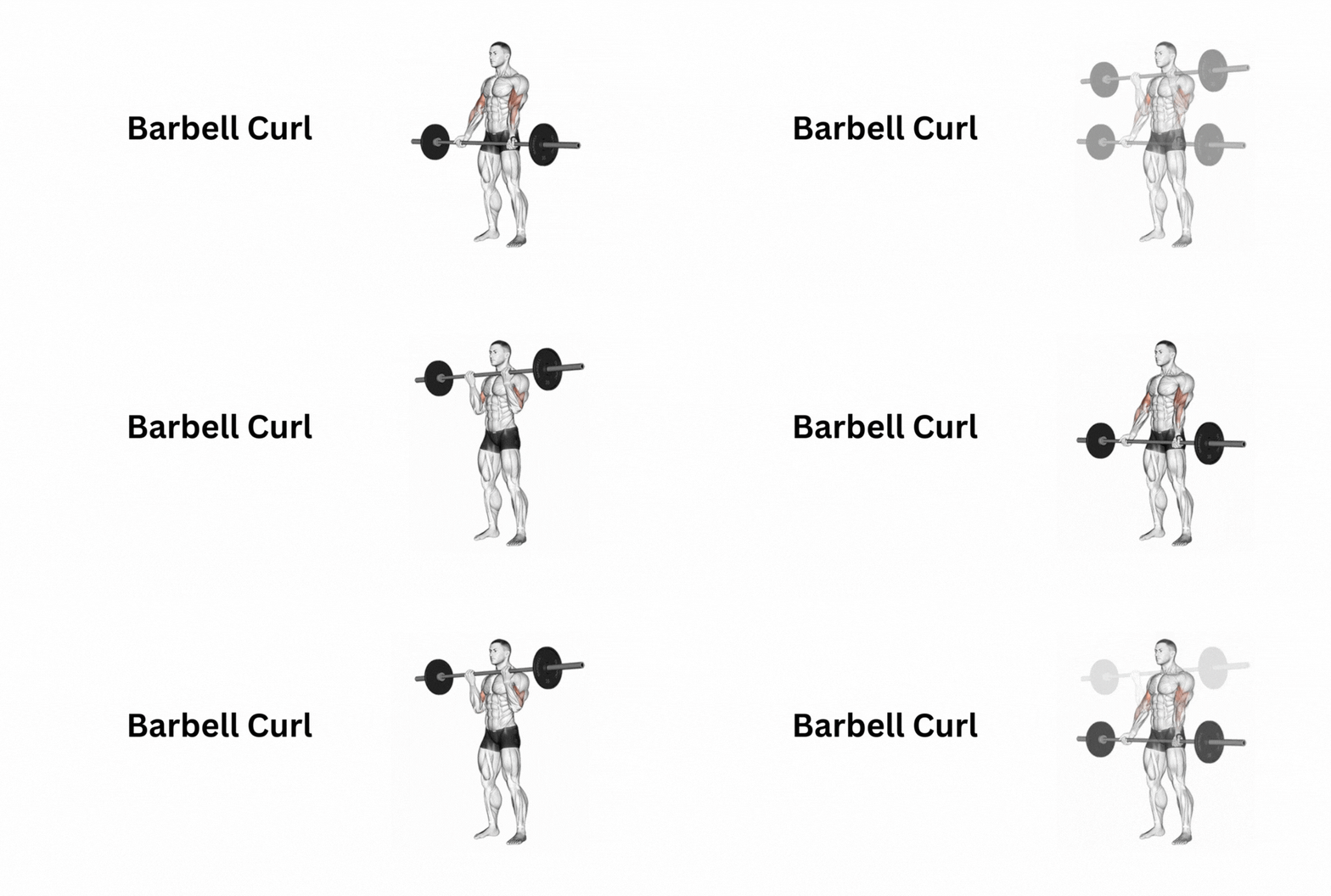
The barbell curl is an isolation exercise that involves curling a barbell upward by flexing the elbows while keeping the upper arms relatively fixed. The movement primarily targets the biceps brachii, with assistance from the brachialis and forearm muscles.
Barbells allow heavier loading than dumbbells because both arms work together on a fixed bar path. This stability reduces coordination demands and lets you focus on producing more force, making barbell curls ideal for progressive overload and strength-focused arm training.
There are two main styles: strict curls and cheat curls. Strict curls use controlled form, minimal body movement, and lighter to moderate loads to maximize muscle tension. Cheat curls involve controlled momentum from the hips to move heavier weight, typically used by advanced lifters to overload the biceps during later reps.
The barbell curl fits best on an arm day, pull day, or upper-body split, usually after compound pulling movements like rows or pull-ups when the biceps are already warmed up.
Benefits of the Barbell Curl
The barbell curl delivers clear, measurable results for both strength and hypertrophy. Its simplicity and load potential make it one of the most effective biceps-building exercises.
Builds biceps mass efficiently
Using a barbell allows you to handle heavier weights with stable mechanics, creating high mechanical tension. This tension is a primary driver of muscle growth, making barbell curls highly effective for adding biceps size.
Allows consistent progressive overload
Barbells make it easy to increase load in small, repeatable increments. This consistency supports long-term progression, which is essential for continued muscle and strength gains.
Improves elbow flexion strength
The movement directly strengthens elbow flexion, the core function of the biceps. Stronger elbow flexors translate to better performance in both isolation and compound pulling exercises.
Enhances arm aesthetics
Well-developed biceps improve arm thickness, shape, and overall upper-body symmetry. Barbell curls contribute to a fuller, more balanced arm appearance when paired with triceps training.
Transfers to pulling strength
Stronger biceps assist in pulling movements like rows, chin-ups, and pull-ups. Improving biceps strength through barbell curls can enhance control, endurance, and force output in these compound lifts.
Muscles Worked
The barbell curl primarily targets the biceps, but several supporting muscles contribute to stability, control, and overall force production throughout the lift.
Primary Muscles
Biceps brachii
The biceps brachii is the main muscle responsible for elbow flexion during the barbell curl. It has two heads, both of which are activated, with slight emphasis changes based on grip width and elbow position.
- Long head: More involved when using a narrower grip and keeping the elbows closer to the torso. It contributes to the biceps “peak” and overall arm height.
- Short head: More emphasized with a wider grip. It plays a key role in building overall biceps thickness and fullness.
Secondary Muscles
Brachialis
Located underneath the biceps, the brachialis assists with elbow flexion regardless of grip position. Developing this muscle increases overall arm size and helps push the biceps outward for a thicker look.
Brachioradialis
This forearm muscle supports elbow flexion, especially during heavier sets. It also contributes to forearm size and strength, improving grip endurance during curls.
Forearm flexors
The forearm flexors work to maintain a strong grip on the barbell. As load increases, their involvement rises to stabilize the wrists and control the bar path.
Stabilizers
Core
The core muscles engage isometrically to prevent excessive torso movement. Proper core bracing helps maintain posture and keeps tension focused on the biceps.
Anterior deltoids (isometric)
The front delts stabilize the shoulder joint and help keep the upper arms in position throughout the curl, especially during the top half of the movement.
Upper back
Muscles of the upper back assist with postural stability by keeping the shoulders set and preventing rounding, allowing for more efficient and controlled biceps loading.
How to Do the Barbell Curl
Proper technique ensures maximum biceps activation while reducing stress on the elbows and shoulders. Follow these steps to perform the barbell curl correctly.
Step 1: Setup
Stand tall with your feet shoulder-width apart, distributing weight evenly across both feet.
Grip the barbell using an underhand (supinated) grip at shoulder width or slightly narrower.
Keep your wrists neutral and straight, avoiding excessive bending to reduce strain and improve force transfer.
Step 2: Starting Position
Hold the barbell against your thighs with your arms fully extended.
Keep your elbows tucked close to your sides to limit shoulder involvement.
Lift your chest, brace your core, and set your shoulders back to create a stable base.
Step 3: Curling Phase
Initiate the movement by driving through the elbows, not by swinging the torso.
Curl the bar upward using a controlled tempo, focusing on squeezing the biceps.
Keep the bar path close to your body as it travels upward to maintain tension on the target muscles.
Step 4: Top Position
At the top of the curl, fully contract the biceps without letting the elbows drift forward.
Pause briefly and avoid rolling the shoulders forward, which reduces biceps engagement and increases shoulder strain.
Step 5: Lowering Phase
Lower the barbell under control over 2–3 seconds.
Maintain tension in the biceps throughout the descent and return the bar to the starting position without fully relaxing at the bottom.
Video
Best Barbell Curl Cues
Use these simple coaching cues to reinforce proper form and keep tension on the biceps:
- Elbows pinned – Keep elbows tight to your sides to limit shoulder involvement
- Curl, don’t swing – Lift with your arms, not momentum from the hips
- Squeeze at the top – Actively contract the biceps at peak tension
- Slow on the way down – Control the eccentric to maximize muscle growth
- Wrists neutral – Keep wrists straight for better force transfer and joint safety
Common Barbell Curl Mistakes And Fixes
| Mistake | Why It’s a Problem | Fix |
|---|---|---|
| Using momentum | Reduces time under tension and shifts work away from the biceps | Lower the weight and use a slower, controlled tempo |
| Elbows drifting forward | Turns the curl into a front-raise pattern, increasing shoulder involvement | Pin your elbows to your ribs throughout the movement |
| Half reps | Limits muscle activation and overall growth stimulus | Use a full range of motion on every rep |
| Overloading | Leads to poor form and raises injury risk | Prioritize strict reps before adding weight |
Barbell Curl Variations
Different barbell curl variations emphasize strength, muscle growth, technique refinement, or joint comfort. Choose the option that best matches your training goal.
For Strength
Strict barbell curl
Uses controlled form and minimal body movement to build pure elbow-flexion strength. Best for progressive overload and long-term strength development.
Paused barbell curl
Includes a 1-2 second pause at the midpoint or top of the curl. This removes momentum and increases time under tension, reinforcing strict technique under load.
For Hypertrophy
EZ-bar curl
The angled grip reduces wrist strain while still allowing heavy loading. It’s ideal for higher-volume training and consistent biceps hypertrophy.
Tempo barbell curl
Uses a slower eccentric or extended tempo (e.g., 3-4 seconds down). This increases muscle tension and metabolic stress, key drivers of muscle growth.
For Advanced Lifters
Cheat curl (controlled)
Uses slight hip drive to initiate heavier loads, followed by strict control on the lowering phase. Best used sparingly for overload once strict form breaks down.
Drag curl
The bar is pulled up while staying in contact with the torso. This minimizes shoulder involvement and places more tension on the biceps through a longer contraction.
For Joint Comfort
EZ-bar curl
The semi-supinated grip position is easier on the wrists and elbows, making it a joint-friendly alternative to straight-bar curls.
Neutral-grip alternatives
Exercises like hammer curls or neutral-grip cable curls reduce rotational stress at the elbow and wrist while still strengthening the biceps and brachialis.
Barbell Curl vs Dumbbell Curl
Both exercises build strong, muscular biceps, but each has a distinct advantage depending on your goal and training style.
| Feature | Barbell Curl | Dumbbell Curl |
|---|---|---|
| Load potential | Higher, allows heavier weights and easier progressive overload | Moderate, limited by unilateral strength |
| Range of motion | Fixed bar path and hand position | More natural, allows individual arm movement |
| Stability | High, both arms work together on a stable bar | Lower, requires more coordination and control |
| Best for | Building mass and overall strength | Improving symmetry, control, and isolation |
How to Program the Barbell Curl
Proper programming is where most lifters fall short. Dialing in sets, reps, frequency, and progression ensures steady biceps growth without overuse or stalled results.
Sets & Reps
Choose your rep range based on your primary training goal:
- Strength: 3-5 sets × 4-6 reps
Focus on strict form and longer rest periods to maximize force output. - Hypertrophy: 3-4 sets × 8-12 reps
Use moderate loads with controlled tempo to maximize muscle tension and volume. - Endurance: 2-3 sets × 12-15 reps
Emphasize lighter weights, shorter rest, and continuous tension.
Frequency
Train barbell curls 1-3 times per week, depending on total arm volume and recovery ability.
- 1× per week: Sufficient for beginners or high-volume pull days
- 2× per week: Ideal for most lifters seeking balanced growth
- 3× per week: Best for advanced lifters with well-managed volume
Placement in Your Workout
Barbell curls work best when performed:
- After compound pulling movements like rows, pull-ups, or lat pulldowns
- As an arm day finisher when the biceps are already pre-fatigued
This placement ensures the biceps receive focused work without limiting performance on big lifts.
Sample Progression Model
Use a simple double-progression approach to drive consistent growth:
- Week 1: 3 × 10
- Week 2: 3 × 11
- Week 3: 3 × 12
- Week 4: Increase load, reset reps to 3 × 10
Repeat the cycle to steadily increase strength and muscle size while maintaining clean technique.
Safety Tips & Who Should Be Careful
Barbell curls are safe and effective when performed with proper technique and appropriate loading. Following these guidelines helps reduce injury risk and keeps your joints healthy.
Warm up elbows and wrists
Begin with light sets, wrist mobility drills, and gradual load increases. Proper warm-ups improve joint lubrication and prepare connective tissue for heavier curls.
Avoid jerking the bar
Sudden movements increase stress on the elbows and shoulders. Use a smooth, controlled tempo on every rep to keep tension on the muscles instead of the joints.
Reduce load if elbow pain appears
Elbow discomfort is often a sign of excessive load or volume. Lower the weight, reduce weekly frequency, and prioritize strict form until symptoms resolve.
Who Should Be Careful or Modify
- Elbow tendinopathy
Straight-bar curls can aggravate symptoms. Use lighter loads, slower eccentrics, or switch to EZ-bar and neutral-grip variations. - Wrist mobility limitations
Limited wrist extension or supination can cause strain during straight-bar curls. Choose an EZ-bar or dumbbells to maintain a more comfortable joint position.
Barbell Curl FAQs
Is the barbell curl good for beginners?
Yes. The barbell curl is beginner-friendly when performed with light to moderate weight and strict form. It’s easy to learn and allows simple, measurable progression.
Should I use an EZ bar or straight bar?
Use a straight bar if your wrists and elbows tolerate it well. Choose an EZ bar if you experience joint discomfort, as the angled grip reduces wrist and elbow strain.
How heavy should I curl?
Use a weight you can lift for the target reps with full range of motion and no swinging. If form breaks down, the load is too heavy.
Can barbell curls cause elbow pain?
Yes, if overloaded or performed with poor technique. Using excessive momentum, high volume, or a straight bar with limited wrist mobility can irritate the elbows.
Barbell curl vs preacher curl which is better?
Barbell curls are better for overall mass and strength. Preacher curls provide stricter isolation and reduce cheating but limit load potential.
How wide should my grip be?
A shoulder-width or slightly narrower grip works best for most lifters. Wider grips emphasize the short head, while narrower grips shift emphasis toward the long head.
How often should I train biceps?
Train biceps 1-3 times per week, depending on volume, recovery, and overall pulling workload. Most lifters progress best with twice-weekly training.
Key Takeaways
- Best use case: Barbell curls are ideal for building biceps mass and elbow-flexion strength through consistent progressive overload
- Top technique cue: Keep your elbows pinned to your sides to maximize biceps tension
- Biggest mistake to avoid: Using momentum or excessive weight that compromises form
- Ideal rep range: 8-12 reps for hypertrophy, with heavier sets of 4-6 reps for strength
See Other Exercises: Barbell Upright Row, Barbell Deadlift, Barbell Clean and Jerk