Table of Contents
Instructions
The barbell deadlift is a fundamental strength-training exercise that targets the posterior chain, including the hamstrings, glutes, lower back, and traps. Often called the king of lifts, it’s a cornerstone movement for building total-body strength, improving posture, and enhancing athletic performance. Suitable for beginners, strength athletes, and powerlifters alike, the deadlift develops raw power, functional strength, and muscular coordination. In this article, we’ll break down proper deadlift technique, common variations, programming tips, safety guidelines, and answer frequently asked questions giving you a complete guide to mastering one of the most effective lifts in weight training.
What is the Barbell Deadlift?
The barbell deadlift is a fundamental hip-hinge lift and one of the most effective compound exercises for building overall strength. It engages multiple muscle groups across the body, with a particular emphasis on the posterior chain, including the hamstrings, glutes, lower back, and traps. Widely used in strength training, powerlifting, and general fitness, the deadlift is a cornerstone movement for developing raw power, functional strength, and athletic performance.
There are several popular variations to suit different goals and biomechanics:
- Conventional Deadlift – Standard stance, focuses on the posterior chain.
- Sumo Deadlift – Wider stance, emphasizes quads and reduces lower back strain.
- Trap Bar Deadlift – Uses a hex bar for a more upright torso and reduced stress on the lower back.
- Romanian Deadlift (RDL) – Focuses on hamstrings and glutes with controlled eccentric movement.
Benefits of the Barbell Deadlift
The barbell deadlift is more than just a strength exercise it delivers a wide range of benefits for both athletes and fitness enthusiasts:
- Builds full-body strength – Engages multiple muscle groups simultaneously, making it one of the most effective lifts for overall power development.
- Strengthens the posterior chain – Targets the glutes, hamstrings, and lower back, improving muscular balance and preventing injuries.
- Improves posture and core stability – Activates the spinal erectors and abdominal muscles, supporting a strong and stable torso.
- Increases grip strength – Holding heavy barbells challenges the forearms and hands, translating to better performance in other lifts.
- Enhances athletic performance – Boosts explosive power, sprinting, jumping, and functional movements used in sports.
- Burns high calories per session – As a full-body compound movement, it elevates heart rate and stimulates metabolism.
Incorporating deadlifts into your training routine can accelerate strength gains, improve functionality, and elevate overall fitness levels.
Muscles Worked by the Barbell Deadlift
The barbell deadlift is a full-body compound exercise that recruits a wide range of muscles. Understanding which muscles are targeted can help optimize your training and prevent imbalances.
Primary Muscles
- Hamstrings – Responsible for hip extension during the lift.
- Glutes – Drive the hips forward and stabilize the pelvis.
- Erector Spinae – Maintain spinal alignment and prevent rounding of the lower back.
- Quadriceps – Assist in knee extension, especially at the start of the lift.
Secondary Muscles
- Trapezius (Traps) – Support upper back posture and shoulder stability.
- Forearms – Improve grip strength and bar control.
- Core – Provides trunk stability throughout the movement.
Stabilizer Muscles
- Obliques – Assist in rotational stability and maintain proper alignment.
- Spinal Erectors – Work continuously to protect the spine.
- Grip Muscles – Engage to hold and control the barbell securely.
By engaging multiple muscle groups simultaneously, the deadlift not only builds strength but also improves coordination, posture, and overall athletic performance.
How to Perform the Barbell Deadlift
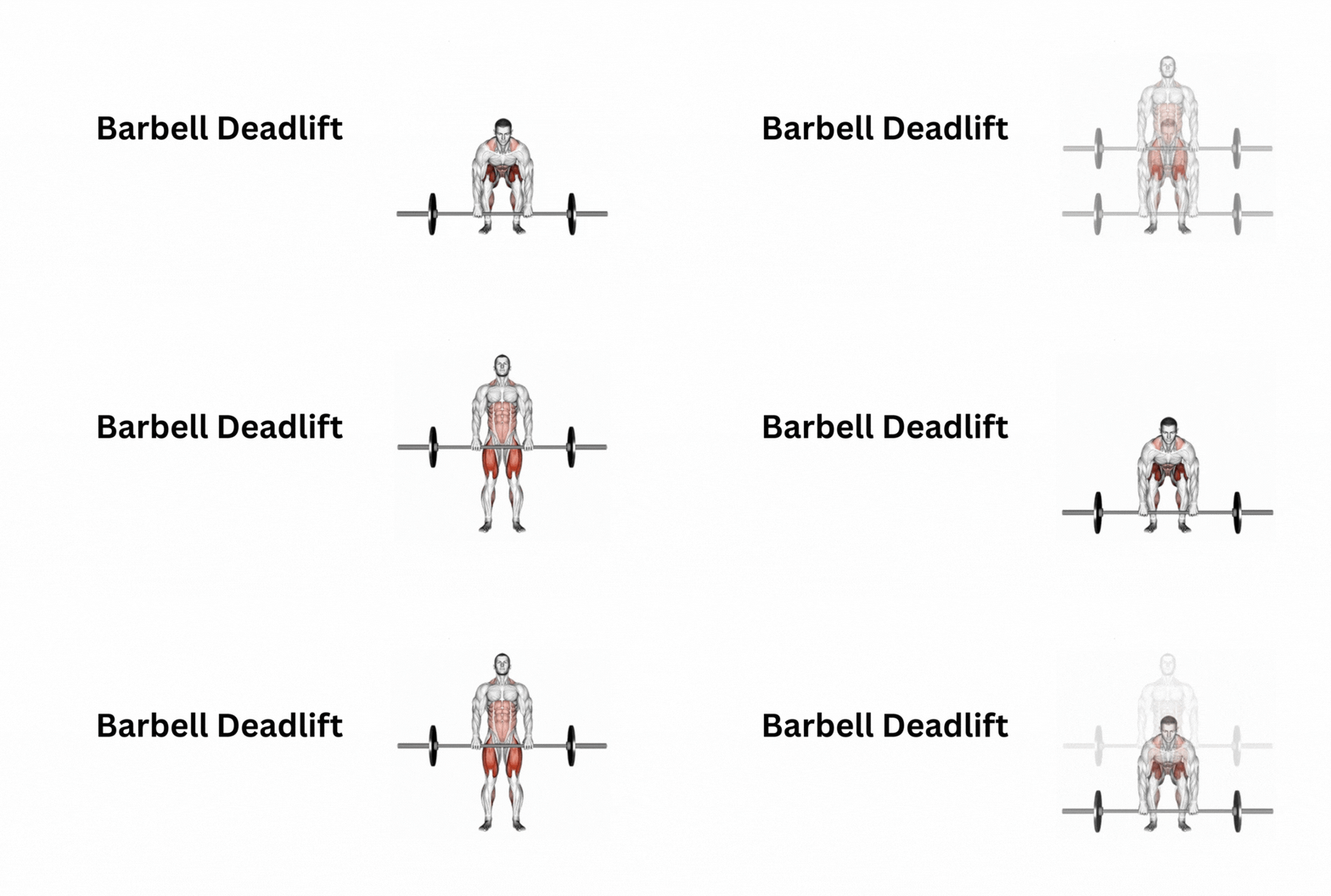
Mastering proper deadlift technique is essential for maximizing strength gains while minimizing the risk of injury. Follow these steps carefully:
Step 1: Setup
- Position the barbell over the mid-foot with your feet hip-width apart and toes slightly pointed outward.
- Align your hips and shoulders, maintaining a neutral spine.
- Grip the bar just outside your knees using a double overhand, mixed, or hook grip.
Step 2: Brace
- Tighten your core and pull your shoulders back.
- Engage your lats to lock the bar in place and stabilize your upper body.
Step 3: Pull
- Push through your heels while extending knees and hips simultaneously.
- Keep the bar close to your shins and thighs as you lift.
- Avoid rounding your back or letting your hips rise too fast.
Step 4: Lockout
- Stand tall with shoulders back and hips fully extended.
- Ensure the lower back stays neutral avoid hyperextending.
- Squeeze your glutes at the top for maximum contraction.
Step 5: Lower
- Hinge at the hips first, then bend the knees to return the bar to the floor.
- Maintain a neutral spine and keep the bar close to your body throughout the descent.
- Reset before the next repetition for safety and control.
Proper technique ensures optimal engagement of the posterior chain, reduces injury risk, and allows you to lift heavier weights safely.
Video
Coaching Cues & Checkpoints for the Barbell Deadlift
Using proper coaching cues can help you maintain form, lift safely, and maximize strength gains. Keep these key checkpoints in mind:
- Push the floor away with your heels – Focus on driving through the heels rather than lifting with your lower back.
- Keep your chest up and back flat – Maintain a neutral spine and prevent rounding.
- Bar should track close to your shins – Reduces stress on the lower back and improves leverage.
- Engage lats and core before lifting – Creates a rigid torso for better force transfer.
- Stand tall at lockout – Fully extend your hips, avoid leaning back, and squeeze glutes.
Incorporating these cues consistently will help improve technique, prevent injury, and lift more efficiently.
Common Barbell Deadlift Mistakes and How to Fix Them
Even experienced lifters can make errors that reduce performance or increase injury risk. Here’s a breakdown of common mistakes and practical fixes:
| Mistake | Why It Happens | How to Fix |
|---|---|---|
| Rounded back | Weak setup or lack of core engagement | Brace your core and engage lats before lifting |
| Hips rise too fast | Poor timing or imbalance between hip and shoulder extension | Maintain a consistent hip-shoulder line throughout the lift |
| Bar too far from body | Improper grip or setup | Keep the bar close to shins and thighs during the lift |
| Overextending at top | Ego lifting or trying to lean back | Achieve lockout without leaning back; stand tall and squeeze glutes |
| Jerking the bar off the floor | Lack of control or rushed first pull | Perform a slow, controlled first pull, then accelerate through the lift |
Correcting these mistakes ensures safer lifts, better strength gains, and improved posterior chain activation.
Barbell Deadlift Variations
Incorporating deadlift variations can target different muscles, improve weaknesses, and reduce the risk of overuse injuries. Here are the most popular options:
- Sumo Deadlift – Uses a wider stance to emphasize the quads and reduce stress on the lower back. Ideal for lifters with longer torsos.
- Romanian Deadlift (RDL) – Focuses on hamstrings and glutes with a slow, controlled eccentric phase. Excellent for building posterior chain strength.
- Trap Bar Deadlift – Performed with a hex bar, this variation allows for a more upright torso, reducing lower back strain and making it beginner-friendly.
- Deficit Deadlift – Standing on a small platform increases range of motion, improving strength off the floor and enhancing mobility.
- Stiff-Leg Deadlift – Minimizes knee bend to maximize hamstring and lower back engagement. Focus on controlled form to prevent injury.
Using these variations strategically can improve strength, correct imbalances, and enhance overall lifting performance.
Barbell Deadlift Alternatives
If a traditional barbell deadlift isn’t suitable due to equipment, skill level, or mobility limitations, these effective alternatives can still target the posterior chain and build strength:
- Kettlebell Deadlift – Uses one or two kettlebells, making it beginner-friendly while emphasizing hip hinge mechanics.
- Dumbbell Deadlift – Offers greater freedom of movement and is easier on the lower back, perfect for home or limited-equipment setups.
- Hip Thrusts – Primarily target the glutes and can complement deadlifts for stronger hip extension and athletic performance.
- Good Mornings – Focus on hamstrings, glutes, and spinal erectors while teaching proper hip hinge technique; ideal as an accessory lift.
Incorporating these alternatives allows you to train similar muscles safely while addressing weaknesses or accommodating different training environments.
Barbell Deadlift Programming: Sets, Reps & Frequency
The deadlift can be programmed differently depending on your training goals, whether you aim for strength, hypertrophy, or conditioning.
Sets & Reps by Goal
- Strength: 3-5 sets of 3-5 reps Focus on heavy loads with full recovery between sets.
- Hypertrophy (Muscle Growth): 3-4 sets of 6-12 reps Moderate weight with controlled tempo for muscle stimulation.
- Conditioning & Endurance: 3-5 sets of 10-15 reps Lighter loads, higher volume, and shorter rest periods.
Frequency
- Deadlifts can be performed 1-2 times per week, allowing for adequate recovery and adaptation.
Sample Workout
Here’s an example of a full-body session incorporating the barbell deadlift:
- Barbell Deadlift – 4×5
- Pull-Ups – 4×8
- Hip Thrusts – 3×10
- Plank – 3×60 seconds
This structure ensures balanced strength development, posterior chain engagement, and core stability, making it suitable for beginners, intermediate lifters, and advanced athletes alike.
Barbell Deadlift Safety & Who Should Avoid It
The deadlift is highly effective, but proper precautions are essential to prevent injury. Follow these safety tips:
- Warm up thoroughly – Activate the hamstrings, glutes, and lower back before lifting heavy.
- Maintain mobility and hip hinge mechanics – Ensure adequate flexibility in hips, hamstrings, and ankles to perform the lift safely.
- Start light to master technique – Focus on form before adding heavy loads.
Who Should Avoid or Modify
- Individuals with lower back injuries or chronic pain.
- Those with limited mobility that prevents safe hip hinge execution.
- Anyone experiencing pain during the lift stop and consult a professional.
By following these guidelines, you can maximize strength gains while minimizing risk, making the deadlift safe for most lifters.
Barbell Deadlift FAQs
Is the deadlift safe for beginners?
Yes, beginners can safely perform deadlifts if they focus on proper technique, start with lighter weights, and progressively increase load. Learning the hip hinge and core engagement is essential before lifting heavy.
Deadlift vs Romanian Deadlift what’s the difference?
The conventional deadlift focuses on lifting the bar from the floor with knees and hips extending simultaneously, engaging the entire posterior chain. The Romanian deadlift (RDL) emphasizes the eccentric movement, targeting hamstrings and glutes with minimal knee bend.
How should my grip be positioned?
Hands should grip the bar slightly outside the knees. You can use a double overhand, mixed, or hook grip depending on comfort and lifting load.
How often should I deadlift per week?
For most lifters, 1-2 sessions per week is ideal, allowing adequate recovery for strength and hypertrophy gains.
Conventional vs Sumo which is better?
- Conventional deadlift emphasizes the posterior chain and is suitable for most lifters.
- Sumo deadlift reduces lower back strain and targets quads more, ideal for those with longer torsos or mobility limitations.
Why do my lower back or hamstrings get sore?
Soreness is common due to posterior chain activation, especially if new to deadlifts or increasing weight. Ensure proper form, warm up adequately, and gradually progress load.
How heavy should I lift safely?
Start with a weight you can control for 6-12 reps while maintaining perfect form. Gradually increase load as technique and strength improve. Avoid ego lifting to minimize injury risk.
Key Takeaways
The barbell deadlift is a cornerstone lift for building full-body strength and targeting the posterior chain. Remember:
- Technique over load – Proper form is essential to maximize results and prevent injury.
- Posterior chain focus – Glutes, hamstrings, and lower back are primary movers.
- Progressive overload safely – Start light, master the hip hinge, then increase weight.
See Other Exercises: Barbell Clean and Jerk, Barbell Clean and Press, Dumbbell One Arm Shoulder Press