Table of Contents
Introduction
The Barbell Incline Front Raise is a strict shoulder isolation exercise performed on an incline bench to place continuous tension on the anterior deltoids. By limiting momentum and body sway, it maximizes front-delt activation and control. This movement is especially effective for hypertrophy-focused shoulder training and improving mind–muscle connection.
What Is the Barbell Incline Front Raise?
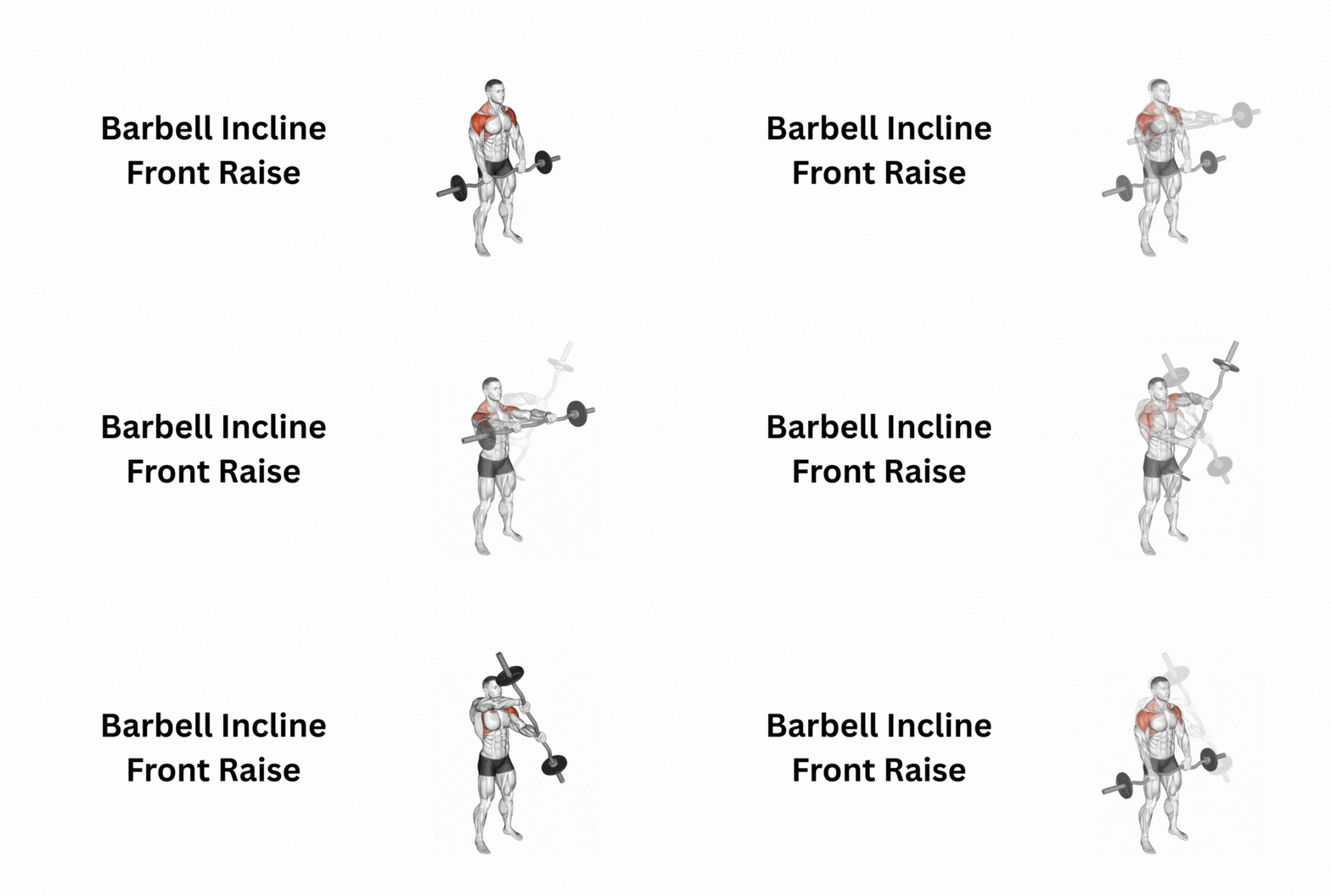
The Barbell Incline Front Raise is a shoulder isolation exercise performed while lying chest-down on an incline bench, typically set between 30 – 45 degrees. This incline position places the body in a fixed angle, allowing the barbell to move through a controlled front-raise path that keeps constant tension on the anterior deltoids throughout the entire range of motion.
How the Incline Position Creates a Mechanical Advantage
Using an incline bench changes the resistance curve of the movement. Because your torso is supported, gravity places continuous load on the front delts from the very start of the lift unlike standing raises, where tension drops at the bottom. This setup increases time under tension, enhances muscle fiber recruitment, and improves overall shoulder activation.
Why the Incline Removes Momentum
In standing front raises, lifters often rely on hip drive, leg movement, or torso swing to lift heavier weight. The incline bench eliminates these compensations by locking the body in place. As a result, the shoulders must do all the work, leading to cleaner reps, better form, and reduced stress on the lower back.
Incline Front Raise vs Standard Front Raise
- Incline Front Raise:
- Greater isolation of the anterior deltoids
- Reduced momentum and cheating
- Higher muscle tension and hypertrophy stimulus
- Standard Front Raise:
- Allows heavier loads
- Easier to cheat with body movement
- More involvement from stabilizers and momentum
Who Should Use the Barbell Incline Front Raise?
This exercise is ideal for bodybuilders, hypertrophy-focused athletes, and anyone looking to improve front-delt size and definition. It’s especially useful in shoulder-focused workouts, push days, or as a finishing movement after compound presses.
Benefits of the Barbell Incline Front Raise
The Barbell Incline Front Raise delivers more than just isolation it enhances shoulder performance and aesthetics by forcing the anterior deltoids to work under strict, controlled conditions. Here’s how this exercise produces real training outcomes:
Maximizes Anterior Deltoid Activation
By positioning the body on an incline bench, the front delts remain under load from the very start of each rep. This constant resistance leads to higher muscle fiber recruitment, making the exercise extremely effective for building front-delt size and density.
Reduces Cheating and Momentum
The incline setup eliminates common compensations such as leg drive, hip swing, or excessive torso movement. With momentum removed, the shoulders are forced to generate all the force, resulting in cleaner reps and more meaningful muscle stimulation.
Increases Time Under Tension
Because the movement is slower and more controlled, the anterior deltoids stay engaged for a longer duration per set. This increased time under tension is a key driver of hypertrophy, helping stimulate muscle growth more effectively than standing variations.
Improves Shoulder Control and Symmetry
Performing the lift in a fixed position enhances neuromuscular control and reinforces proper shoulder mechanics. Over time, this leads to better left-to-right symmetry and more balanced shoulder development, especially for lifters with dominant-side imbalances.
Excellent Accessory for Pressing Movements
The Barbell Incline Front Raise strengthens the front delts in isolation, directly supporting compound lifts like the overhead press, bench press, and incline press. Stronger anterior deltoids translate to improved pressing power and reduced risk of muscular imbalances.
Muscles Worked
The Barbell Incline Front Raise is a highly targeted shoulder isolation movement. When performed correctly, it places the majority of the workload on the front delts while minimizing assistance from other muscle groups.
Primary Muscle
Anterior Deltoids – The main shoulder flexors responsible for lifting the arms forward. These muscles handle most of the load throughout the movement and receive the highest hypertrophy stimulus.
Secondary Muscles
Upper Pectorals – Assist during the initial portion of the lift, especially as the arms move upward from the stretched position.
Upper Trapezius – Provides minor assistance in shoulder elevation and stabilization but should not dominate the movement.
Stabilizer Muscles
Core – Engaged isometrically to maintain torso stability against the bench.
Forearms – Work to grip and control the barbell throughout the lift.
Scapular Stabilizers – Help control shoulder blade movement, ensuring smooth and safe arm elevation.
You should feel this exercise mainly in the front of your shoulders not your traps or lower back.
How to Do the Barbell Incline Front Raise
Follow these steps to perform the Barbell Incline Front Raise with proper form and maximum front-delt activation.
Step 1: Bench Setup
Set an incline bench to 30 – 45 degrees. Lie chest-down with your torso fully supported and your feet flat on the floor for stability. This setup removes momentum and keeps constant tension on the shoulders.
Step 2: Grip & Start Position
Use a pronated (overhand) grip at about shoulder width. Let the barbell rest near your thighs with your arms fully extended and a slight bend in the elbows. Keep your neck neutral and core braced against the bench.
Step 3: Raising the Bar
Lift the barbell in a controlled arc directly in front of you. Focus on driving the movement with your shoulders, not your arms or traps. Raise the bar until it reaches shoulder height, taking 2 – 3 seconds on the concentric (lifting) phase.
Step 4: Lowering Phase
Lower the barbell slowly over 3 – 4 seconds, maintaining tension on the anterior deltoids the entire time. Do not let the bar rest at the bottom keep the muscles engaged before beginning the next rep.
Video
Best Form Cues for Maximum Activation
Use these simple, highly effective cues to keep tension on the anterior deltoids and get the most out of every rep:
- Chest glued to the bench – Stay fully supported to eliminate momentum and body swing.
- Lift with shoulders, not traps – Initiate the movement by flexing the front delts, not shrugging.
- No swinging or jerking – Smooth, controlled reps beat heavier weight every time.
- Raise to shoulder level only – Going higher shifts tension away from the front delts.
- Control every inch of the descent – A slow eccentric maximizes time under tension and growth stimulus.
Common Mistakes
Avoid these frequent errors to keep constant tension on the anterior deltoids and get the most benefit from the Barbell Incline Front Raise.
| Mistake | Why It’s Bad | How to Fix It |
|---|---|---|
| Using momentum | Shifts work away from the front delts and reduces muscle tension | Lower the weight and slow the lift |
| Raising too high | Causes excessive trap involvement and shoulder shrugging | Stop at shoulder height |
| Bent elbows | Turns the movement into a press rather than a raise | Maintain only a slight elbow bend |
| Too much weight | Leads to poor control and sloppy reps | Prioritize tempo over load |
Rule of thumb: If you can’t control the eccentric for at least 3 seconds, the weight is too heavy.
Variations
Choose the right front raise variation based on your training experience, goals, and shoulder comfort.
For Hypertrophy
These variations maximize tension and provide excellent muscle-building stimulus for the anterior deltoids:
- Dumbbell Incline Front Raise – Allows independent arm movement, improving symmetry and mind–muscle connection.
- Cable Incline Front Raise – Provides constant tension throughout the entire range of motion, ideal for slow, controlled reps.
For Beginners
Simpler variations that help build foundational shoulder strength and proper movement patterns:
- Seated Dumbbell Front Raise – Reduces momentum while being easier to control than a barbell.
- Plate Front Raise – Encourages proper hand positioning and lighter loading for better form.
For Shoulder Comfort
Best options if you experience shoulder irritation or limited mobility:
- Neutral-Grip Dumbbell Raise – Keeps the shoulders in a more joint-friendly position, reducing strain.
- Resistance Band Front Raise – Smooth, progressive resistance with minimal joint stress, great for warm-ups or rehab-focused sessions.
Alternatives to the Incline Front Raise
If you don’t have access to an incline bench or want to add variety to your shoulder training, these effective alternatives still emphasize the anterior deltoids while offering different loading patterns and benefits.
- Standing Barbell Front Raise – Allows heavier loads but requires strict form to avoid momentum. Best used once front-delt control is already developed.
- Dumbbell Front Raise – Offers greater range of motion and unilateral control, making it ideal for fixing strength and size imbalances.
- Plate Raise – A simple yet effective option that encourages lighter weight and constant tension through the front delts.
- Landmine Press – A compound, anterior-delt dominant movement that trains shoulder flexion while being more joint-friendly than traditional overhead presses.
How to Program the Barbell Incline Front Raise
The Barbell Incline Front Raise works best as a strict accessory movement designed to maximize front-delt hypertrophy and control. Program it strategically to complement your pressing exercises.
Sets & Reps
- Hypertrophy: 3-4 sets × 10-15 reps
- Tempo Focus: Use a 3-1-3 tempo
- 3 seconds lifting
- 1-second pause at the top
- 3 seconds lowering
This tempo ensures constant tension and prevents momentum.
Weekly Frequency
- Perform 1-2 times per week
- Best placed after compound pressing movements like overhead presses or incline bench presses, when the front delts are already pre-fatigued.
Sample Finisher (Front-Delt Burnout)
- 3 sets × 12 reps
- 30-45 seconds rest
- Last set: Perform a drop set by reducing the weight 20-30% and continuing to near failure
Safety Tips & Who Should Avoid This Exercise
While the Barbell Incline Front Raise is highly effective, proper precautions are essential to protect your shoulders and neck.
Safety Tips
- Warm up your shoulders first with light mobility work or band raises to prepare the joints and rotator cuff.
- Keep weights moderate this is an isolation movement, not a strength lift.
- Use slow, controlled reps to maintain tension and reduce joint stress.
- Maintain full chest support on the bench to avoid compensatory movements.
Who Should Avoid or Modify
- Avoid this exercise if you have shoulder impingement or unresolved shoulder pain.
- Stop immediately if you feel pain in your neck or traps, as this indicates poor loading or technique.
- Lifters with limited shoulder mobility should choose dumbbell or band variations instead.
Barbell Incline Front Raise FAQs
Is the incline front raise better than standing front raises?
Yes for isolation and hypertrophy, the incline front raise is superior. The incline position removes momentum and keeps constant tension on the anterior deltoids, whereas standing front raises often involve body swing and trap compensation.
What bench angle is best for incline front raises?
A bench angle of 30-45 degrees is ideal. This range maximizes front-delt tension while keeping the shoulders in a safe, joint-friendly position.
Why do I feel this exercise in my traps?
Feeling it in your traps usually means the weight is too heavy or you’re raising the bar too high. Lower the load, stop at shoulder height, and focus on lifting with the front delts not shrugging.
Should I use a barbell or dumbbells?
- Barbell: Great for symmetrical loading and consistent tension.
- Dumbbells: Better for unilateral control and correcting imbalances.
Choose the tool that allows the best control and mind-muscle connection.
How heavy should I go?
Use a weight you can control for 10-15 reps with a slow tempo. If you can’t manage a 3-second eccentric, the weight is too heavy.
Can beginners do incline front raises?
Yes, but beginners should start with dumbbells or very light barbells to master form before increasing load.
Is the barbell incline front raise safe for shoulders?
When performed with proper warm-up, moderate weight, and strict form, it is safe for healthy shoulders. Avoid it if you have shoulder impingement or experience pain in the neck or traps.
Key Takeaways
- The Barbell Incline Front Raise is an excellent anterior-delt isolation exercise that maximizes front shoulder development.
- Performing it on an incline bench removes momentum, ensuring cleaner, more effective reps.
- It’s best used for hypertrophy and controlled shoulder training, rather than heavy strength work.
- Light to moderate weight with slow, controlled tempo yields the best results and minimizes injury risk.
Ready to maximize your front delts and shoulder growth? Combine the Barbell Incline Front Raise with other targeted exercises for a complete shoulder routine.
- Shoulder Workout Plan – Full routines for all shoulder heads
- Best Front Delt Exercises – Top moves to sculpt the front delts
- Push Day Training Split – Structure your push workouts for optimal gains
See Other Exercises: Barbell Behind Neck Press, Barbell Military Press, Barbell Seated Military Press