Table of Contents
Instructions
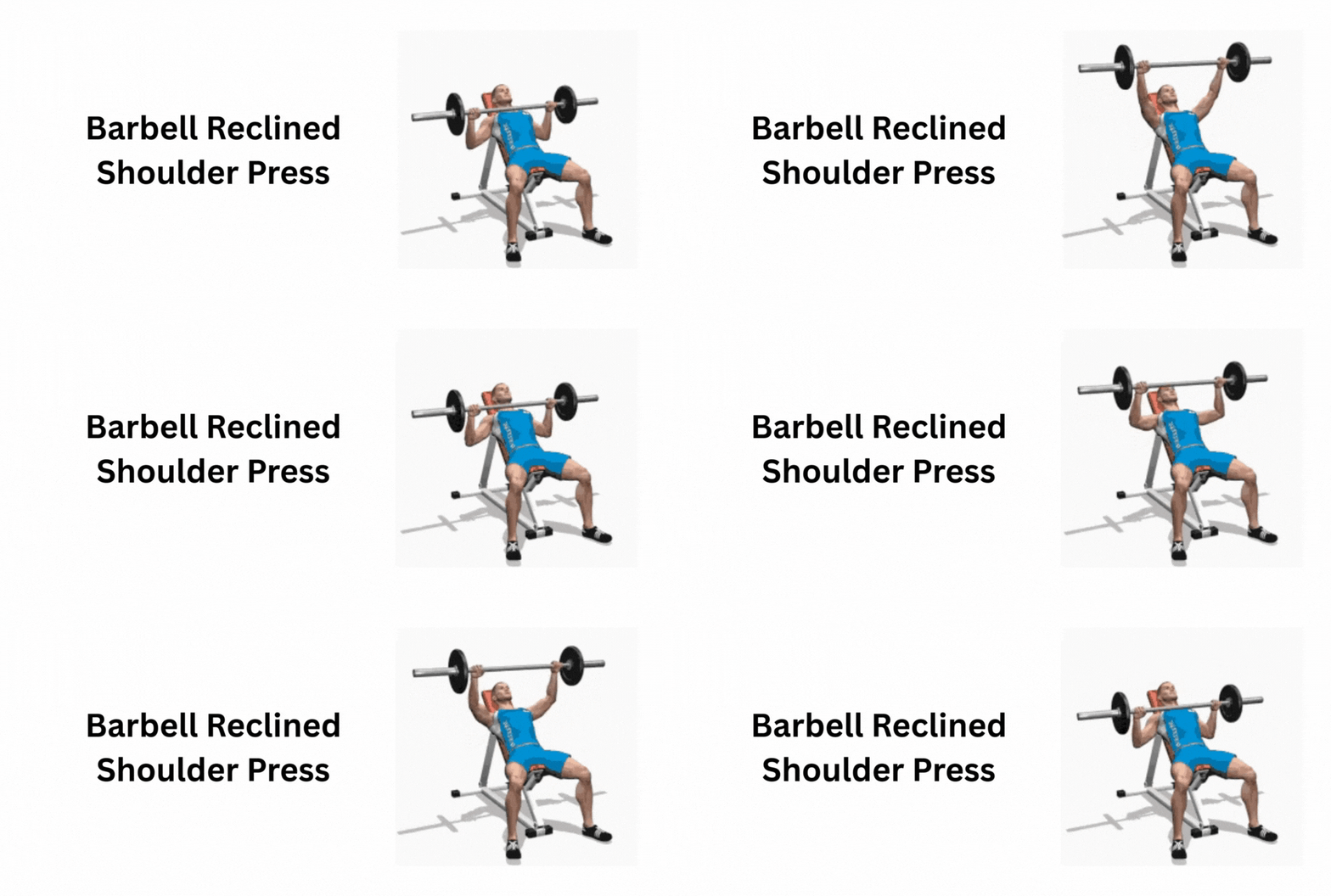
The Barbell Reclined Shoulder Press is a unique variation of the traditional shoulder press, performed on a bench set at a reclined angle. This exercise emphasizes the deltoid muscles while minimizing lower-back strain, allowing for safer and more controlled lifting. Ideal for building shoulder strength and hypertrophy, it’s a powerful addition to any upper-body training routine.
What is the Barbell Reclined Shoulder Press?
The Barbell Reclined Shoulder Press is performed on a bench set at a reclined angle of approximately 30-45°, which shifts the emphasis toward the deltoids while reducing stress on the lower back. Unlike the seated or standing shoulder press, this variation allows for a more controlled range of motion and lowers the risk of shoulder impingement.
This exercise is particularly ideal for bodybuilders and hypertrophy-focused trainees, as it targets the anterior and lateral delts efficiently while minimizing strain on supporting joints.
Benefits of the Barbell Reclined Shoulder Press
The Barbell Reclined Shoulder Press offers several key advantages for shoulder development and overall upper-body strength:
- Increases anterior deltoid activation – The reclined angle emphasizes the front delts for greater hypertrophy.
- Reduces lower-back involvement – Unlike standing presses, the reclined position minimizes lumbar strain.
- Improves shoulder stability and strength – Controlled pressing enhances joint stability and muscle balance.
- Enhances triceps lockout – Secondary activation of the triceps supports stronger pressing mechanics.
- Controlled range of motion reduces momentum – Promotes strict form and maximizes muscle engagement.
Muscles Worked
The Barbell Reclined Shoulder Press primarily targets the shoulders while engaging several supporting muscles:
| Muscle Group | Role |
|---|---|
| Anterior Deltoid | Primary mover – drives the press forward |
| Medial Deltoid | Secondary – assists in lifting and shoulder width development |
| Triceps | Lockout assistance – extends elbows at the top of the movement |
| Upper Pectorals | Stabilization – supports the shoulder and chest connection |
| Trapezius | Scapular support – stabilizes shoulder blades |
| Core | Postural support – maintains spine alignment throughout the press |
This layout helps readers and search engines quickly understand which muscles are engaged and why this exercise is effective for shoulder hypertrophy and strength.
How to Perform the Barbell Reclined Shoulder Press
Step 1: Bench Setup
- Adjust the bench to a 30-45° recline.
- Keep feet flat on the floor and ensure your glutes and back are fully supported.
Step 2: Grip & Start Position
- Use a pronated (overhand) grip, slightly wider than shoulder-width.
- Position the bar at upper chest height, keeping your elbows under the wrists.
Step 3: Press
- Press the bar in a vertical line overhead, maintaining control.
- Exhale as you lift and avoid arching the lower back.
Step 4: Lockout
- Achieve full elbow extension at the top of the movement.
- Pause briefly to ensure proper muscle activation before lowering.
Step 5: Lowering Phase
- Lower the bar slowly and under control (2-4 seconds).
- Keep tension on the delts throughout the eccentric phase.
Video
Best Form Cues for the Barbell Reclined Shoulder Press
To maximize results and minimize injury risk, keep these key cues in mind:
- Back fully against the bench – Ensures spinal support and proper pressing mechanics.
- Elbows slightly forward, not flared – Reduces shoulder impingement risk and targets delts effectively.
- Core tight and glutes engaged – Maintains stability and prevents lower-back arching.
- Press with shoulders, not traps – Focuses on deltoid activation rather than over-recruiting upper traps.
- Controlled tempo throughout – Promotes muscle tension, hypertrophy, and safe movement.
Common Mistakes & How to Fix Them
Avoid these frequent errors to perform the Barbell Reclined Shoulder Press safely and effectively:
| Mistake | Problem | Fix |
|---|---|---|
| Elbows flared | Shoulder strain | Keep elbows slightly forward |
| Overarching back | Lower back stress | Use proper bench recline and engage core |
| Using momentum | Reduces muscle activation | Slow tempo, focus on controlled lifting |
| Too heavy | Poor form, injury risk | Start lighter and prioritize technique |
Variations & Alternatives for the Barbell Reclined Shoulder Press
Variations
- Dumbbell Reclined Shoulder Press – Allows for a greater range of motion and unilateral training.
- Incline Bench Dumbbell Press – Targets the upper chest and anterior delts with a similar reclined angle.
- Seated Barbell Military Press – Traditional vertical press that emphasizes shoulder strength.
Alternatives
- Standing Barbell Shoulder Press – Full-body engagement with core stabilization.
- Arnold Press – Adds rotational movement to hit all deltoid heads.
- Landmine Shoulder Press – Reduces shoulder stress while allowing pressing from an angled path.
- Cable Shoulder Press – Constant tension throughout the movement for hypertrophy focus.
Programming the Barbell Reclined Shoulder Press
Rep Ranges
- Strength: 3-6 reps per set for maximal load and power development
- Hypertrophy: 6-12 reps per set to maximize shoulder growth
- Endurance: 12-15 reps per set for muscular stamina and joint conditioning
Frequency
- 1-2 times per week is ideal for most trainees
- Best performed early in upper-body sessions when shoulders are fresh
Sample 4-Week Plan
| Week | Sets × Reps | Notes |
|---|---|---|
| 1 | 3×10 | Focus on controlled tempo and form |
| 2 | 3×12 | Increase volume gradually |
| 3 | 4×8 | Slightly heavier load for strength focus |
| 4 | Increase weight by 5%, repeat cycle | Progressive overload to stimulate growth |
Safety Tips & Who Should Avoid the Barbell Reclined Shoulder Press
To perform the Barbell Reclined Shoulder Press safely and prevent injury, consider the following:
- Avoid if shoulder impingement exists – Pre-existing shoulder issues may be aggravated.
- Ensure bench back support is secure – Proper stability prevents excessive spinal strain.
- Warm up rotator cuff and delts before pressing – Prepares the muscles and joints for heavy loads.
- Stop if pain occurs in shoulders or elbows – Discomfort is a signal to adjust form, weight, or exercise choice.
FAQs About the Barbell Reclined Shoulder Press
1. Reclined Shoulder Press vs Seated Military Press which is better?
The reclined press emphasizes the anterior delts and reduces lower-back strain, making it ideal for hypertrophy. The seated military press focuses more on overall shoulder strength but may stress the lower back if core engagement is lacking.
2. What bench angle is optimal?
A 30-45° recline balances deltoid activation and spinal support. Lower angles reduce shoulder involvement, while steeper angles resemble a seated press.
3. How heavy should beginners go?
Start with a light to moderate weight that allows controlled, strict form for 8–12 reps. Focus on technique before increasing load.
4. Barbell or dumbbells which is better for hypertrophy?
Dumbbells allow a greater range of motion and unilateral training, while barbells enable heavier loading. Combining both can maximize growth.
5. Can it be done standing with slight recline?
Slightly leaning back while standing is possible, but it may shift stress to the lower back. Using a bench is safer and more controlled.
6. How often should I train shoulders with this press?
1-2 times per week is ideal, preferably early in upper-body sessions when shoulders are fresh.
7. Is it safe for older adults or people with back issues?
Yes, if the bench provides full back support and weight is light to moderate. Avoid if there’s existing shoulder impingement or pain.
Key Takeaways
- The Barbell Reclined Shoulder Press effectively isolates the delts while minimizing lower-back stress.
- Prioritize strict form, controlled motion, and moderate weight to maximize results and reduce injury risk.
- Ideal for shoulder hypertrophy, stability, and pressing strength, making it a valuable addition to upper-body routines.
Enhance your shoulder training by exploring our Shoulder Workout Guides, Push-Day Routines, and other Targeted Shoulder Exercises for balanced growth and strength.
See Other Exercises: Barbell Shoulder Press, Barbell Seated Military Press, Barbell Military Press