Table of Contents
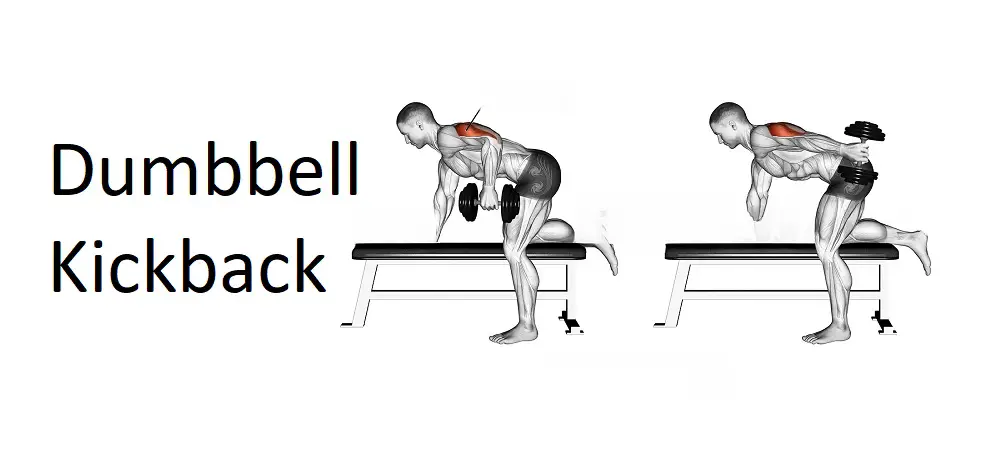
The dumbbell kickback is a triceps isolation exercise that targets the muscles at the back of your upper arms. It is performed by extending the elbow while keeping the upper arm relatively stable, helping you train the triceps with a controlled range of motion. Dumbbell kickbacks require minimal equipment and can be performed at home or in the gym.
Introduction
The triceps make up about two-thirds of your upper arm, making them crucial for a well-rounded and strong upper body. The Dumbbell Kickback focuses solely on the triceps, ensuring maximum engagement and muscle activation. This exercise requires minimal equipment and can be performed at home or in the gym, making it an accessible option for all fitness enthusiasts.
Muscles Worked in Dumbbell Kickbacks
The dumbbell kickback is primarily an isolation exercise for the triceps. The movement is performed by extending the elbow while keeping the upper arm relatively stationary, allowing the triceps to produce most of the movement.
Primary Muscle: Triceps
The triceps brachii is the primary muscle worked during dumbbell kickbacks. It extends the elbow as you straighten your arm and helps control the dumbbell as you return to the starting position.
Keeping the upper arm close to your torso and minimizing movement at the shoulder helps keep the exercise focused on elbow extension and triceps contraction. :chatgpt-content-reference{index=”1″}
Secondary Muscles
Dumbbell kickbacks also require supporting muscles to help maintain your body and shoulder position while the triceps perform the elbow extension.
- Shoulder stabilizers: Help maintain the position of the upper arm while the elbow moves.
- Core muscles: Help stabilize the torso when performing the exercise in a bent-over or split-stance position.
- Forearm and grip muscles: Help maintain control of the dumbbell throughout the movement.
Although these muscles contribute to stability and control, the triceps remain the primary focus of the exercise.
Dumbbell Kickback Muscles Worked: What Does It Target?
The dumbbell kickback primarily works the triceps brachii, which is responsible for extending the elbow and straightening the arm. The long, lateral, and medial heads of the triceps all contribute to the movement.
The exercise also involves the shoulder stabilizers, core, and forearm and grip muscles. These muscles help maintain your body position and control the dumbbell, but they are not the primary targets.
For the best triceps engagement, keep your upper arm relatively stationary and perform the movement by extending and flexing the elbow rather than swinging the entire arm.
Which Part of the Triceps Does the Dumbbell Kickback Work?
The triceps brachii has three heads: the long head, lateral head, and medial head. All three contribute to elbow extension, so the dumbbell kickback involves the triceps as a whole rather than isolating only one head.
Maintaining a stable upper arm and performing controlled elbow extension helps keep the movement focused on the triceps.
How to Perform Dumbbell Kickbacks: Proper Form
Equipment Needed
You only need a pair of dumbbells. Choose a weight that allows you to keep your upper arms stable and perform each repetition with controlled movement.
Step-by-Step Instructions
Starting Position
- Hold a dumbbell in one hand with your palm facing inward toward your body.
- Take a split stance with the opposite foot forward and keep your feet stable.
- Brace your core and place your free hand on your forward thigh or another stable support.
- Hinge forward slightly from your hips while keeping your spine neutral and your head aligned with your torso.
- Position the working upper arm close to and roughly parallel with your torso.
- Bend your elbow to about 90 degrees so your forearm points toward the floor.
Execution
- Extend the elbow: Keeping your upper arm stationary, slowly straighten your elbow and move the dumbbell backward.
- Reach the top position: Continue until your arm is extended without forcing the elbow beyond a comfortable position.
- Squeeze the triceps: Briefly contract your triceps at the top while keeping your upper arm in position.
- Return with control: Slowly bend your elbow and lower the dumbbell back to the starting position.
- Repeat: Complete your repetitions on one side, then switch arms.
Form Tips
- Keep your upper arm close to your torso and avoid letting it swing during the repetition.
- Move primarily through the elbow rather than the shoulder.
- Keep your core braced and avoid rotating or twisting your torso.
- Maintain a neutral spine instead of rounding or excessively arching your lower back.
- Use a controlled tempo rather than relying on momentum to move the dumbbell.
- Choose a manageable weight that allows you to maintain the same body position throughout the set.
Dumbbell Kickback Form: Key Technique Points
Proper dumbbell kickback form depends on keeping the upper arm stable while the elbow moves through extension. Use these checkpoints during every repetition:
- Keep your upper arm stationary: Position it close to your torso and avoid letting it swing.
- Hinge from the hips: Keep your spine neutral and your torso stable rather than rounding or excessively arching your back.
- Move through the elbow: The main movement should be straightening and bending the elbow, not swinging the shoulder.
- Control both phases: Extend the arm smoothly and lower the dumbbell under control.
- Use an appropriate weight: Choose a load that allows you to maintain your position and technique throughout the set.
If your form breaks down, reduce the weight and focus on controlled repetitions before increasing resistance.
Common Mistakes to Avoid
1. Swinging the Arms
Moving the entire arm instead of keeping the upper arm stable reduces the emphasis on elbow extension and can make the exercise less controlled.
How to fix it: Keep your upper arm close to your torso and stationary throughout the repetition. The primary movement should come from bending and extending the elbow.
2. Using Excessive Weight
Using a dumbbell that is too heavy can make it difficult to maintain your torso and upper-arm position. This often leads to swinging, shortened repetitions, or compensatory movement.
How to fix it: Reduce the weight and choose a load that allows you to complete each repetition with controlled movement and consistent form.
3. Rushing the Movement
Performing kickbacks too quickly can reduce control during both the extension and return phases. The lowering portion is especially important because it requires you to control the dumbbell rather than simply letting it drop.
How to fix it: Extend the elbow smoothly, pause briefly when the arm is extended, and return the dumbbell slowly to the starting position.
4. Incorrect Body Position
Rounding the back, excessively arching the lower back, or rotating the torso can make it harder to maintain a stable position during the exercise.
How to fix it: Brace your core, maintain a neutral spine, keep your head aligned with your spine, and avoid rotating your torso while performing the movement.
Benefits of Dumbbell Kickbacks
1. Triceps Isolation
Dumbbell kickbacks provide a focused way to train the triceps through elbow extension. Keeping the upper arm relatively stable helps limit unnecessary movement and keeps the exercise centered on the triceps.
2. Simple Equipment
The exercise requires only dumbbells, making it practical for home workouts, gyms, and routines with limited equipment.
3. Easy to Add to Triceps Workouts
Dumbbell kickbacks can be used as an isolation exercise after pressing movements or other triceps exercises. They can fit into upper-body, push, and dedicated arm workouts.
4. Useful for Different Training Levels
Beginners can start with light dumbbells and focus on technique, while more experienced lifters can gradually increase repetitions or resistance as their form improves.
5. Helps Reinforce Controlled Triceps Training
Because the exercise is performed with a relatively stable upper arm and controlled elbow movement, it encourages you to focus on the triceps rather than relying on momentum.
Variations of Dumbbell Kickback
Changing the setup or resistance method can make dumbbell kickbacks more comfortable, accessible, or challenging. The following variations keep the main goal of the exercise the same: controlled elbow extension with the upper arm kept stable.
1. Single-Arm Dumbbell Kickback
The single-arm variation allows you to train one side at a time while using your free hand for support.
- Place your free hand on a stable surface such as a bench or your thigh.
- Keep the working upper arm close to your torso.
- Extend the elbow while maintaining control of the dumbbell.
- Complete the repetitions on one side before switching arms.
This variation can be useful when you want to focus on each arm individually or maintain better torso stability.
2. Incline Dumbbell Kickback
The incline dumbbell kickback uses a bench to provide additional support while you perform the movement.
- Set an adjustable bench to a comfortable incline.
- Position your chest against the bench and hold the dumbbells with a neutral grip.
- Keep your upper arms positioned close to your torso.
- Extend your elbows without swinging the weights.
- Lower the dumbbells under control before repeating.
The bench can reduce the amount of effort required to stabilize the torso, allowing you to concentrate more on the elbow-extension movement.
3. Cable Kickback
The cable kickback replaces the dumbbell with a cable attachment and can provide resistance through a different portion of the movement.
- Attach a single handle to a low cable position.
- Take a stable stance and hinge forward slightly.
- Keep your upper arm relatively stationary.
- Extend your elbow and move the handle backward.
- Return the handle slowly without allowing the weight stack to pull your arm out of position.
A cable setup can be useful when you want to experiment with a different resistance profile while keeping the exercise focused on the triceps.
4. Resistance Band Kickback
The resistance band kickback is a convenient alternative when dumbbells or cable equipment are not available.
- Secure the band at a suitable low anchor point or position it so it provides resistance during the kickback.
- Hold the band with one hand and establish a stable stance.
- Keep your upper arm close to your torso.
- Extend your elbow against the band’s resistance.
- Return slowly to the starting position and maintain control of the band.
This variation is particularly useful for home workouts and travel because resistance bands are lightweight and portable.
Incorporating Dumbbell Kickbacks into Your Routine
Dumbbell kickbacks work well as a triceps isolation exercise near the end of an upper-body or push workout. Because the exercise relies on controlled elbow extension and relatively stable positioning, use a weight that allows you to maintain proper form throughout the set.
Frequency
For most training routines, dumbbell kickbacks can be performed 1–2 times per week as part of your overall triceps training. Allow enough recovery between sessions, especially when other pressing and triceps exercises are included in your program.
Sets and Reps
A practical starting point is 2–4 sets of 8–15 repetitions per arm. Choose a resistance that allows you to complete the target repetitions without swinging the dumbbell or losing your upper-arm position.
For muscle-building workouts, you can gradually increase the resistance or repetitions as your technique and strength improve. ACE programming examples commonly use 8–15 repetitions for triceps kickbacks and other resistance exercises. ACE
Where to Place Dumbbell Kickbacks in a Workout
Dumbbell kickbacks are generally better suited toward the middle or end of an upper-body or triceps workout rather than as your first exercise. This allows you to perform heavier compound movements first while using kickbacks as focused triceps work afterward.
Sample Triceps Workout
Triceps-Focused Workout:
- Close-Grip Bench Press: 3–4 sets of 6–10 reps
- Overhead Dumbbell Triceps Extension: 3 sets of 8–12 reps
- Dumbbell Kickbacks: 2–4 sets of 8–15 reps
- Optional Triceps Isolation Exercise: 2–3 sets of 10–15 reps
Sample Upper-Body Workout
You can also include dumbbell kickbacks after your main upper-body pressing exercises:
- Barbell or Dumbbell Bench Press: 3–4 sets of 6–10 reps
- Dumbbell Shoulder Press: 3 sets of 8–12 reps
- Row or Pull-Up Variation: 3 sets of 8–12 reps
- Dumbbell Kickbacks: 2–3 sets of 10–15 reps
How to Progress
Start with a weight that allows you to maintain consistent technique. Once you can complete all planned repetitions with good control, gradually increase the resistance or add repetitions within your target range.
Do not increase the weight if doing so causes you to swing the dumbbells, move your upper arms excessively, or lose a stable torso position. Maintaining controlled movement is more important than using a heavier dumbbell.
Safety Considerations
Dumbbell kickbacks are a relatively simple isolation exercise, but proper positioning and controlled movement are important. Use a manageable weight and maintain a stable torso throughout each repetition.
1. Warm Up
Before performing triceps isolation exercises, spend a few minutes preparing your upper body with light movement and an appropriate warm-up. If you are starting a new workout, begin with lighter resistance before using your normal working weight.
2. Use an Appropriate Weight
Choose a dumbbell that allows you to maintain your upper-arm position and perform controlled repetitions. If you need to swing the weight or move your shoulder to complete a repetition, reduce the resistance.
3. Protect Your Lower Back
Maintain a stable, neutral spine while performing the exercise. Avoid excessively arching or rounding your lower back and avoid rotating your torso as you extend the elbow. ACE specifically recommends maintaining the torso position throughout the movement to avoid additional loading on the spine. ACE Fitness
4. Keep the Upper Arm Stable
The movement should primarily occur at the elbow. Keep your upper arm close to your torso rather than allowing it to swing upward or forward during each repetition.
5. Use Controlled Movement
Perform both the extension and return phases under control. Avoid using momentum to move the dumbbell, especially when fatigue begins to affect your technique.
6. Stop if You Feel Pain
Muscular effort and fatigue are normal during resistance training, but sharp, sudden, or unusual pain is not something to push through. Stop the exercise if pain occurs and seek appropriate professional guidance if it persists.
If you have an existing injury or medical condition that may affect your ability to exercise safely, consult an appropriate healthcare or qualified fitness professional before adding this exercise to your routine.
Video Demonstration
Watch the demonstration below to see the dumbbell kickback setup, arm position, elbow extension, and controlled return. Use the video together with the step-by-step instructions above to reinforce proper form.
FAQs
1. How heavy should the dumbbells be for kickbacks?
Use a dumbbell weight that allows you to perform each repetition with controlled dumbbell kickback form. You should be able to keep your upper arm relatively stationary, extend the elbow fully without forcing the joint, and control the dumbbell during the return.
If you have to swing the weight, rotate your torso, raise your upper arm, or shorten the range of motion to complete your repetitions, the dumbbell is likely too heavy. Reduce the weight and focus on consistent technique before increasing resistance.
2. Can beginners perform dumbbell kickbacks?
Yes. Dumbbell kickbacks are listed by ACE as a beginner-level exercise. Beginners should start with a manageable weight and focus on maintaining a stable torso and upper arm before increasing resistance. :chatgpt-content-reference{index=”2″}
3. Are dumbbell kickbacks better than triceps pushdowns?
Neither exercise needs to be considered universally better. Dumbbell kickbacks require only dumbbells and focus on controlled elbow extension, while cable pushdowns use a cable machine and provide a different resistance setup. Both can be used as part of a triceps training routine.
4. How many sets and reps should I do?
A practical starting point is 2–4 sets of 8–15 repetitions per arm. Choose a resistance that allows you to maintain good technique throughout the set. Your total triceps training volume should also account for other exercises performed during the workout.
5. What is the best grip for dumbbell kickbacks?
A neutral grip, with your palms facing toward each other, is a straightforward option for dumbbell kickbacks. The most important factor is maintaining a comfortable wrist position while keeping the upper arm stable and performing controlled elbow extension.
6. Should I perform dumbbell kickbacks with one or both arms?
Both options can work. Performing the exercise one arm at a time allows you to concentrate on each side individually and use your free hand for additional support. If you perform both arms together, make sure you can maintain a stable torso and consistent upper-arm position.
7. What muscles do dumbbell kickbacks work?
The triceps brachii is the primary muscle worked during dumbbell kickbacks. The exercise involves elbow extension while the upper arm remains relatively stationary, with other muscles contributing to body and shoulder stability. :chatgpt-content-reference{index=”3″}
8. How do I know if I am using too much weight?
If you have to swing the dumbbell, rotate your torso, raise your upper arm, or lose control during the lowering phase, the weight may be too heavy for your current level of technique. Reduce the resistance and focus on controlled repetitions.
Conclusion
The dumbbell kickback is a simple triceps isolation exercise that can be included in upper-body, push, or triceps-focused workouts. It primarily trains the triceps through controlled elbow extension while the upper arm remains relatively stable.
For effective dumbbell kickbacks, choose a manageable weight, maintain a stable torso, keep your upper arm controlled, and perform both the extension and return phases with control. Avoid swinging the dumbbell or using excessive weight to complete repetitions.
Whether you use the standard dumbbell kickback or a variation such as the single-arm or incline kickback, consistent technique and appropriate resistance are more important than simply lifting heavier weights.
Other Triceps Exercises
If you want to train your triceps with different equipment or movement patterns, explore these related exercises:
- Cable One Arm Pushdown — a single-arm cable exercise for focused triceps training.
- Cable Triceps Extension — a cable-based isolation exercise for the triceps.
- Cable Triceps Dip — a cable exercise that provides another way to train the triceps.
- Cable Rope Hammer Curl — a cable-based arm exercise that complements triceps training with direct biceps and forearm work.