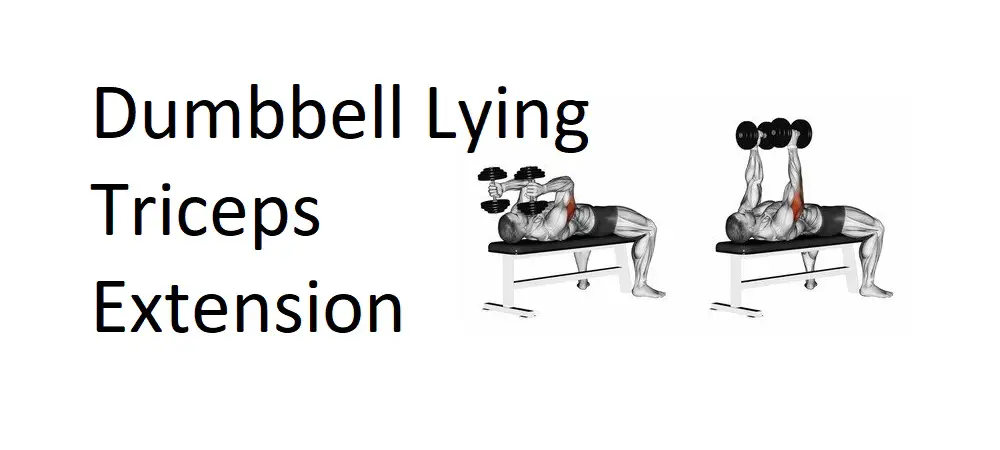
The dumbbell lying triceps extension is an isolation exercise that trains the triceps by bending and straightening the elbows while you lie on a bench or the floor. It is commonly performed with a dumbbell in each hand, allowing each arm to work independently while you control the weights.
Unlike a conventional triceps press, the lying extension emphasizes elbow movement rather than repeatedly pressing the entire upper arm and shoulder forward. You lower the dumbbells toward the sides of your head, then straighten your elbows to return to the starting position.
Good technique matters because the weights move close to your head. Start with a manageable load, keep the movement controlled, and use a range of motion that feels comfortable. This guide covers the muscles worked, setup, proper form, common mistakes, programming, and useful alternatives.
Table of Contents
What Is the Dumbbell Lying Triceps Extension?
The dumbbell lying triceps extension is a resistance exercise performed while lying face-up on a flat bench or on the floor. You hold dumbbells above your chest or shoulders and bend your elbows to lower the weights toward the sides of your head before extending your arms again.
The exercise is sometimes called a lying dumbbell triceps extension or dumbbell skull crusher, although people may use “skull crusher” for several lying triceps-extension variations.
Using two dumbbells allows each arm to move independently. A neutral grip, with the palms facing each other, is a common starting position, but grip and arm path may vary according to comfort and technique.
Muscles Worked by the Dumbbell Lying Triceps Extension
1. Triceps brachii
The triceps brachii is the primary muscle group trained. It is located at the back of the upper arm and has three heads: the long head, lateral head, and medial head.
The triceps extends the elbow, which is the main action used to lift the dumbbells back to the starting position.
2. Long head of the triceps
The long head crosses both the shoulder and elbow joints. Its length and contribution change with shoulder position, so the position of your upper arms can affect how the exercise feels.
However, you should not assume that the lying dumbbell extension isolates the long head or guarantees greater growth in that head compared with every other triceps exercise.
3. Lateral and medial heads
The lateral and medial heads also contribute to elbow extension. All three heads participate in straightening the elbow, although their relative contributions can vary with technique, load, and joint position.
4. Supporting muscles
The shoulder muscles help stabilize the upper arms, while the forearm muscles help maintain your grip. Your trunk and upper back help you remain stable on the bench.
These supporting muscles assist the movement, but the triceps remains the primary target.
Benefits of the Dumbbell Lying Triceps Extension
Direct triceps training
The exercise trains elbow extension directly, making it a useful addition to a resistance-training program that also includes compound pushing movements.
Independent arm movement
Using two dumbbells allows each arm to control its own weight and path. This can make differences in coordination or strength easier to notice, although it does not automatically correct an imbalance.
Flexible equipment options
A flat bench provides a stable surface, but the movement can also be adapted to the floor. The floor limits how far your upper arms or dumbbells can travel below body level, which some people may find more comfortable.
A different option for arm workouts
The lying extension can complement exercises such as the cable triceps extension and dumbbell kickback. These movements train elbow extension using different arm positions and resistance setups.
No single triceps exercise is necessary for everyone. Choose variations that fit your goals, equipment, comfort, and overall training plan.
How to Do the Dumbbell Lying Triceps Extension
Step 1: Set up your bench
Lie face-up on a stable flat bench with your feet planted on the floor. Keep your head and upper back supported.
If you do not have a bench, you can perform the exercise on the floor. Use a clear, stable surface and make sure you have enough room to lower the dumbbells safely.
Step 2: Choose your dumbbells
Select a light starting weight that you can control without swinging or straining. If you are unfamiliar with the exercise, practice the movement with very light dumbbells before increasing resistance.
Check that you have a secure grip on both weights before moving them over your body.
Step 3: Position your arms
Hold one dumbbell in each hand and extend your arms above your chest or shoulders. Your palms can face each other in a neutral grip.
Keep your upper arms relatively steady, with your elbows pointing upward. Avoid forcing your elbows into a narrow position if that feels uncomfortable.
Step 4: Lower the dumbbells
Bend your elbows slowly to lower the dumbbells toward the sides of your head. Your upper arms should remain relatively stable while your forearms move.
Lower only as far as you can comfortably control the weights. The dumbbells do not need to touch your head, and you should not force a deeper stretch.
Step 5: Extend your elbows
Straighten your elbows to bring the dumbbells back to the starting position. Keep the motion smooth and avoid using momentum to lift the weights.
Maintain control near the top rather than aggressively snapping your elbows straight.
Step 6: Repeat with consistent form
Continue for your planned repetitions, maintaining a similar path and pace on both sides. End the set if your elbows move excessively, the dumbbells become unstable, or you can no longer control the lowering phase.
Common Dumbbell Lying Triceps Extension Mistakes
Using excessive weight
Heavy dumbbells can cause your upper arms to swing, your elbows to flare, or the weights to move unpredictably near your head.
Choose a load that lets you maintain control throughout every repetition.
Moving the upper arms excessively
The primary movement should come from bending and straightening the elbows. Some natural movement may occur, but repeatedly swinging your upper arms can turn the exercise into a less controlled movement.
Reduce the load if you cannot maintain a stable arm position.
Lowering the dumbbells too far
A deeper range of motion is not automatically better. Lower the weights only as far as your mobility and comfort allow while keeping control.
If you feel joint pain or uncomfortable stretching around the elbows or shoulders, shorten the range or choose another exercise.
Letting the elbows flare uncontrollably
The elbows do not have to touch or remain tightly pinned together. Aim for a comfortable, consistent position and avoid letting them move unpredictably during the repetition.
Rushing the lowering phase
Dropping the weights quickly can make it harder to control their path. Lower them smoothly, especially because they move close to your head.
Arching or shifting your body
Keep your body stable on the bench and avoid using your torso to help lift the dumbbells. If you cannot remain stable, reduce the load.
Sets, Repetitions, and Training Tips
The appropriate volume depends on your training experience, recovery, and the other exercises in your routine. The following is a practical starting point for many healthy adults, not a mandatory prescription.
- Sets: 2 to 3
- Repetitions: 8 to 15
- Rest: Approximately 60 to 120 seconds between sets, adjusted to your recovery
- Frequency: Include the exercise in a triceps or upper-body session as part of your overall weekly plan
Choose a weight that allows controlled repetitions while leaving enough capacity to maintain good form. You do not need to train to failure in every set.
If you are new to the exercise, begin with a lighter load and fewer working sets. Increase the weight gradually only when you can complete the planned repetitions without losing control.
Avoid adding multiple nearly identical triceps exercises simply to increase volume. Consider how the lying extension fits alongside presses, pushdowns, and other elbow-extension movements in your program.
Dumbbell Lying Triceps Extension Variations
Floor dumbbell triceps extension
Perform the movement while lying on the floor instead of a bench. The floor limits how far your upper arms and dumbbells can move below body level, which may be useful if a deeper range feels uncomfortable.
Alternating lying dumbbell triceps extension
Lower and raise one dumbbell at a time while the other arm remains extended. This requires you to control each side independently and may make the set feel more demanding.
Use a light load until you can keep your body and nonworking arm stable.
Single-arm lying dumbbell triceps extension
Perform the movement with one dumbbell while the other arm rests in a comfortable position. This can be useful when you prefer to focus on one arm at a time, but it also requires attention to balance and control.
Overhead dumbbell triceps extension
The overhead variation places the upper arms in a different position from the lying extension. This changes the muscle lengths and movement demands, so the exercises should not be treated as identical.
Research has found differences in triceps growth between overhead and neutral-arm cable elbow-extension training, but those findings do not establish that every overhead dumbbell variation is superior for every person.
Dumbbell Lying Triceps Extension vs. Other Triceps Exercises
Lying dumbbell extension vs. dumbbell kickback
The lying extension is performed on your back with the upper arms elevated and the elbows bending and straightening. The dumbbell kickback is usually performed with the torso hinged forward and the upper arms held close to the torso.
Both train elbow extension, but the resistance and joint positions differ.
Lying dumbbell extension vs. cable triceps extension
A cable triceps extension commonly uses a cable attachment with the upper arms near the torso. The lying dumbbell variation uses free weights and a different resistance direction.
You can include both in a program if they suit your goals and recovery, but you do not need to perform every variation in one session.
Lying dumbbell extension vs. overhead triceps extension
The overhead extension holds the upper arms overhead, while the lying variation is generally performed with the arms raised above the chest or angled slightly toward the head.
Shoulder position affects the length of the triceps long head. Research on cable elbow-extension exercises suggests that overhead positioning can influence hypertrophy, but that result should not be generalized into a claim that one dumbbell variation is best for all lifters.
Safety Tips
- Use a stable bench or clear floor area.
- Start with a weight you can control confidently.
- Keep a secure grip on both dumbbells, especially when moving them into and out of position.
- Lower the weights smoothly and avoid swinging them near your head.
- Do not force a range of motion that causes elbow or shoulder discomfort.
- Stop if you experience sharp pain, sudden weakness, or other unusual symptoms.
- If you have a recent elbow or shoulder injury, seek individualized guidance before adding the exercise.
If you are concerned about safely getting the dumbbells into position, use lighter weights or ask a qualified training partner for assistance. Do not attempt a load you cannot set up and finish safely.
Frequently Asked Questions
What muscles do dumbbell lying triceps extensions work?
They primarily train the triceps brachii, which extends the elbow. The shoulder and forearm muscles help stabilize the movement and maintain your grip.
Are dumbbell lying triceps extensions the same as skull crushers?
The terms are often used interchangeably, but skull crushers can refer to several lying triceps-extension variations performed with dumbbells, a barbell, or an EZ bar. Equipment and technique can differ.
Should my elbows stay tucked in?
Keep your elbows in a comfortable, consistent position rather than forcing them tightly against each other. Avoid uncontrolled flaring or movement that makes the dumbbells difficult to control.
How far should I lower the dumbbells?
Lower them through a comfortable range that you can control without joint pain or losing your upper-arm position. You do not need to touch your head or force a deep stretch.
Are lying dumbbell triceps extensions good for beginners?
They can be suitable for beginners who can control the weights and understand the movement. Start light, practice the setup, and consider a simpler alternative if you struggle to stabilize the dumbbells.
Can I do this exercise on the floor?
Yes. The floor provides a stable surface and limits the range in which the upper arms can travel below the torso. Make sure the space is clear and the dumbbells can be handled safely.
Should I perform this exercise before or after pressing movements?
That depends on your goals and program. If you prioritize triceps isolation, you may perform it earlier in an arm-focused session. If you prioritize compound presses, you may prefer to do it afterward so it does not fatigue your triceps beforehand.
Conclusion
The dumbbell lying triceps extension is a useful isolation exercise for training the triceps through controlled elbow extension. A stable setup, manageable dumbbells, and a comfortable range of motion are more important than using the heaviest possible load.
Include it alongside other triceps exercises when it fits your training goals. Progress gradually, keep the weights under control, and choose a different variation if the movement causes discomfort.
References
- Mayo Clinic. Triceps extension exercise demonstration.
- Alves D, Matta T, Oliveira L. Effect of shoulder position on triceps brachii heads activity in dumbbell elbow extension exercises. Journal of Sports Medicine and Physical Fitness. PubMed.
- Maeo S, et al. Triceps brachii hypertrophy is substantially greater after elbow extension training performed in the overhead versus neutral arm position. European Journal of Sport Science. PubMed.