Table of Contents
Instructions
The Barbell Clean and Jerk is a dynamic, full-body Olympic lift that combines explosive power, strength, and coordination. It involves lifting a barbell from the floor to the shoulders (the clean) and then thrusting it overhead (the jerk) in a single, fluid movement. Often hailed as the king of Olympic lifts, it’s unmatched for building total-body strength, power, and athleticism. Ideal for athletes, strength trainees, and Olympic lifters, this lift develops speed, stability, and muscle across multiple joints. In this article, we’ll break down proper technique, benefits, variations, programming, common mistakes, and safety tips, giving you everything needed to master the clean and jerk safely and effectively.
What is the Barbell Clean and Jerk?
The Barbell Clean and Jerk is a classic Olympic-style lift performed in two explosive phases. The clean involves lifting the barbell from the floor to the shoulders in one smooth motion, while the jerk propels the bar overhead using the legs and arms in a coordinated push. Unlike the clean and press, which relies on pressing the bar overhead without the leg drive, the clean and jerk maximizes power by combining strength, speed, and technique.
Historically, this lift has been a cornerstone of Olympic weightlifting and international strength competitions, celebrated for its ability to develop total-body strength, explosive power, and athletic performance. It’s widely regarded as one of the most effective full-body exercises, targeting legs, back, shoulders, arms, and core simultaneously while improving coordination and functional strength.
Benefits of the Barbell Clean and Jerk
The Barbell Clean and Jerk offers a wide range of benefits that make it a cornerstone of Olympic weightlifting and strength training programs:
- Develops explosive power and speed: The lift trains your muscles to generate maximum force quickly, enhancing sprinting, jumping, and other athletic movements.
- Builds full-body strength: It targets legs, back, shoulders, arms, and core, making it one of the most comprehensive strength exercises.
- Enhances coordination and timing: The two-phase movement requires precise technique, improving neuromuscular efficiency and movement synergy.
- Improves athletic performance and functional strength: By mimicking real-life explosive movements, it translates directly to better performance in sports and daily activities.
- Burns high calories and improves conditioning: The lift is highly demanding, boosting metabolic rate and cardiovascular endurance.
- Strengthens stabilizers: Core muscles, traps, and the posterior chain are heavily engaged, enhancing balance, posture, and injury prevention.
Performing the clean and jerk consistently not only builds raw strength but also develops the speed, agility, and endurance needed for high-level athletic performance.
Muscles Worked
The Barbell Clean and Jerk is a full-body exercise that engages multiple muscle groups, making it highly effective for building strength, power, and coordination.
Primary Muscles
- Quadriceps, Hamstrings, Glutes: Drive the explosive lift from the floor and provide power during the clean and jerk.
- Deltoids: Shoulder muscles play a key role in pressing the bar overhead during the jerk phase.
Secondary Muscles
- Traps and Upper Back: Assist in pulling the bar to the shoulders and stabilizing the load.
- Core: Maintains balance and transfers power efficiently between the lower and upper body.
- Triceps: Support the final push overhead in the jerk.
Stabilizers
- Spinal Erectors: Maintain posture and protect the spine during the lift.
- Forearms: Enhance grip strength and bar control.
- Obliques: Aid in rotational stability and core support throughout the movement.
This combination of primary, secondary, and stabilizer muscles makes the clean and jerk one of the most comprehensive lifts for functional strength, athletic performance, and overall muscular development.
How to Perform the Barbell Clean and Jerk
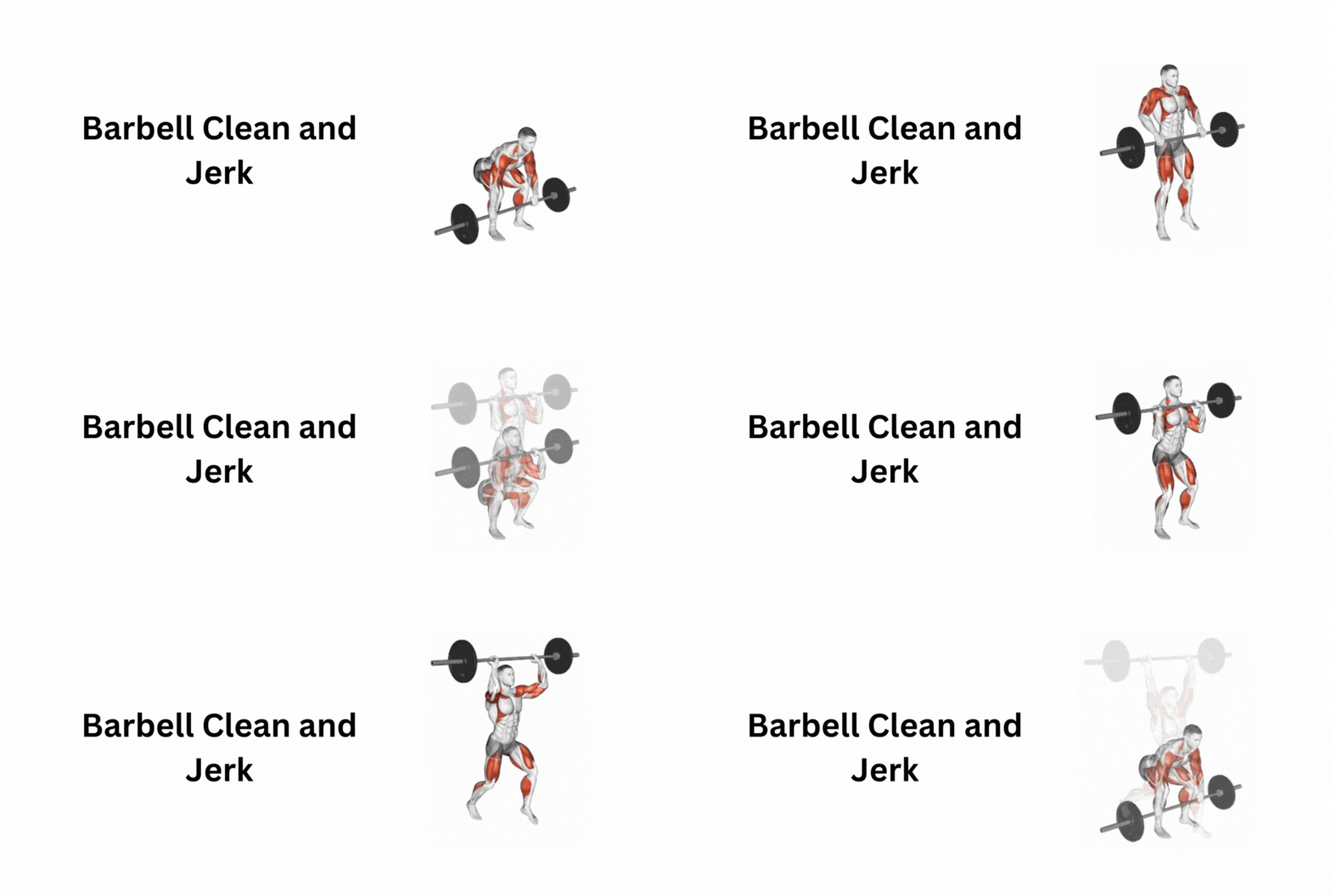
Mastering the Barbell Clean and Jerk requires precise technique to maximize power and prevent injury. Follow these steps carefully:
Step 1: Setup
- Stand with feet hip-width apart and the bar over the mid-foot.
- Maintain a neutral spine and brace your core.
- Grip the bar slightly wider than shoulder-width, ensuring balance and stability.
Step 2: First Pull (Floor to Knees)
- Push through your heels and extend your knees while keeping the bar close to your body.
- Lift in a controlled manner, maintaining a straight back and engaged core.
Step 3: Second Pull (Hip Explosion)
- At knee height, perform an explosive hip extension, shrug your shoulders, and pull yourself under the bar.
- Keep the movement fluid, using power from legs, hips, and back.
Step 4: Catch (Front Rack Position)
- Drop slightly under the bar into a front rack position.
- Keep elbows high, letting the bar rest on your shoulders, and bend your knees slightly to absorb the weight.
Step 5: Jerk Phase
- Perform a slight dip by bending the knees, then drive the bar overhead explosively.
- Lock your arms overhead and position your head slightly forward for balance.
- Engage your core and glutes to stabilize the lift.
Step 6: Lockout & Reset
- Stand tall, fully extending your hips and knees.
- Lower the bar in a controlled manner back to the shoulders or floor, maintaining proper form throughout.
Video
Coaching Cues & Checkpoints
Using simple cues and checkpoints can dramatically improve your Barbell Clean and Jerk performance while reducing injury risk. Focus on these key points:
- Drive through heels, explode with hips – Generate maximum power from your legs and hips during the clean and jerk.
- Keep bar close to body – Maintain bar contact along your legs and torso to optimize efficiency and control.
- Elbows high in front rack – Ensure a secure catch position and proper bar placement on your shoulders.
- Dip slightly before jerk – Use a controlled knee bend to build momentum for a strong, stable overhead press.
- Finish tall with locked arms – Complete the lift in a stable overhead position, fully extending the arms and engaging the core.
Following these cues consistently helps reinforce proper technique, enhances power transfer, and ensures a safer lift for both beginners and advanced lifters.
Common Mistakes and How to Fix Them
Even experienced lifters can make errors during the Barbell Clean and Jerk. Identifying and correcting these mistakes is key for safety and performance:
| Mistake | Why it Happens | How to Fix |
|---|---|---|
| Early arm pull | Weak hip drive | Focus on generating power from your legs and hips before using your arms. |
| Rounded back | Improper posture | Brace your spine, engage your core, and maintain a neutral back throughout the lift. |
| Pressing too early in the jerk | Poor dip technique | Perform a controlled dip first, then explosively drive the bar overhead. |
| Losing balance | Incorrect foot placement | Step into the proper split stance and stabilize before locking out the jerk. |
| Using too much weight | Ego lifting | Reduce the load and master technique before progressing. |
Correcting these common errors ensures safer, more efficient lifts, allowing you to maximize strength, power, and overall performance.
Variations of the Barbell Clean and Jerk
Incorporating variations of the Barbell Clean and Jerk can help target different muscles, improve technique, and accommodate different training goals or equipment availability:
- Push Jerk – Involves a quick dip and drive with a slight leg bend to press the bar overhead; ideal for developing explosive shoulder and leg power.
- Split Jerk – A classic Olympic variation where one foot moves forward and the other back during the jerk; improves balance, coordination, and maximal overhead strength.
- Hang Clean and Jerk – Performed from a standing position above the knees, emphasizing the second pull and hip explosion for better power development.
- Dumbbell Clean and Jerk – Beginner-friendly variation that allows independent arm movement, improves stability, and reduces spinal load.
- Kettlebell Clean and Jerk – Lightweight, full-body option that enhances grip, core stability, and functional strength while being easier on the joints.
Using these variations strategically can help lifters progress safely, strengthen weak points, and enhance overall performance in the clean and jerk.
Alternatives to the Barbell Clean and Jerk
If you don’t have access to a barbell, are working on technique, or want to target similar muscles in a different way, these exercises serve as excellent alternatives:
- Clean and Press – A simpler two-phase lift that develops total-body strength while emphasizing pressing power.
- Thrusters – Combines a front squat with an overhead press, building leg, shoulder, and core strength in a fluid motion.
- Deadlift + Overhead Press – Separates the pulling and pressing phases, allowing focus on technique, grip strength, and shoulder stability.
- Kettlebell Swing + Overhead Press – Dynamic, beginner-friendly option that enhances explosive hip drive, core stability, and shoulder strength.
These alternatives can complement or substitute the clean and jerk in training programs, especially for beginners, those recovering from injury, or athletes looking to vary their workouts.
Programming: Sets, Reps & Frequency
Effective programming for the Barbell Clean and Jerk depends on your training goals, experience level, and overall workout plan.
Goal-Based Sets & Reps
- Strength: 3-5 sets of 3-5 reps to maximize total-body power and force production.
- Hypertrophy: 3-4 sets of 6-8 reps for muscle growth while maintaining technique.
- Power/Conditioning: 3-5 rounds of timed reps or circuits to develop explosive endurance and metabolic conditioning.
Frequency
- Perform the clean and jerk 1-2 times per week, allowing adequate recovery between sessions.
- Pair with complementary lifts (squats, pulls, presses) for a balanced program.
Sample Workout
- Barbell Clean and Jerk: 5×3
- Front Squats: 4×6
- Pull-Ups: 4×8
- Core Work: 10 minutes of planks, hanging leg raises, or ab rollouts
This structure allows lifters to develop strength, power, and muscular endurance while improving technique and minimizing injury risk.
Safety & Who Should Avoid the Barbell Clean and Jerk
The Barbell Clean and Jerk is a demanding, full-body lift that requires proper mobility, technique, and awareness to prevent injury. Follow these safety guidelines:
Warm-Up & Mobility
- Perform dynamic shoulder, hip, and knee drills to prepare joints and muscles for explosive movement.
- Check shoulder, wrist, and thoracic mobility to ensure a safe range of motion for both the clean and the jerk.
Who Should Regress or Avoid
- Beginners or those still mastering basic lifting patterns should start with lighter weights or simpler variations.
- Injury-prone athletes or individuals with current shoulder, elbow, or back issues should consider alternative lifts or regressions (e.g., dumbbell clean and jerk, hang clean, or clean and press).
Red Flags
- Stop immediately if you experience pain in shoulders, elbows, or back.
- Poor form, excessive load, or inadequate warm-up can increase injury risk, so always prioritize technique over weight.
By addressing mobility, proper progression, and warning signs, lifters can safely incorporate the clean and jerk into their strength and conditioning programs.
Barbell Clean and Jerk FAQs
1. Is the clean and jerk safe for beginners?
Yes, but beginners should start with light weights or alternative variations (dumbbell or kettlebell clean and jerk) and focus on mastering technique before progressing to heavy loads. Proper coaching is highly recommended.
2. Clean and jerk vs clean and press what’s the difference?
The clean and press relies solely on pressing the bar overhead with arm strength, while the clean and jerk uses a leg-driven dip and explosive push to lift heavier weights overhead. The jerk allows for greater loads and total-body power development.
3. How should feet be positioned in the jerk?
For a split jerk, one foot moves forward and the other back during the drive. For a push jerk, feet stay roughly hip-width apart, with a slight dip and drive to stabilize the bar overhead. Foot placement is critical for balance and safety.
4. How heavy should I lift?
Start with a manageable weight that allows you to maintain proper form throughout all reps. Gradually increase load as technique improves. Prioritize form over ego to prevent injuries.
5. How often should I train the clean and jerk?
Typically 1-2 times per week is sufficient for most athletes, allowing time for recovery while building strength, power, and skill.
6. Strict vs push jerk which is better?
Both have benefits:
- Strict jerk emphasizes shoulder and tricep strength.
- Push jerk allows heavier loads and develops leg drive and explosive power. Choose based on goals and experience level.
7. Which muscles should I feel most?
You should feel activation in your quadriceps, glutes, hamstrings, deltoids, traps, core, and upper back, along with stabilizing muscles like forearms, spinal erectors, and obliques.
Key Takeaways
- The Barbell Clean and Jerk is an explosive, full-body lift that develops strength, power, and athletic performance.
- Success requires strict attention to technique, proper mobility, and progressive loading.
- Technique always comes before weight mastering form is essential to maximize gains and minimize injury risk.
See Other Exercises: Barbell Clean and Press, Dumbbell One Arm Shoulder Press, Dumbbell Shoulder Press