Table of Contents
Instructions
The Barbell Clean and Press is a classic compound lift that combines a powerful clean from the floor with an overhead press, making it one of the most effective full-body strength movements in training. It develops explosive power, total-body coordination, and real-world strength by engaging multiple muscle groups in a single, fluid motion. Widely used by athletes, strength trainees, and functional fitness enthusiasts, this lift improves both raw power and conditioning. In this article, you’ll learn how to perform the barbell clean and press with proper form, which muscles it works, key benefits, common mistakes to avoid, effective programming strategies, and smart variations to help you build strength safely and efficiently.
What Is the Barbell Clean and Press?
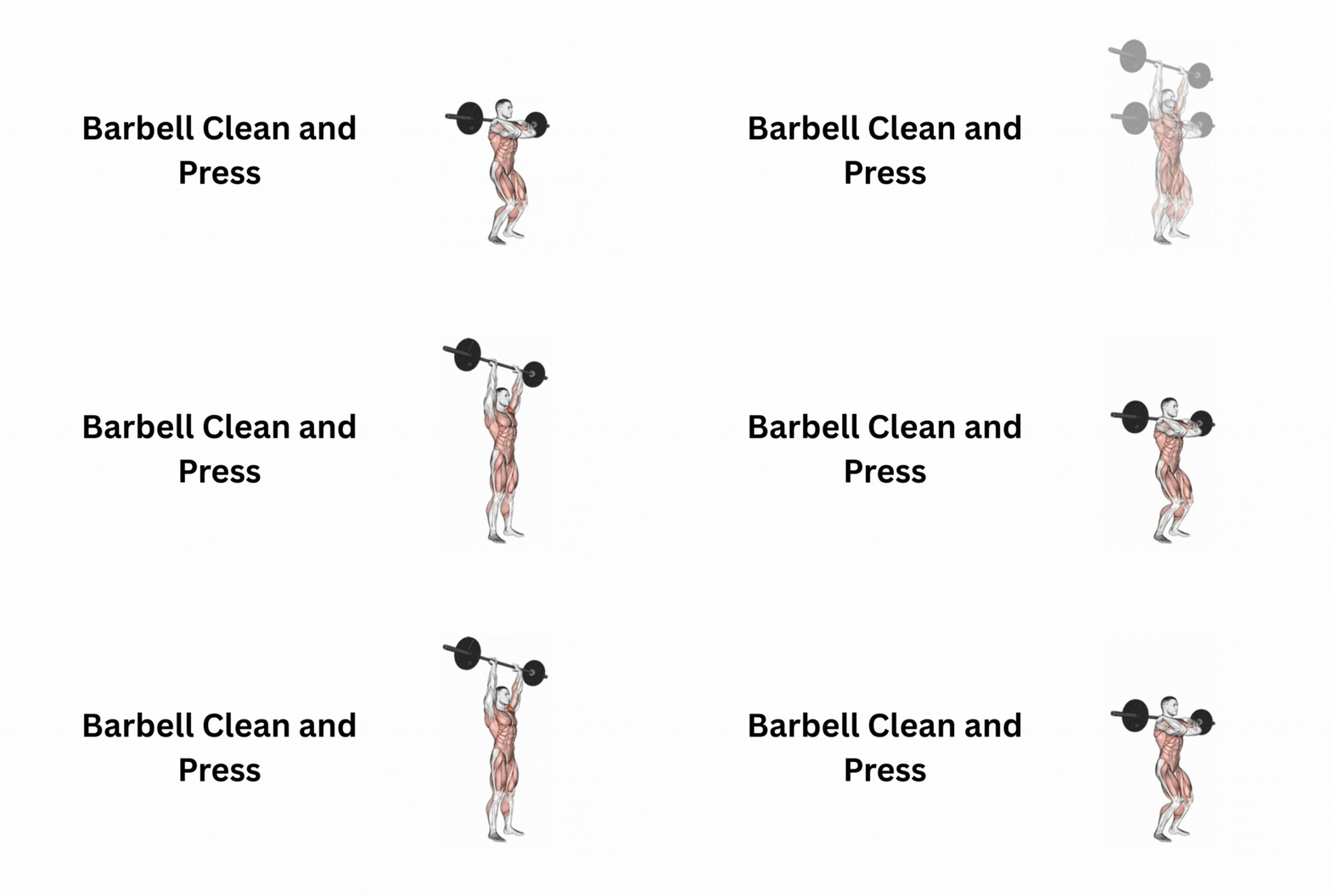
The Barbell Clean and Press is a compound lift that combines two powerful movements: a barbell clean, where the weight is lifted from the floor to the shoulders, followed immediately by an overhead press to full lockout. This sequence turns the exercise into a true full-body movement, requiring strength, coordination, and timing from head to toe.
There are two main styles. In the strict clean and press, the bar is cleaned to the shoulders and pressed overhead using only upper-body strength, with no leg drive. In the push press style, a slight dip and drive from the legs helps propel the bar upward, allowing for heavier loads and more power output.
The clean and press has deep roots in old-school strength training and military conditioning, where it was valued for building rugged, functional strength. Despite modern specialization in lifting, it remains highly relevant today for athletes and lifters seeking efficiency, total-body power, and real-world strength carryover.
Benefits of the Barbell Clean and Press
The barbell clean and press offers far more than basic muscle building. Because it links multiple compound movements into one lift, it delivers unique performance and functional benefits that few exercises can match.
Builds total-body strength:
From the initial pull off the floor to the overhead lockout, nearly every major muscle group is engaged. The legs, glutes, back, shoulders, arms, and core all work together, making this lift one of the most efficient ways to develop full-body strength.
Improves explosive power:
The clean portion trains rapid force production through the hips, knees, and ankles. This triple-extension pattern is critical for jumping, sprinting, and athletic performance, making the clean and press especially valuable for athletes.
Enhances coordination and athleticism:
Executing the movement smoothly requires timing, balance, and motor control. Repeated practice improves neuromuscular coordination, body awareness, and the ability to generate power through complex movement patterns.
Burns high calories per rep:
Because so many muscles are involved and the movement demands both strength and power, the clean and press has a high metabolic cost. This makes it an excellent choice for strength-based conditioning and fat-loss focused training.
Improves posture and core stability:
Maintaining an upright torso during the clean and a stable overhead position during the press strengthens the core, upper back, and spinal stabilizers, helping counter poor posture and shoulder instability.
Transfers to sports and real-world strength:
Lifting an object from the ground to overhead mirrors many real-life and sport-specific tasks. This direct carryover makes the barbell clean and press a practical tool for building strength that translates beyond the gym.
Muscles Worked in the Barbell Clean and Press
The barbell clean and press is a true full-body lift, recruiting multiple muscle groups across different phases of the movement. Each section of the exercise pulling the bar from the floor, catching it at the shoulders, and pressing it overhead places unique demands on the body.
Primary Muscles
Quadriceps
The quads drive the bar upward during the initial pull and assist in standing up from the catch position. They play a major role in generating force from the floor.
Glutes
The glutes are heavily involved during hip extension in the clean and help stabilize the body during the overhead press. Strong glute activation is essential for power and balance.
Deltoids
The shoulders, particularly the anterior and medial delts, are the primary movers during the overhead press, controlling the bar to full lockout.
Secondary Muscles
Hamstrings
The hamstrings assist with hip extension and help control the descent and transition phases of the clean.
Trapezius (Traps)
The upper traps are highly active during the explosive shrug in the clean, contributing to bar acceleration and power.
Core
The core muscles brace the spine throughout the lift, transferring force between the lower and upper body while protecting the lower back.
Triceps
The triceps extend the elbows during the press, helping lock the bar overhead with control and stability.
Upper Back
Muscles such as the rhomboids and rear delts support scapular retraction and shoulder positioning, especially during the rack and press phases.
Stabilizers
Spinal Erectors
These muscles maintain a neutral spine during the pull and support the torso under load, reducing injury risk.
Obliques
The obliques resist rotation and lateral movement, keeping the bar path stable and the torso upright.
Forearms
The forearms work continuously to maintain grip strength and control the bar throughout the entire lift.
How to Do the Barbell Clean and Press
Proper technique is critical for getting the most out of the barbell clean and press while minimizing injury risk. Follow these steps to perform the movement safely and efficiently.
Step 1: Setup
Position the barbell directly over your mid-foot, about one inch from your shins. Stand with a hip-width stance and grip the bar just outside your knees. Set your back in a neutral spine, pull your shoulders slightly back, and brace your core as if preparing for impact. Your chest should be tall and your eyes forward.
Step 2: First Pull (Floor to Knees)
Initiate the lift by pushing through your heels and extending your knees. Keep your hips and shoulders rising together while maintaining a strong torso angle. The bar should travel in a straight, close path, staying tight to your legs as it moves from the floor to knee height.
Step 3: Second Pull (Explosion)
Once the bar passes your knees, drive explosively by forcefully extending your hips, knees, and ankles. Shrug your shoulders upward and begin pulling yourself under the bar rather than lifting it higher with your arms. This explosive phase is where power is generated.
Step 4: Catch (Front Rack)
Quickly rotate your elbows forward and up as you receive the bar in the front rack position across your shoulders. Your elbows should point forward and stay high, with the bar resting on your delts. Catch the bar with soft knees to absorb impact and maintain balance.
Step 5: Press Phase
Once stable, brace your core and press the bar overhead. You can use a strict press for pure shoulder strength or a push press by dipping slightly at the knees and driving upward for added power. Keep the bar path vertical and your head moving slightly back, then through.
Step 6: Lockout & Reset
Finish with your arms fully locked overhead, biceps close to your ears, and core tight. Lower the bar in a controlled manner back to the front rack or to the floor, reset your stance and brace, and prepare for the next repetition.
Video
Best Coaching Cues for the Barbell Clean and Press
- Explode, don’t yank – Generate power from your hips and legs instead of pulling the bar with your arms.
- Bar stays close – Keep the barbell tight to your body for better efficiency and control.
- Elbows through fast – Snap your elbows forward quickly to secure a strong front rack position.
- Brace before you press – Tighten your core and glutes to protect your spine and improve pressing power.
- Finish tall – Stand fully upright with locked arms and a stable body at the top of the lift.
Common Clean and Press Mistakes and Fixes
| Mistake | Why It Happens | Fix |
|---|---|---|
| Early arm pull | Lack of proper hip drive or trying to muscle the bar up | Focus on powerful leg and hip explosion before using the arms |
| Rounded back | Poor setup position or insufficient core bracing | Reset your spine before the pull and brace your core tightly |
| Pressing too early | Unstable or rushed front rack position | Pause briefly after the catch and stabilize before pressing |
| Using too much weight | Ego lifting or poor load selection | Reduce the weight and prioritize clean, technically sound reps |
Mastering these fixes will improve efficiency, reduce injury risk, and help you progress safely with the barbell clean and press.
Clean and Press Variations
The clean and press can be adjusted to match different goals, experience levels, and training styles. These variations allow you to emphasize power, conditioning, or skill development while maintaining the core benefits of the movement.
For Power
Push Clean and Press
Uses leg drive in both the clean and the press, allowing heavier loads and greater power output. Ideal for athletes and strength-focused lifters.
Power Clean + Push Press
A slightly separated version that reinforces explosive hip extension and overhead power. Excellent for improving force production and bar speed.
For Conditioning
Hang Clean and Press
Starts from above the knees, increasing time under tension and metabolic demand. Great for high-rep sets and conditioning circuits.
Clean and Press EMOMs
Performing clean and press reps every minute on the minute challenges work capacity, technique under fatigue, and cardiovascular conditioning.
For Beginners
Dumbbell Clean and Press
Allows independent arm movement, lighter loading, and easier learning of proper mechanics while still delivering full-body benefits.
Kettlebell Clean and Press
Promotes smooth movement patterns, grip strength, and shoulder stability. A beginner-friendly option that reduces stress on the wrists and elbows.
Best Alternatives to the Barbell Clean and Press
While the barbell clean and press is highly effective, certain goals, skill levels, or mobility limitations may call for alternative movements. Each of the options below offers similar benefits while emphasizing different aspects of strength and power.
Clean and Jerk (Olympic lifting)
Swap to the clean and jerk if your primary goal is maximum power and competitive Olympic lifting performance. The jerk allows heavier overhead loads than a press and is ideal for advanced lifters focused on explosive strength.
Thrusters
Thrusters are a great alternative when training for conditioning and metabolic output. They reduce technical complexity while still combining a squat and overhead press, making them ideal for high-rep workouts and conditioning circuits.
Deadlift + Overhead Press
This combination works well if you want strength focus with simpler technique. Performing the movements separately allows better control, heavier pulling loads, and less coordination demand than the clean.
Kettlebell Swings + Press
Choose this pairing for functional training, endurance, or limited equipment settings. Swings train explosive hip drive, while presses build shoulder strength with lower joint stress and smoother transitions.
How to Program the Barbell Clean and Press
Programming the barbell clean and press depends on your primary goal strength, muscle growth, or conditioning. Because it’s highly demanding on both the nervous system and musculature, smart volume and frequency are essential.
Sets & Reps
Strength
- 3-5 sets × 3-5 reps
Focus on heavy but technically perfect reps with full recovery between sets.
Hypertrophy
- 3-4 sets × 6-8 reps
Use moderate loads and controlled tempo to increase time under tension while maintaining clean form.
Conditioning
- 3-5 rounds of timed sets
Perform continuous reps for 20-40 seconds or include the lift in circuits or EMOMs to elevate heart rate and work capacity.
Frequency
Train the barbell clean and press 1-2 times per week, allowing adequate recovery between sessions. Pairing it with lower-body or push-focused training days works best.
Sample Workout
- Barbell Clean and Press – 5×5
- Pull-Ups – 4×8
- Front Squats – 3×6
- Core Work – 10 minutes
This setup balances power, upper-body pulling strength, leg development, and core stability, making it ideal for full-body or athletic training days.
Safety & Who Should Avoid the Barbell Clean and Press
Because the barbell clean and press is a technical, full-body lift, proper preparation and individual considerations are essential for safe execution.
Warm-up drills
Always begin with a thorough warm-up that includes light cardio, dynamic hip and ankle mobility, thoracic spine rotations, and shoulder activation. Drills such as empty-bar cleans, front rack holds, and strict presses help reinforce proper movement patterns before loading the bar.
Mobility requirements
Adequate ankle, hip, thoracic spine, and shoulder mobility is required to maintain proper positions throughout the lift. Limited wrist or front rack mobility can compromise the catch position and increase strain on the shoulders and elbows.
Shoulder and lower-back considerations
Lifters with current shoulder pain, impingement, or limited overhead range of motion should be cautious, especially during the press phase. Similarly, those with lower-back issues must ensure a neutral spine and strong core bracing, as poor positioning under load increases injury risk.
Who should regress or avoid
Beginners without basic hinge and press mechanics, individuals recovering from shoulder or spinal injuries, or anyone lacking sufficient mobility should regress to simpler variations such as dumbbell or kettlebell clean and press, or perform the clean and press as separate movements until technique and strength improve.
Barbell Clean and Press FAQs
Is the clean and press good for beginners?
Yes, but only with proper progression. Beginners should start with light weights, master basic hinge and press mechanics, and consider dumbbell or kettlebell variations before progressing to the barbell clean and press.
Clean and press vs clean and jerk what’s the difference?
The clean and press uses a strict or push press to move the bar overhead, while the clean and jerk uses a split or power jerk, allowing significantly heavier weights. The jerk is more technical and explosive, making it better suited for Olympic lifting.
Should I strict press or push press?
Use a strict press if your goal is shoulder strength and control. Choose a push press if you want to lift heavier loads, develop power, or improve athletic performance.
How heavy should I go?
Start with a weight you can move with perfect form for all prescribed reps. As a guideline, most lifters use 60-75% of their strict press 1RM for clean and press work, adjusting based on experience and conditioning.
Is the clean and press a full-body exercise?
Yes. It trains the legs, glutes, back, shoulders, arms, and core in one continuous movement, making it one of the most complete strength exercises available.
How often should I train it?
Most lifters benefit from training the clean and press 1-2 times per week, allowing adequate recovery due to its high neurological and muscular demand.
Key Takeaways
- Full-body strength builder: The barbell clean and press trains nearly every major muscle group in one efficient movement.
- Explosive and functional: It develops power, coordination, and real-world strength that carries over to sports and daily activities.
- Technique matters more than load: Clean reps and proper positioning are far more important than lifting heavy weight.
See Other Exercises: Dumbbell One Arm Shoulder Press, Dumbbell Shoulder Press, Dumbbell Front Raise