Table of Contents
Instructions
The Dumbbell Arnold Press is a dynamic shoulder exercise popularized by Arnold Schwarzenegger, designed to target all three heads of the deltoid through a combination of rotation and overhead pressing. This movement not only builds shoulder size and strength but also enhances stability and the mind-muscle connection, making it ideal for hypertrophy-focused training.
What is the Dumbbell Arnold Press?
The Dumbbell Arnold Press is a shoulder exercise that combines a traditional overhead press with a rotational movement, making it more complex than standard presses. This unique motion targets all three heads of the deltoid anterior, lateral, and posterior while also improving shoulder stability and promoting muscle hypertrophy. Ideal for intermediate to advanced lifters, it emphasizes control and the mind-muscle connection for maximum shoulder development.
Benefits of the Dumbbell Arnold Press
The Dumbbell Arnold Press offers a range of benefits for shoulder development and overall upper-body strength:
- Builds overall shoulder mass and symmetry – targets all deltoid heads for balanced growth.
- Strengthens anterior and medial delts – emphasizes key muscles often underworked in standard presses.
- Enhances range of motion and joint mobility – the rotational movement promotes healthy shoulder mechanics.
- Improves triceps engagement during lockout – helps develop pressing strength and arm stability.
- Boosts mind-muscle connection – encourages controlled movement and better muscle activation for hypertrophy.
Muscles Worked in the Dumbbell Arnold Press
The Dumbbell Arnold Press targets multiple muscles, making it an effective compound shoulder exercise:
| Muscle Group | Role |
|---|---|
| Anterior Deltoid | Primary mover |
| Medial Deltoid | Secondary |
| Triceps | Assists in lockout |
| Upper Pectorals | Stabilization |
| Traps | Scapular stabilization |
| Core | Postural support |
This combination of primary and secondary muscles helps develop shoulder size, strength, and stability, while improving overall upper-body coordination.
How to Perform the Dumbbell Arnold Press
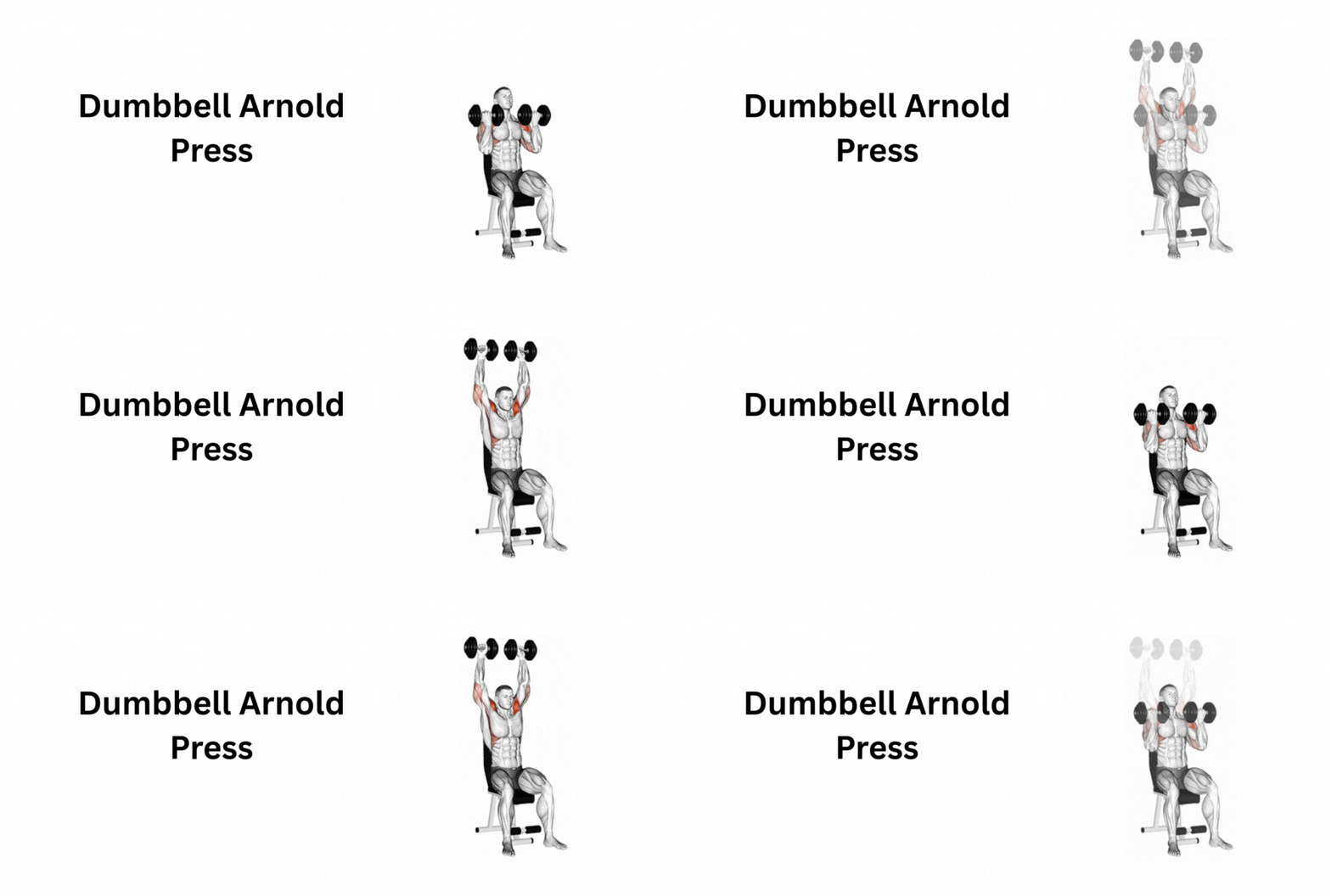
Step 1: Starting Position
- Sit on a bench with back support or stand upright with feet shoulder-width apart.
- Hold a dumbbell in each hand at shoulder height, palms facing your body.
- Engage your core and maintain a stable posture throughout the movement.
Step 2: Rotation & Press
- As you press the dumbbells overhead, rotate your palms outward until they face forward at the top.
- Fully extend your elbows without locking out aggressively.
- Focus on smooth, controlled motion to maximize deltoid activation.
Step 3: Lowering & Reset
- Slowly lower the dumbbells back to the starting position while rotating your palms inward.
- Maintain tension in your shoulders and avoid letting the weights drop too quickly.
Step 4: Breathing
- Exhale while pressing the dumbbells upward.
- Inhale while lowering them back down.
Video
Best Form Tips for the Dumbbell Arnold Press
- Maintain a slow, controlled tempo – avoid using momentum to lift the dumbbells.
- Do not lean back excessively – keep your spine neutral to protect your lower back.
- Keep elbows under wrists during rotation – ensures proper shoulder alignment and reduces strain.
- Engage your core for stability – supports posture and balance throughout the movement.
- Focus on shoulder contraction, not just lifting weight – emphasize muscle activation over heavy loads for optimal hypertrophy.
Common Mistakes in the Dumbbell Arnold Press & How to Fix Them
| Mistake | Problem | Fix |
|---|---|---|
| Swinging torso | Reduces deltoid activation | Use lighter weights and focus on slow, controlled motion. |
| Elbows flared | Increases shoulder strain | Keep elbows aligned under wrists throughout the press. |
| Over-rotating | Strains the rotator cuff | Rotate palms only to proper alignment; avoid excessive rotation. |
| Using too heavy | Compromises form and safety | Prioritize control and full range of motion over lifting heavier weight. |
Proper attention to these corrections ensures maximum deltoid engagement, safer training, and better hypertrophy results.
Variations & Alternatives of the Dumbbell Arnold Press
Variations:
- Seated Dumbbell Arnold Press – Provides additional back support and reduces momentum for stricter form.
- Standing Dumbbell Arnold Press – Engages the core more for stability and balance.
Alternatives:
- Dumbbell Shoulder Press – A simpler overhead press targeting the delts without rotation.
- Barbell Overhead Press – Ideal for building overall shoulder strength with heavier loads.
- Machine Shoulder Press – Guides movement for beginners or those recovering from injury.
- Cable Shoulder Press – Maintains constant tension on the delts throughout the range of motion.
Including these options allows you to mix up your shoulder routine while still targeting similar muscle groups.
Programming the Dumbbell Arnold Press
Repetition Ranges by Goal:
- Strength: 3-6 reps per set with heavier weights
- Hypertrophy: 8-12 reps per set for optimal muscle growth
- Endurance / Isolation: 12-20 reps per set to focus on muscle stamina and control
Frequency:
- Perform the Dumbbell Arnold Press 1-2 times per week, ideally after compound pressing movements such as bench presses or overhead presses.
Sample 4-Week Progression:
- Week 1: 3×12 with moderate weight
- Week 2: 3×10 with slightly heavier weight
- Week 3: 4×10, maintaining good form
- Week 4: 4×12, applying progressive overload for continued gains
This structured approach ensures strength, hypertrophy, and endurance development while minimizing injury risk.
Safety Tips & Who Should Avoid the Dumbbell Arnold Press
- Avoid this exercise if you have a shoulder impingement or rotator cuff injury.
- Always warm up the delts and rotator cuff muscles before performing the movement to reduce injury risk.
- Start with moderate weights until proper form and control are mastered.
- Stop immediately if you feel pain in the shoulders, elbows, or upper back during the exercise.
Following these precautions ensures safe shoulder development while minimizing the risk of injury.
Dumbbell Arnold Press FAQs
1. Dumbbell Arnold Press vs Standard Shoulder Press Which is Better?
The Arnold Press adds a rotational movement, targeting all three heads of the deltoid and improving shoulder stability, while the standard shoulder press focuses more on anterior and lateral delts. Choose Arnold Press for hypertrophy and full deltoid engagement.
2. Can Beginners Safely Do the Arnold Press?
Yes, beginners can perform the Arnold Press with light weights, proper form, and slow controlled motion. Focus on mastering rotation before increasing load.
3. Should I Sit or Stand for the Arnold Press?
- Seated: Provides back support and isolates the delts.
- Standing: Engages the core more for stability and balance. Both are effective depending on your goal.
4. How Heavy Should I Go for Hypertrophy?
Use moderate weights that allow 8-12 controlled reps with proper form, emphasizing muscle contraction over lifting heavier loads.
5. Does the Arnold Press Work All Deltoid Heads?
Yes, the rotational motion engages the anterior, lateral, and posterior delts, making it superior to standard presses for overall shoulder development.
6. How Many Sets/Reps per Week Are Ideal?
- Hypertrophy: 8-12 reps, 3-4 sets per session, 1-2 times per week.
- Adjust frequency based on overall shoulder workload and recovery.
Key Takeaways & Next Steps
- The Dumbbell Arnold Press effectively targets all deltoid heads through its rotational movement.
- Maintaining a controlled tempo and proper rotation is essential for safety and maximum muscle activation.
- Ideal for hypertrophy, shoulder definition, and overall pressing strength.
See Other Exercises: Dumbbell Alternating Incline Front Raise, Dumbbell Alternating Front Raise, Barbell Reclined Shoulder Press