Table of Contents
Instructions
The Dumbbell One Arm Shoulder Press is a unilateral overhead pressing exercise that targets the deltoids while challenging core stability and shoulder control. Unlike bilateral presses, training one arm at a time helps correct strength imbalances, improve coordination, and enhance mind-muscle connection. This movement is highly effective for hypertrophy, functional strength, and athletic performance, as well as for lifters returning from minor shoulder issues who need controlled loading. Because each side works independently, the core and stabilizing muscles are more engaged throughout the lift. In this article, you’ll learn proper technique, muscles worked, key benefits, common mistakes to avoid, smart programming tips, and the best variations and alternatives to maximize results safely.
What Is the One Arm Dumbbell Shoulder Press?
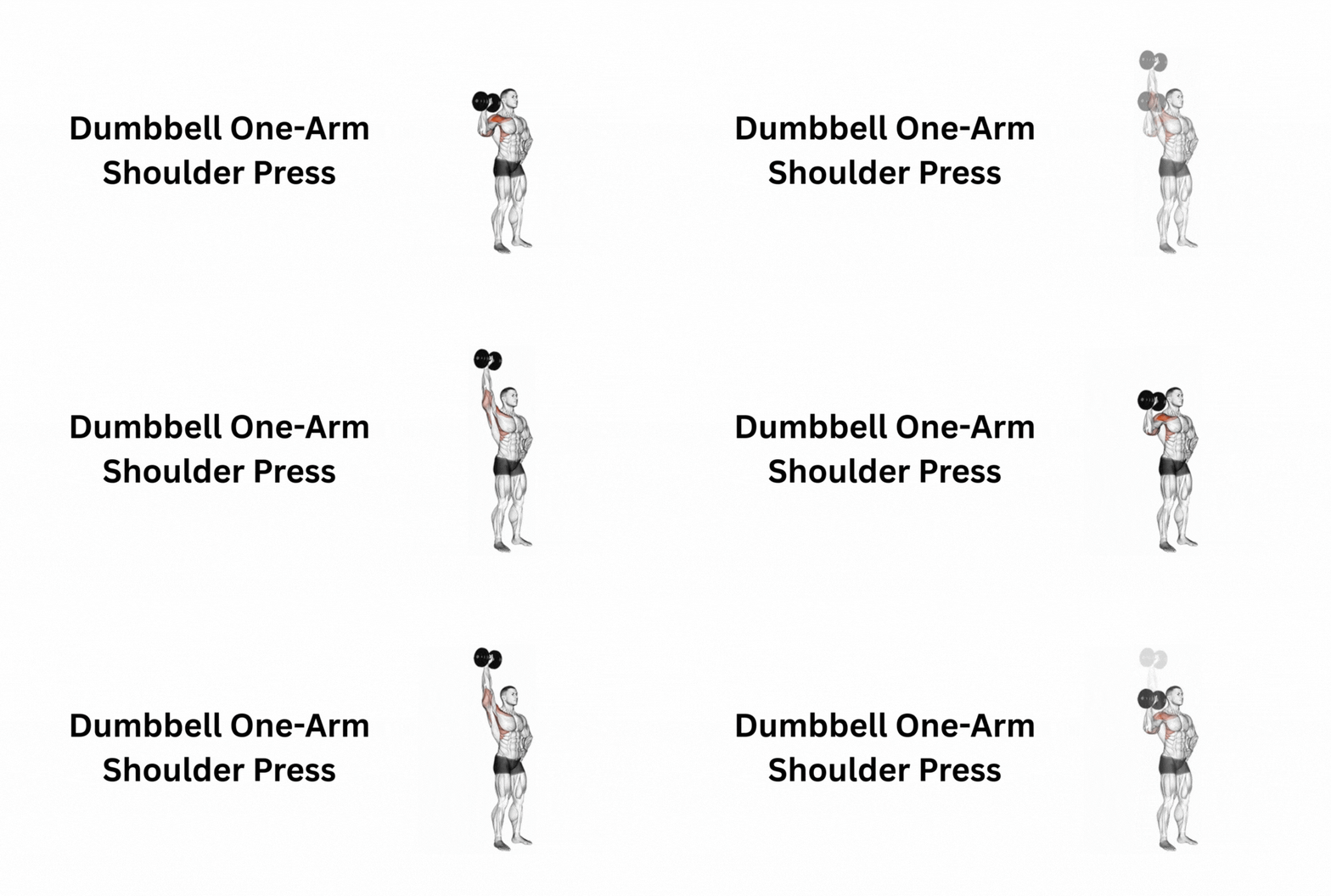
The Dumbbell One Arm Shoulder Press is a unilateral overhead pressing exercise where one arm presses a dumbbell from shoulder height to full extension overhead. Because only one side works at a time, the body must resist rotation, making this movement more demanding on the core and shoulder stabilizers than bilateral presses.
This exercise can be performed seated or standing, depending on training goals. The standing variation increases core and balance demands, while the seated version allows better isolation of the deltoids. By training each shoulder independently, the one-arm shoulder press helps identify and correct strength imbalances, improve neuromuscular control, and promote more symmetrical shoulder development.
Muscles Worked in Dumbbell One Arm Shoulder Press
Primary Muscles
Anterior Deltoid
The front deltoid is the main driver of the pressing motion, responsible for shoulder flexion as the dumbbell moves upward. It handles the majority of the load throughout the lift.
Medial Deltoid
The side deltoid assists in shoulder abduction and contributes to overall shoulder width and stability, especially as the dumbbell reaches the top position.
Secondary Muscles
Triceps Brachii
The triceps extend the elbow to lock out the dumbbell overhead, playing a crucial role in completing each repetition with control and power.
Upper Chest (Clavicular Pectorals)
The upper portion of the chest supports the pressing action, particularly during the initial drive from shoulder level.
Stabilizers
Core (Obliques & Transverse Abdominis)
Because the load is on one side, the core must resist rotation and lateral flexion, making this exercise highly effective for anti-rotation strength.
Rotator Cuff
The rotator cuff muscles stabilize the shoulder joint, keeping the humeral head properly aligned during the overhead press.
Upper Trapezius
The upper traps assist in scapular elevation and stabilization, especially near lockout, helping maintain a strong and safe overhead position.
How to Do the Dumbbell One Arm Shoulder Press
Step 1: Setup
Sit upright on a bench with your back tall or stand with a neutral spine. Place your feet shoulder-width apart to create a stable base. Hold a dumbbell at shoulder height with your elbow slightly in front of your torso. Your palm can face forward or remain in a neutral (palm-in) position, depending on comfort and shoulder mobility.
Step 2: Pressing Phase
Brace your core by tightening your abs and glutes to prevent torso rotation. Press the dumbbell upward in a controlled, vertical path. Keep your wrist stacked directly over your elbow to maintain joint alignment and reduce strain.
Step 3: Top Position
Reach full arm extension overhead without aggressively locking out the elbow. Your shoulder should remain stable, and your torso upright avoid leaning or side bending to assist the lift.
Step 4: Lowering Phase
Slowly lower the dumbbell back to shoulder height under control. Maintain tension in the deltoids and core throughout the descent to maximize muscle engagement and safety.
Step 5: Breathing
Exhale as you press the dumbbell overhead to support core stability. Inhale as you lower the weight back to the starting position.
Video
Proper Form Tips
- Keep your ribs down and core braced throughout the movement to prevent excessive spinal extension and improve anti-rotation stability.
- Avoid leaning to the opposite side as you press; torso shifting reduces shoulder activation and increases stress on the lower back.
- Use a controlled tempo, pressing smoothly and lowering the dumbbell slowly to maintain tension and reinforce proper motor control.
- Keep the shoulder depressed, not shrugged, especially near the top position this protects the shoulder joint and limits unnecessary upper trap dominance.
- Choose a lighter weight than two-arm presses, as unilateral loading increases stability demands and requires greater control for safe, effective reps.
Benefits of the Dumbbell One Arm Shoulder Press
- Corrects left-right strength imbalances by forcing each shoulder to work independently, helping ensure more symmetrical strength and muscle development.
- Improves core and anti-rotation strength, as the unilateral load requires the obliques and deep core muscles to stabilize the torso throughout the press.
- Enhances shoulder stability by engaging the rotator cuff and scapular stabilizers, which supports healthier and more resilient shoulders.
- Builds functional pressing strength that transfers well to real-world and gym-based movements where force is often produced one side at a time.
- Offers excellent carryover to sports and daily activities, particularly those involving overhead actions, unilateral force production, and core-controlled movement patterns.
Common Mistakes to Avoid
| Mistake | Why It’s a Problem | How to Fix It |
|---|---|---|
| Leaning sideways | Shifts load away from the shoulder and reduces delt activation while increasing lower-back strain | Brace your core, keep ribs down, and reduce the weight |
| Using momentum | Decreases time under tension and limits muscle growth | Slow down each rep and control both the press and the descent |
| Overarching the lower back | Places unnecessary stress on the spine and compromises stability | Engage your glutes and abs to maintain a neutral spine |
| Locking the elbow | Increases joint stress and reduces continuous muscle tension | Stop just short of full lockout and keep tension on the deltoid |
Variations of One Arm Shoulder Press
Seated Dumbbell One Arm Shoulder Press
Performed seated, this variation minimizes lower-body involvement and limits momentum, allowing greater focus on the deltoids. It’s ideal for hypertrophy-focused training and for lifters who want stricter form and improved shoulder isolation.
Standing One Arm Shoulder Press
The standing version increases core and balance demands, as the body must resist rotation and lateral shifting. This variation is excellent for developing functional strength and improving full-body coordination.
Half-Kneeling One Arm Press
In a half-kneeling stance, the exercise places even greater emphasis on core stability, hip control, and posture. It’s commonly used in athletic training and rehabilitation settings to reinforce proper pressing mechanics and spinal alignment.
Arnold-Style One Arm Press
This variation incorporates a rotational movement, starting with the palm facing the body and rotating outward as you press overhead. It increases time under tension and engages the deltoids through a larger range of motion, making it effective for muscle growth and shoulder mobility.
One Arm vs Two Arm Dumbbell Shoulder Press
| Factor | One-Arm Dumbbell Shoulder Press | Two-Arm Dumbbell Shoulder Press |
|---|---|---|
| Core engagement | Very high due to anti-rotation and lateral stability demands | Moderate, primarily for posture support |
| Load potential | Lower absolute weight due to unilateral stability requirements | Higher loads possible with bilateral support |
| Stability demands | High requires shoulder, core, and scapular control | Moderate more stable pressing environment |
| Hypertrophy vs functional strength | Excellent for functional strength, balance, and correcting imbalances | Ideal for maximizing muscle hypertrophy and strength loading |
How to Program the Dumbbell One Arm Shoulder Press
For optimal results, program the dumbbell one-arm shoulder press based on your primary goal hypertrophy, strength, or stability.
- Sets: Perform 3-4 sets per arm, allowing adequate rest to maintain form and control.
- Reps: Use 8-12 reps for hypertrophy and muscle growth, or 5-8 reps when focusing on strength and power development.
- Tempo: Keep a controlled 2-1-2 tempo two seconds to press, one-second pause at the top, and two seconds to lower for maximum time under tension and joint safety.
- Frequency: Train this movement 1-2 times per week, depending on total shoulder and pressing volume.
Best Placement in Your Workout
The one-arm shoulder press fits best on a shoulder-focused day, a push day, or within an upper-body split, where it can be paired with lateral raises, chest presses, and triceps work for balanced development.
Safety Tips & Precautions
- Warm up your shoulders and core before performing the exercise to improve mobility, activate stabilizers, and reduce injury risk.
- Avoid this movement if you have active shoulder pain, sharp discomfort, or unresolved shoulder injuries address mobility or strength deficits first.
- Start with the seated variation if balance is an issue, as it provides a more stable base and allows better control of the load.
- Progress the load gradually, increasing weight only when you can maintain proper form, core control, and smooth pressing mechanics on every rep.
Dumbbell One Arm Shoulder Press FAQs
Is the one-arm shoulder press better than the two-arm version?
Neither is better overall they serve different purposes. One-arm presses are superior for correcting imbalances, improving core stability, and building functional strength, while two-arm presses allow heavier loading for maximum hypertrophy.
Can beginners do this exercise?
Yes. Beginners can safely perform the one-arm shoulder press using light weights and strict form. Starting seated is recommended to reduce balance demands.
Should I sit or stand?
Sit if your goal is shoulder isolation and stability. Stand if you want greater core engagement and functional strength carryover.
How heavy should I go?
Use a lighter weight than you would for two-arm presses. Choose a load that allows full control without leaning or using momentum, typically 60-70% of your bilateral press weight.
Does it train the core?
Yes. The unilateral load creates anti-rotation forces that strongly activate the obliques and deep core muscles throughout the movement.
How often should I do unilateral presses?
Perform unilateral shoulder presses 1-2 times per week, depending on overall shoulder volume and recovery.
Key Takeaways
- One-arm pressing improves balance, coordination, and overall stability by challenging the body to resist rotation.
- The dumbbell one-arm shoulder press builds strong, well-developed shoulders while actively engaging the core.
- It works best as an accessory movement or as a tool for correcting left–right strength imbalances within a balanced program.
See Other Exercises: Dumbbell Shoulder Press, Dumbbell Front Raise, Dumbbell Alternating Seated Front Raise