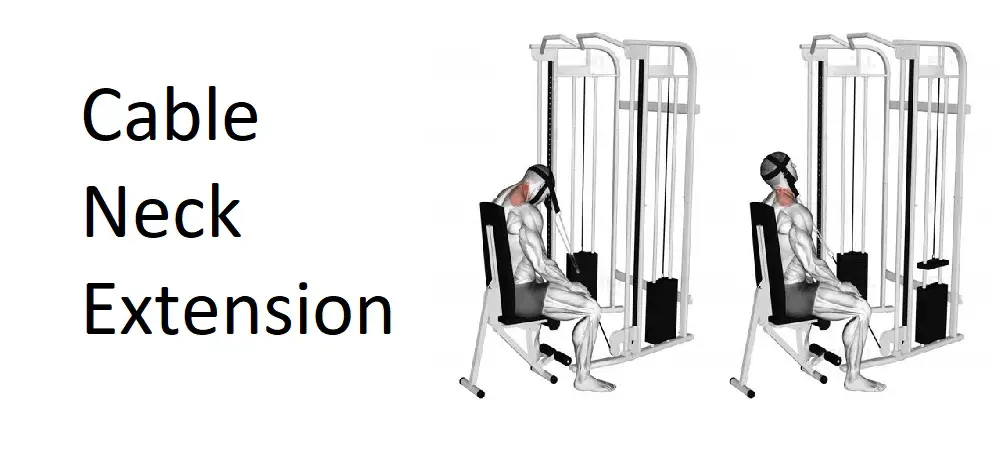
The cable neck extension is a resistance exercise that targets the muscles responsible for extending the neck. When performed with suitable equipment, light resistance, and controlled movement, it can be included in a carefully planned neck-strengthening routine.
Because the neck is a sensitive area, technique matters more than the amount of weight used. This guide explains the muscles involved, how to perform the exercise, common mistakes, possible benefits, and important safety considerations. You can also explore related exercises such as cable neck flexion and cable neck extension with belt.
Table of Contents
What Is a Cable Neck Extension?
A cable neck extension is an exercise in which you extend your head backward against cable resistance. A purpose-built head harness connects to the cable and allows resistance to be applied during the movement.
The exercise primarily involves the posterior neck muscles, which help extend and control the head and neck. Unlike shoulder exercises, the movement occurs mainly at the neck rather than through the shoulders or arms.
For another exercise that uses a harness and targets neck muscles, see SaveDollar’s guide to seated head harness neck resistance.
Cable neck extensions should be performed with conservative resistance and a comfortable range of motion. They are not a test of maximum strength, and heavier loads do not automatically produce better results.
Muscles Worked
Cable neck extensions primarily train the muscles involved in extending the head and neck. Several muscles contribute to the movement, and their relative involvement depends on posture, technique, and individual anatomy.
Primary Muscles
Splenius capitis: Located at the back of the neck, this muscle contributes to extending the head and helps control head rotation and side bending.
Splenius cervicis: This muscle contributes to neck extension and helps control movements of the cervical spine.
Other posterior neck muscles: Several smaller muscles along the back of the neck help extend and stabilize the head and neck during controlled movement.
Supporting Muscles
Other muscles surrounding the cervical spine contribute to stability and movement control. Their involvement varies depending on the position of the head and the resistance applied.
Does the Cable Neck Extension Work the Trapezius?
The upper trapezius may contribute to stabilizing the neck and shoulder region, but cable neck extensions are not primarily a trapezius-building exercise. Movements involving shoulder elevation and scapular control are generally more direct ways to train the trapezius.
For a related shoulder and upper-back exercise, see the cable shrug exercise guide.
For additional scientific context, read this systematic review of neck-strengthening protocols in collision sports. The review discusses neck-strength training research, but its findings should not be interpreted as proof that this particular exercise prevents injury.
Equipment and Setup
Before performing a cable neck extension, make sure the equipment is suitable for neck training.
You will need:
- A cable machine with an appropriately positioned pulley.
- A purpose-built head harness designed for resistance training.
- A secure attachment compatible with the cable machine.
- Enough space to maintain a stable body position.
How to Set Up
- Position the cable pulley according to the harness manufacturer’s instructions.
- Attach the harness securely to the cable using the designated connection.
- Adjust your position so the cable provides resistance as you extend your head backward.
- Stand or sit in a stable position, keeping your torso still.
- Select very light resistance before attempting the movement.
Never attach an ordinary cable handle directly to your head or neck. If the equipment is unsuitable, damaged, or difficult to secure, do not perform the exercise.
How to Perform a Cable Neck Extension
Once the equipment is correctly set up, focus on smooth movement rather than increasing the weight.
Step-by-Step Instructions
Step 1: Establish a stable position
Stand or sit securely with your torso upright. Keep your shoulders relaxed and your body still throughout the exercise.
Step 2: Position your head neutrally
Fit the head harness according to the manufacturer’s instructions. Begin with your head aligned comfortably with your torso. Avoid forcing your chin upward or beginning with an exaggerated forward bend.
Step 3: Extend your head gently
Move your head backward against the cable’s resistance through a small, comfortable range. Do not jerk your head, swing your torso, or force the movement to its limit.
Step 4: Pause under control
Briefly maintain the comfortable end position without pushing your head farther backward. Keep the movement smooth and controlled.
Step 5: Return slowly
Bring your head back to the starting position while resisting the cable’s pull. Do not allow the weight to pull your head forward suddenly.
Step 6: Finish the set carefully
Stop if you experience pain, dizziness, tingling, numbness, a headache, or any unusual symptoms. Do not continue through discomfort to complete a predetermined number of repetitions.
Technique Tips
- Use the lightest practical resistance while learning the movement.
- Keep your torso stable.
- Maintain a comfortable range of motion.
- Avoid rapid repetitions and sudden changes in direction.
- Do not use your hands to pull the harness or force your head into position.
- Check the cable, attachment, and harness before every session.
Sets, Reps, and Progression
There is no single sets-and-reps prescription that is suitable for everyone performing direct neck training. Appropriate training volume depends on experience, health history, equipment, and individual tolerance.
Starting Out
If you are new to neck resistance exercises, prioritize learning the setup and movement. Start with very light resistance, a small comfortable range of motion, and only a few controlled repetitions.
Avoid training to failure or attempting to match the loads used for larger muscle groups.
Progressing Safely
Progress gradually only when you can maintain stable posture and controlled movement without discomfort. Change one training variable at a time, and avoid increasing the resistance simply because the exercise feels easy during a single session.
Allow adequate recovery between neck-training sessions. If you have a history of neck injury, ongoing symptoms, or a diagnosed cervical condition, obtain professional guidance before beginning or progressing the exercise.
Remember: Consistent technique and comfort are more important than lifting a particular weight.
Benefits and Limitations
When appropriate for the individual and performed with suitable technique, cable neck extensions provide a way to apply adjustable resistance to the muscles that extend the neck.
Potential Benefits
Targeted neck strengthening: The exercise provides resistance for the posterior neck muscles involved in extension.
Adjustable resistance: A compatible cable machine allows the resistance to be changed gradually.
Controlled movement practice: Using light resistance can help a person practice controlled neck extension within a comfortable range.
Training variety: For individuals who have been appropriately cleared for neck training, the exercise may complement a broader strength-training routine.
What the Exercise Cannot Guarantee
Cable neck extensions should not be presented as a guaranteed way to improve posture, eliminate neck pain, prevent injury, or treat a cervical condition. These outcomes depend on many factors and cannot be promised from one exercise.
If you are trying to address persistent neck discomfort, headaches, restricted movement, or symptoms affecting your arms or hands, seek an appropriate clinical assessment instead of relying on this exercise as treatment.
Common Mistakes
Even a simple neck exercise can become unnecessarily risky when performed with excessive resistance or poor control.
Using Too Much Weight
Heavy resistance can make it difficult to control the head and neck. Start conservatively and increase resistance only when appropriate technique is consistent.
Moving Too Quickly
Fast repetitions and sudden changes in direction reduce control. Move smoothly in both directions rather than allowing the cable to pull your head back to the starting position.
Forcing the Range of Motion
Pushing the head as far backward as possible is unnecessary. Work only within a comfortable range and avoid forcing the neck into an extreme position.
Moving the Torso
Leaning backward or swinging the body to move the cable shifts the movement away from controlled neck extension. Keep your torso stable throughout each repetition.
Ignoring Equipment Fit
A poorly fitted harness or insecure attachment can make the movement difficult to control. Use equipment specifically intended for the exercise and follow its instructions.
Training Through Symptoms
Pain, dizziness, tingling, numbness, and unusual headaches are not signs that the exercise is working. Stop immediately if these symptoms occur.
Safety Considerations
The neck supports the head and contains sensitive structures. Direct resistance training therefore requires more caution than many conventional gym exercises.
Before beginning cable neck extensions:
- Check that the exercise is appropriate for your experience and health history.
- Use a properly fitted head harness and a secure cable attachment.
- Start with light resistance and a controlled range of motion.
- Avoid sudden movements and forced positions.
- Stop immediately if you experience unusual symptoms.
If you have a neck injury, ongoing neck pain, a diagnosed cervical spine condition, recent neck surgery, unexplained headaches, or symptoms such as tingling, numbness, or weakness, consult a qualified healthcare professional before attempting the exercise.
Seek prompt medical assessment for new or worsening neurological symptoms. Severe or sudden symptoms require urgent medical attention.
For research background, you can review this published study of a neck-strengthening program in professional rugby players. It describes a specific training intervention; its results should not be generalized to every person or every neck exercise.
Variations and Alternatives
Not every neck exercise uses the same movement pattern. Choose alternatives based on your experience, goals, available equipment, and any professional guidance you have received.
Cable Neck Extension With Belt
SaveDollar also covers cable neck extension with belt. Check the equipment requirements and technique in that guide before choosing between setups. Use only equipment intended for the movement and follow its instructions.
Cable Neck Flexion
The cable neck flexion exercise trains the neck through a different movement pattern. Flexion and extension are not interchangeable, and both should be selected according to the individual’s needs and tolerance.
Cable Neck Rotation With Belt
The cable neck rotation with belt guide covers a rotational neck movement. Rotation differs from extension, so do not use one exercise as a direct substitute for the other without considering your training goals.
Cable Lateral Neck Flexion
The cable lateral neck flexion with belt guide covers side bending against resistance. This movement targets a different direction of neck motion and also requires careful control.
Isometric Neck Exercise
An isometric exercise involves activating the neck muscles without visibly moving the head. See SaveDollar’s guide to the isometric neck exercise. Isometrics may be appropriate in some training or rehabilitation programs, depending on the person’s needs.
Weighted Neck Extension Alternatives
Other neck-extension variations use different positions or equipment:
These exercises are not automatically safer or more effective than cable neck extensions. Choose an alternative only if the equipment, technique, and movement are appropriate for you.
Frequently Asked Questions
What does the cable neck extension work?
The exercise primarily targets muscles involved in extending the head and neck, including the splenius capitis and splenius cervicis. Other posterior neck muscles also contribute to movement and stability.
Is the cable neck extension suitable for beginners?
It may be suitable for some people, but direct neck resistance training requires careful setup and control. Beginners should use very light resistance, learn the movement, and seek professional guidance if they are unsure whether the exercise is appropriate.
Can cable neck extensions relieve neck pain?
They should not be assumed to relieve or treat neck pain. The causes of neck discomfort vary, and resisted neck extension may be unsuitable for some conditions. Persistent or worsening pain should be assessed by a qualified healthcare professional.
How much weight should I use?
Use the lightest practical resistance that allows smooth, controlled movement. There is no universal starting weight because cable systems, harnesses, experience, and individual circumstances differ.
How often should I perform cable neck extensions?
Frequency depends on your training experience, recovery, and overall program. Avoid intense or frequent direct neck training without an appropriate plan. If you are new to the exercise or have a history of neck problems, seek individualized advice.
Can I use a regular cable handle instead of a head harness?
No. Do not attach an ordinary cable handle directly to your head or neck. Use only a purpose-built head harness that is compatible with the cable setup and follow the manufacturer’s instructions.
What should I do if I feel pain during the exercise?
Stop the exercise immediately. Do not attempt to work through neck pain or unusual symptoms. Seek medical advice if symptoms persist, worsen, or include numbness, tingling, weakness, dizziness, or a severe headache.
Is the cable neck extension the same as a neck stretch?
No. A cable neck extension is a resisted strengthening movement, whereas a neck stretch is intended to gently lengthen tissues or explore comfortable mobility. They serve different purposes and should not be treated as interchangeable.
Conclusion
The cable neck extension is a targeted exercise for the muscles that extend the neck. Its effectiveness depends on appropriate equipment, careful setup, controlled movement, and resistance suited to the individual.
Use a purpose-built head harness, begin with light resistance, and avoid forcing the head backward or using momentum. Pay attention to discomfort and unusual symptoms, and seek professional guidance if you have a neck condition or are uncertain whether direct neck training is suitable for you.
For further reading, explore SaveDollar’s guides to cable neck flexion, seated head harness neck resistance, and isometric neck exercises.
A careful, consistent approach is preferable to chasing heavier loads or extreme ranges of motion.